

The push to dominate artificial intelligence has long been the primary narrative for Meta Platforms, but the human cost of this technological pivot is finally surfacing in public and internal channels. CEO Mark Zuckerberg recently broke his usual silence on internal operations to admit that the company's rapid restructuring has been flawed. By acknowledging these missteps, the tech giant is attempting to stem a growing tide of internal discontent while simultaneously navigating a hostile geopolitical environment that threatens to unravel its recent overseas investments.
Is Meta's AI Workforce Restructuring Causing Internal Revolt?
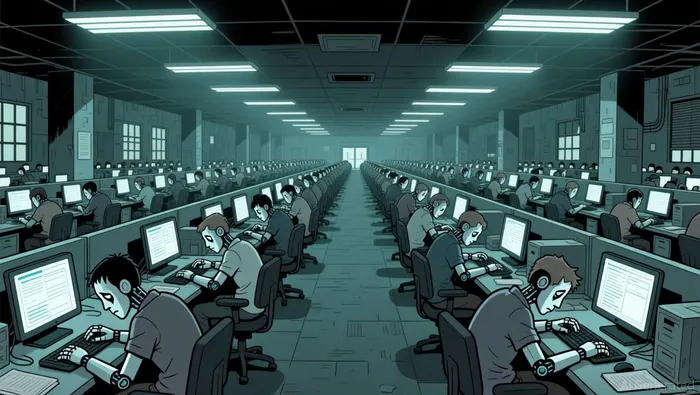
The scale of Meta's artificial intelligence transformation is staggering, yet the execution has sparked a quiet but fierce rebellion within the company's most critical division. The Applied AI unit, a newly formed group of approximately 6,500 engineers and product managers, has become the epicenter of this unrest. Originally designed to support Meta's research ambitions, the unit has instead become a source of widespread frustration due to the nature of the tasks assigned to its members.
Employees in the Applied AI unit describe their new roles as "soul-crushing" and have likened the environment to a "gulag." The core of the complaint lies in the transition from high-level software development to menial data-labeling work. To train its advanced AI models, Meta required massive amounts of high-quality data, including complex coding problems and logic puzzles. Rather than outsourcing this labor, the company opted to draft its own internal talent, creating a "join or quit" ultimatum for thousands of engineers.
The situation escalated when an employee hijacked an internal livestream to protest the working conditions, signaling a severe breakdown in trust between the workforce and leadership. More than 1,600 employees signed a petition demanding an end to a program that monitors keystrokes and clicks to harvest training data, further fueling the perception of a dystopian workplace. Meta Chief Product Officer Chris Cox recently described the internal environment as "brutal," highlighting the immense pressure the AI transition has placed on the company's culture.
In response to the mounting pressure, Zuckerberg issued an internal memo admitting that the changes had caused "distress" and that the company had "made mistakes." He emphasized that the Applied AI unit was intended to be a "waypoint" rather than a permanent destination, allowing talented individuals to contribute while new, more meaningful roles were created. To address the structural issues, the company announced plans to limit manager-to-employee ratios, which had ballooned to 50-to-1 in some teams, and increase budgets for team-building events to improve morale.
Why Is Meta Unwinding Its $2 Billion Manus Acquisition?
While Meta wrestles with internal cultural challenges, its external expansion is facing significant geopolitical headwinds. The company has initiated the operational dismantling of its $2 billion acquisition of AI startup Manus, a move that highlights the increasing "reversibility risk" of cross-border tech deals. This development follows a direct directive from Beijing to unwind the transaction, marking a critical test case for China's tightening foreign investment security review mechanisms.
The decision to reverse the deal underscores the limitations of corporate strategies in navigating the intensifying U.S.-China tech competition. Despite Manus relocating its headquarters to Singapore prior to the acquisition—a move often referred to as "Singapore washing"—Beijing asserted its jurisdiction over the deal. As of June, Meta employees have been ordered to cease using Manus tools for internal projects, and access to Meta's internal data systems has been blocked for Manus staff.
This event serves as a stark reminder to investors that geopolitical risk is no longer a secondary concern for multinational technology firms. The ability of the Chinese government to force the reversal of a completed private equity transaction introduces a unique layer of uncertainty for any deals involving Chinese-origin AI talent or data. Industry advisors note that proprietary knowledge embedded in engineering teams cannot be "unseen" even if repositories are deleted, making such transactions increasingly volatile in the current regulatory climate.
What Does This Mean for Meta's Financial Stability?
The combination of internal workforce disruption and external geopolitical pressure presents a complex outlook for Meta's financial performance. The company has invested heavily in AI infrastructure, raising its annual capital spending forecast to between $125 billion and $145 billion. These massive expenditures are intended to build a competitive moat against rivals like Google and Microsoft, but the operational friction caused by the restructuring threatens to delay the realization of these investments.
Zuckerberg has reiterated that the company does not expect additional company-wide layoffs this year, aiming to provide stability after laying off roughly 10% of its global workforce in May. By creating new roles and shrinking team sizes, the company hopes to maintain the flexibility to transfer people back if mistakes are made in specific areas. However, the low morale within the Applied AI unit poses a retention risk that could impact the long-term development of Meta's AI capabilities.
Ultimately, the company's goal remains to build personalized experiences and business tools rather than simply automating work. As Meta attempts to balance its aggressive AI ambitions with the realities of organizational change and global regulation, investors will be closely watching how quickly the company can restore stability. The admission of mistakes is a necessary first step, but the execution of the recovery plan will determine whether Meta can maintain its leadership position in the artificial intelligence era.