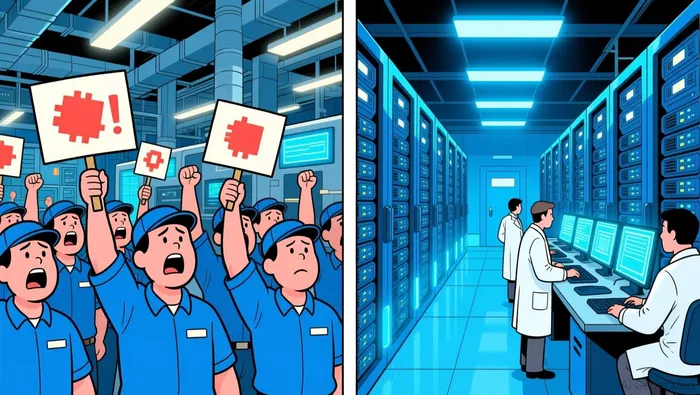
The smart money is watching a standoff that could directly gut semiconductor profits. At the heart of the dispute is a union demand for 15 percent of annual operating profit as employee bonuses. Applied to the consensus forecast for 2026, that figure translates to roughly 47.6 trillion won ($34 billion). Management's refusal to institutionalize this bonus system is the key sticking point, with the union now threatening an 18-day general strike from May 21 to June 7.
This isn't just a pay dispute; it's a direct threat to the company's most profitable operations. The strike would hit the world's largest chipmaker at its core, specifically targeting AI-related production like High Bandwidth Memory. The potential financial toll is staggering, with estimates pointing to losses of up to ₩30 trillion. That's a sum that could easily wipe out a quarter's worth of operating profit and represents a massive, unplanned cash outflow.
The setup is classic. The union is demanding a piece of the AI-driven profit boom, while management cites long-term sustainability. For now, the market's focus remains on the explosive growth in memory chips, but the strike threat introduces a severe near-term volatility risk that could disrupt the entire semiconductor supply chain.
Market Reaction: Skin in the Game vs. Headline Risk
The smart money is making its bet clear. While the headlines scream of a looming strike, the trading action tells a different story. On May 11, Samsung Electronics shares surged 6.52% in premarket trading, a move that suggests the market is either pricing in a last-minute deal or underestimating the operational risk. This rally happened even as other geopolitical tensions flared, showing the stock's move was driven by its own fundamental narrative.
The real signal, however, came from the competition. Just as Samsung popped, Micron Technology shares rose 5.75% on the same day. Deutsche Bank analysts pointed directly to the Samsung labor unrest as a bullish catalyst, noting that a walkout would further strain a market already grappling with significant supply constraints. The bank's $1,000 price target for Micron is a direct bet that disruption at its rival will benefit its own position.
This is classic institutional accumulation. The smart money isn't buying Samsung's stability; it's buying the potential supply shock. While Samsung's CEO and board may be focused on protecting their own profit margins, the market's reaction shows that institutional investors are looking through the strike threat to the broader semiconductor supply chain. They see a potential gap in AI memory production that rivals like Micron are well-positioned to fill. The skin in the game here isn't with Samsung insiders; it's with the whales betting on a competitor's gain.
Catalysts and What to Watch: The 10-Day Countdown
The smart money is now watching the clock. With the strike scheduled to begin in just nine days, the next 10 days are a make-or-break window for the current thesis. The two sides have resumed government-mediated post-mediation talks, but as of Monday, no breakthrough had been reached. This is the final procedural step after failed formal mediation, and its collapse would leave the union with no choice but to proceed with the walkout.
The core demand remains unchanged. Union leaders, including the head of the Samsung Electronics chapter, have been clear: they need the institutionalization of a system that guarantees workers 15 percent of operating profit as bonuses, with the cap removed. They have explicitly stated that management has not shown a meaningful change in stance on this key point. The union has left some room for compromise on other issues, but this codification demand is non-negotiable for them.
If the strike proceeds as planned on May 21, it would force an immediate and severe re-rating of Samsung's operational risk. The potential financial toll is already estimated at up to ₩30 trillion in losses. More critically, it would disrupt the production of critical AI memory like High Bandwidth Memory, directly impacting the global semiconductor supply chain. For the smart money, the path forward is now binary. A deal would remove a massive overhang and likely see the stock stabilize. A walkout would validate the worst-case scenario, turning a headline risk into a tangible, multi-billion dollar operational crisis. The countdown is on.