

Mortgage rates are climbing again, catching many borrowers off guard just as they were hoping for a break. The average 30-year fixed mortgage rate recently hit a 9-month high of 6.53%, according to the latest data from Freddie Mac. This uptick marks another setback for prospective homebuyers who are already navigating a challenging and highly competitive market environment. Despite this recent spike, the current average rate remains below the 6.89% level recorded a year ago, indicating that while borrowing costs are rising, they have not yet returned to the peak levels seen during the previous cycle.
The movement reflects ongoing volatility in the housing finance sector, driven by broader macroeconomic factors that are keeping interest rates elevated. Geopolitical tensions, particularly the ongoing conflict in Iran, have spiked global energy prices. This surge in oil and gas costs has reignited inflation fears among investors, who are now demanding higher yields to offset potential purchasing power erosion. As a result, the bond market has reacted by pushing mortgage rates higher, creating a difficult environment for anyone looking to secure a long-term home loan.
What Are Current Mortgage Loan Rates Today?
As of Monday, June 1, 2026, the daily 30-year fixed rate has seen a slight decline of 3 basis points to 6.33%, though this is a short-term fluctuation amidst a broader upward trend. The 15-year fixed rate has also experienced minor adjustments, reflecting the general volatility in the mortgage market. Experts generally predict that mortgage rates will remain range-bound in the low-to-mid 6% range for the foreseeable future. This prediction is driven by persistent inflationary pressures, a labor market that is cooling but not collapsing, and a Federal Reserve that is expected to hold steady on overnight borrowing rates.
Major housing authorities have converged on a similar outlook for the remainder of 2026 and into 2027. Fannie Mae's latest housing forecast, released in mid-May, projects that 30-year mortgage rates will average 6.3% through the second quarter of 2027. The Mortgage Bankers Association (MBA) offers a slightly more conservative forecast, projecting that 30-year mortgage rates will remain between 6.4% and 6.5% throughout 2026, ending the year at an average of 6.5%. These forecasts suggest that while rates may not drop significantly in the immediate future, a gradual stabilization is anticipated over the next five years, hovering near 6% by 2027.
The Federal Reserve's upcoming economic projections will be critical in shaping this trajectory. Markets are currently projecting that the Fed will vote to leave overnight borrowing rates unchanged at its June 16-17 meeting. However, the Summary of Economic Projections (SEP) released alongside this decision could signal a shift in the central bank's outlook. If the report indicates worsening inflation due to the ongoing energy crisis, lenders could preemptively raise mortgage rates throughout the summer. Conversely, if the data shows a significant cooling in the labor market, it could provide a pathway for rates to stabilize or dip slightly.
Why Are Refinance Rates Rising Amidst Economic Uncertainty?
Refinance rates are rising in tandem with purchase rates, driven by the same macroeconomic forces. The primary catalyst is the ongoing U.S. war with Iran, which has disrupted global oil shipping and production. Rising energy prices make it more costly to manufacture and transport goods, fueling inflationary pressures that keep borrowing costs high. While President Trump has promised a quick end to the conflict, no peace agreement has been reached yet. So long as the war continues with no clear end in sight, mortgage rates will probably remain elevated.
Despite these headwinds, mortgage rates have not climbed even higher because of intervention from government-sponsored entities (GSEs). Fannie Mae and Freddie Mac have been buying up billions of dollars’ worth of mortgage-backed securities (MBS). These MBS are packages of home loans that are purchased by investors. When demand for these bonds goes up, so do their prices, which typically pushes mortgage rates down. According to Realtor.com, Fannie Mae’s mortgage bond portfolio has more than doubled in the past year at the direction of the administration, aiming to support housing market liquidity and stability.
However, security purchases can only do so much. While Fannie and Freddie continue on this buying path, rates should stay below their worst-case-scenario thresholds. Still, it likely won’t be enough to stop rates from rising altogether if inflation remains persistent. Peter Akwaboah, acting CEO and chief operating officer at Fannie Mae, noted in Q1 2026 earnings-call remarks that their mission guides how they operate, especially as the macroeconomic environment adds uncertainty to an already challenging housing market. The bottom line is that while GSE intervention provides a crucial floor, it does not eliminate the fundamental inflationary pressures driving rates higher.
How Do Mortgage Rates Impact the Housing Market Dynamics?
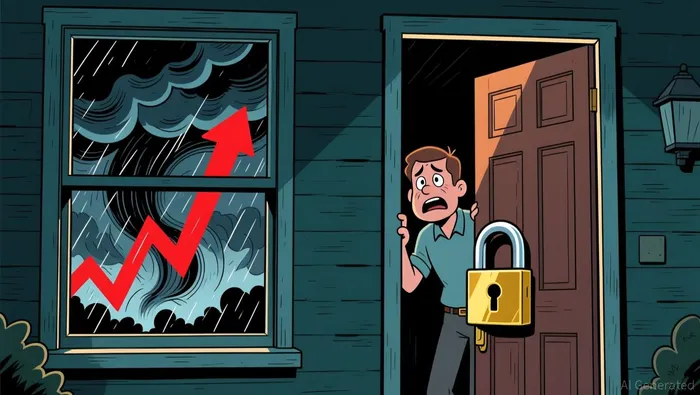
The impact of elevated mortgage rates on the housing market is profound, primarily through the "lock-in effect." Many current homeowners hold mortgages with rates significantly lower than the current average of roughly 6.3%. Consequently, they are unwilling to sell their homes and take on higher-cost financing, keeping the supply of existing homes tight despite weaker demand. This dynamic creates a market where homes take longer to sell and sellers may offer concessions, but without a broad nationwide price drop.
Housing market price growth has slowed significantly due to these high rates. The S&P CoreLogic Case-Shiller U.S. National Home Price Index gained only 0.9% year-over-year in January 2026, down from 4.2% a year earlier. Mortgage rates above 6% continue to pressure affordability, particularly for first-time buyers whose affordability readings remain well below the National Association of Realtors (NAR) baseline of 100. While new construction has added some supply, builder confidence remains subdued, with the NAHB/Wells Fargo Housing Market Index at 34 in April 2026.
Existing-home sales fell 3.6% in March, yet unsold inventory rose to 4.1 months of supply. This suggests a rebalancing toward buyers, but closings have not rebounded meaningfully. For investors, the key indicators are mortgage rate movements and labor-market strength, which support household income. Housing-related spending accounts for 15-18% of U.S. economic activity, making stability in this sector critical for broader consumer spending outlooks. Investors should monitor inventory levels and rate volatility closely, as these factors determine whether demand can absorb the growing supply in a shifting market.
Looking ahead, the housing sector remains sensitive to any shifts in Federal Reserve policy and geopolitical developments. While some cooling in the labor market may exert downward pressure on rates, upward risks from energy costs and potential tariff policies keep volatility high. Until inflation cools more clearly or economic conditions weaken significantly, rates are expected to remain choppy around current levels. Borrowers are advised to shop around, as lender rates vary significantly based on credit profiles and market volatility, and locking in a rate may provide necessary certainty in an unpredictable environment.