

The U.S. housing market is currently navigating a complex inflection point where elevated borrowing costs are fundamentally altering both supply and demand dynamics. After a brief period of optimism in late 2025, mortgage rates have reversed course, climbing back into the mid-6% range. This shift is largely attributed to persistent inflationary pressures and geopolitical instability, particularly energy price volatility linked to conflicts in the Middle East. For investors and borrowers alike, the immediate takeaway is that the era of rapidly declining rates is on pause, replaced by a volatile, range-bound environment that requires strategic patience.
What Are Today's Current Mortgage Rates?
As of late May 2026, the average 30-year fixed mortgage rate has reached 6.53%, its highest level in nine months, according to Freddie Mac's latest benchmark data. This represents a slight uptick from the 6.51% recorded the previous week, but it remains notably below the 6.89% peak observed a year ago. For those looking at shorter-term financing, the 15-year fixed rate is averaging around 5.98%, while adjustable-rate mortgages (ARMs) are hovering near 5.84%. Refinancing rates are tracking slightly higher than purchase rates, with the 30-year fixed refinance rate sitting at approximately 6.61% .
These rates are not determined in a vacuum. Mortgage pricing closely tracks the yield on the 10-year U.S. Treasury note, which has been buoyed by broader economic uncertainties and safe-haven demand. The Federal Reserve held its benchmark federal funds rate steady at 3.50%-3.75% in its April 2026 meeting, citing low job gains and elevated inflation. This pause in the easing cycle has contributed to the recent upward pressure on mortgage yields. While the Fed signaled readiness to cut rates late in 2025, the combination of sticky inflation and global energy shocks has forced policymakers to adopt a cautious, data-dependent stance.
Why Are Mortgage Rates Staying Above 6%?
The primary reason mortgage rates are remaining stubbornly above the 6% threshold is the structural widening of the spread between the 10-year Treasury yield and mortgage-backed securities (MBS). Historically, this spread hovered under 2 percentage points, but Federal Reserve quantitative tightening has compressed private market absorption of MBS, pushing the spread to roughly 2% or higher. Even if Treasury yields ease gradually, this widened spread acts as a floor, preventing mortgage rates from returning to the sub-4% levels seen in the early 2020s.
Geopolitical risks are playing an equally critical role. Conflicts in the Middle East have reignited inflation concerns through rising energy costs, acting as a counterweight to downward pressure from a softening labor market . Experts note that the market is increasingly driven by bond market pricing of these inflation risks rather than direct Federal Reserve decisions alone . Institutional forecasts from Deloitte and Goldman Sachs suggest the 10-year Treasury yield will settle between 3.9% and 4.5% over the next five years . When combined with the current risk spread, the consensus among major housing authorities is that 30-year fixed rates will hover around 6% through 2030 .
How The Lock-In Effect Is Reshaping The Market
The housing market is currently defined by a severe 'lock-in' effect that is suppressing the supply of existing homes. Millions of current homeowners secured mortgages with rates significantly lower than today's 6.53% benchmark. Selling their homes would mean trading a low-rate loan for a much higher one, which many are unwilling to do. This reluctance keeps the inventory of existing homes critically tight, forcing the market to rely heavily on new construction to meet demand .
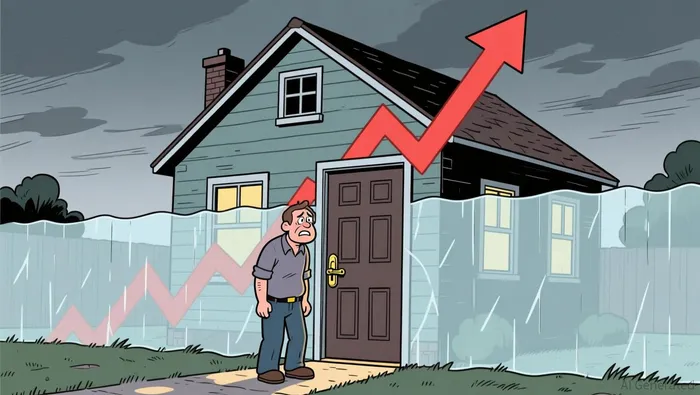
This dynamic is reshaping the competitive landscape for buyers. While existing-home sales fell 3.6% in March 2026, unsold inventory has risen to 4.1 months of supply, providing buyers with slightly more leverage than in previous years . New construction has helped fill the gap, with builders stepping in to capture demand from those priced out of the existing market. However, the S&P Case-Shiller U.S. National Home Price Index showed modest year-over-year gains of just 0.9% in early 2026, indicating a cooling national trend despite local disparities . For investors, the focus is shifting toward quality residential mortgage-backed bonds and monitoring whether the spring selling season allows demand to absorb the growing supply without causing a broad price decline .
How Lenders Are Adapting To The New Rate Environment
In this high-rate, high-cost environment, mortgage lenders are undergoing a technological transformation to streamline closings and protect their book of business. A critical bottleneck has emerged in the form of homeowners' insurance, where premiums have increased by 30% to 50% since 2019, and major carriers have exited entire states. Missing or delayed insurance coverage has become a primary reason for loan failures to close, particularly for refinancers and buyers in volatile markets .
To combat this, platforms like Covered Insurance have partnered with CRM providers like Insellerate to embed insurance procurement directly into the mortgage borrower lifecycle . This integration allows lenders to deliver personalized insurance quotes to borrowers at the purchase, refinance, and post-closing stages, automating communications and tracking completion status within existing workflows . This shift is not just about efficiency; it is a survival mechanism in a market where underwriting delays and insurance shortages can derail deals. By embedding these services, lenders are aiming to accelerate closings and improve retention in an increasingly difficult operating environment .
What To Watch For In The Coming Months
Looking ahead, market participants should focus on the Federal Reserve's next policy decisions and the trajectory of Treasury yields. The Fed is expected to hold rates steady in June, with future cuts dependent on clearer data regarding labor markets and inflation trends . Experts caution against waiting indefinitely for lower rates, noting that if rates fall, increased competition could drive home prices up, potentially offsetting the benefit of lower financing costs .
For borrowers, the high-rate environment has led to a 27% drop in conventional refinance applications, as rising Treasury yields have reversed recent gains . Refinancing is generally recommended only if borrowers can reduce their rate by at least one percentage point to offset closing costs, or for strategic reasons like term adjustment or debt consolidation . Investors should monitor pending home sales, which have risen for three consecutive months, suggesting latent demand is waiting for further clarity on rate directions before committing . The bottom line is that while a crash is unlikely due to safe lending practices and low inventory, a rapid return to sub-5% rates is not currently anticipated without significant economic cooling .
Key Takeaways for Investors
The housing market in mid-2026 is characterized by a tug-of-war between softening demand and constrained supply. Rates are stabilizing in the mid-6% range, driven by structural spreads and geopolitical inflation risks. Lenders are adapting through technology to mitigate closing failures, while buyers are gaining slight leverage as new construction fills the void left by the lock-in effect. For the foreseeable future, the market will remain range-bound, rewarding patience and strategic financial planning over aggressive speculation.