

The core of Musk's vision is a direct flow from AI-driven productivity to universal wealth. He predicts that in 10 to 20 years, work will be optional, likening it to a leisure activity. This future, he says, will be funded by universal high income generated by the automation of labor.
The scale of the promised revenue flow is immense. The robotics market alone, which Musk sees as central to this wealth engine, is projected to reach $3 trillion by 2050. This represents the total addressable market for the physical automation that Musk believes will underpin the new economy.
The proposed mechanism is straightforward: AI and robotics will generate so much productivity and revenue that a universal income becomes feasible. As Musk stated, there is only basically one way to make everyone wealthy, and that is AI and robotics. The flow from these technologies to widespread individual wealth is the engine's promised output.
The Tesla Catalyst: Production to Revenue Flow
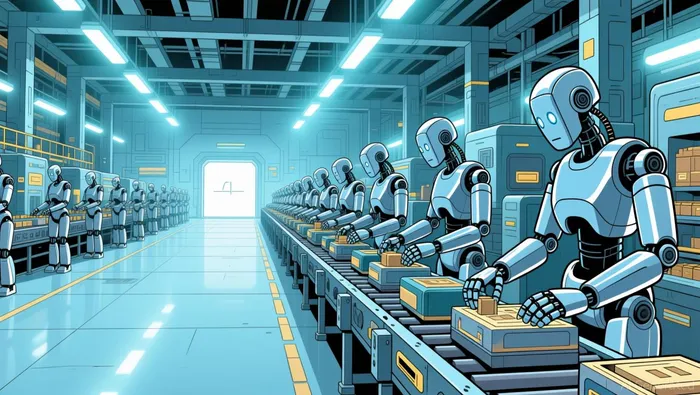
Tesla's pivot to robotics is a concrete capital flow in motion. The company plans to begin production of the Optimus robot by the end of 2026, targeting an annual capacity of one million units. This isn't a distant concept; it's a strategic shift that has already begun, with Tesla halting Model S and Model X production in California to repurpose those lines for Optimus manufacturing.
The capital allocation signal is clear. By shuttering its lower-volume vehicle lines, Tesla is redirecting physical assets and engineering focus toward its future identity. This move optimizes resource allocation, funneling investment into a new product line with a projected addressable market that could dwarf its current automotive business.
The market is betting on this transformation. Tesla's stock is up 20% over the past year, a move driven by future identity bets rather than current EV performance.
The recent 4% pop on the Optimus announcement shows the flow of investor capital is already pricing in this production ramp and the revenue diversification it promises.
The Flow Obstacles: Capital Concentration and Reality Check
The promised wealth flow faces a critical bottleneck: capital is hyper-concentrated. Last year, $211 billion in venture capital poured into AI, but 60% of that-$126 billion-flowed to the San Francisco Bay Area. This creates a massive funnel, where the majority of funding for the future wealth engine is already captured by a single, existing tech hub.
Critics argue this setup leads to wealth capture, not broad distribution. As one analysis notes, people who already have access to tangible capital and wealth will use AI and Robotics to run their businesses, potentially creating an "inaccessible community." The flow of capital from the many to the few could undermine the very promise of universal income.
Finally, the timeline for the physical automation that drives the wealth engine is under pressure. Experts deem the vision of millions of robots in the workforce within a decade optimistic, with significant technical and implementation hurdles remaining. This creates a gap between the promised revenue flow and the reality of production scaling.