

NASA is reframing Artemis as infrastructure, not a one-off landing
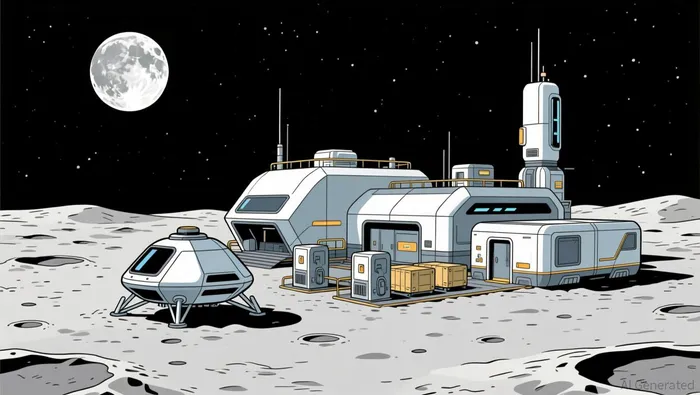
The market is still treating Artemis mainly as a headline-grabbing moon landing program. The bigger shift is that NASA is rebuilding it as an infrastructure program. The agency has committed roughly US$93 billion to Artemis through 2025 to pursue a permanent lunar base. That makes this less like a sprint to plant a flag and more like a capital-intensive buildout.
For investors, that changes the lens. The key question is not just who lands first, but which companies control the repeatable launch, landing, and logistics layers that a sustained lunar presence would require.
Cadence is becoming the real signal
Artemis II has now completed its lunar flyby, clearing the nearest major milestone at Artemis II splashdown. NASA is now pushing toward a faster schedule, including crewed launches every six to nine months. If that rhythm holds, the program starts to look less like a series of symbolic missions and more like an operating cadence problem.
That is where the investment lens shifts. In a higher-cadence program, value moves downstream-from the spectacle of a single touchdown to the repeatability of transport, landing, and surface logistics.
Why the infrastructure layer matters more than the landing headline
Administrator Isaacman has said Artemis II is "just the beginning" and that success or failure will be "measured in months, not years". He has also described a phased approach that builds capability landing by landing. That makes the infrastructure layer more important than the landing narrative itself.
In a base-building framework, the likely winners are the companies that supply the essential launch, landing, and sustainment pieces of the stack. That is why SpaceX is getting attention: not as a moon-landing novelty, but as a company already embedded in the mission-critical landing layer.
NASA's architecture is shifting away from Gateway and toward the surface
Gateway is no longer the centerpiece
NASA is no longer treating a space station orbiting the moon as the core of Artemis. Instead, resources are being redirected from the Lunar Gateway toward surface infrastructure and a more durable lunar presence.
That matters because the architecture shapes the value pool. An orbit-first design concentrates upside in a narrower set of integrators and deep-space habitat suppliers. A surface-first design widens it to include landers, cargo systems, power, thermal management, and repeatable return logistics.
The new test is repeatability, not symbolism
NASA is also changing how it validates the program. Under the revised plan, Artemis III becomes an Earth-orbit test flight instead of the first lunar landing attempt, pushing the surface landing to Artemis IV in early 2028. The point is less about planting a flag and more about de-risking the landing stack before committing to the lunar surface.
The bigger signal is still cadence. NASA now envisions crewed launches every six to nine months. If the program starts moving in that direction, the bottleneck becomes less about whether a landing is possible and more about whether landings can be repeated safely and on schedule.
Why SpaceX looks well placed in the new architecture
NASA is working with SpaceX and Blue Origin on landing systems for future lunar missions, with agency experts embedded across the supply chain to help prepare those efforts. In a surface-first Artemis, that positioning matters.
That does not guarantee success. But it does suggest that the companies already involved in the landing layer may be better placed than competitors to benefit if Artemis becomes a repeatable program rather than a sequence of one-off missions.
SpaceX's edge is real, but landing reliability is still the test
The debate is not whether SpaceX has momentum. It does. The harder question is whether that momentum can carry through the jump from launch cadence to lunar landing reliability.
Why the bull case remains credible
SpaceX already has a direct path into the mission-critical landing layer. NASA awarded its Human Landing System contract at roughly about $2.9 billion, and it is being developed under NASA's Human Landing System (HLS) contract through ongoing work at SpaceX Starbase. That gives the company hands-on exposure to interfaces, layouts, and iteration loops that matter in a development program.
NASA has also said it is working with SpaceX and Blue Origin on landing systems for future lunar missions. Bulls read that as a sign that SpaceX is not just pitching a vision; it is already being asked to help build a core part of the Artemis stack.
Why schedule risk still matters
The bear case is about timing, not intent. NASA's current target is to land astronauts on the lunar south pole by early 2028, while management has spoken about crewed launches every six to nine months. That is a demanding arc for a program still waiting on Starship's maturation.
Skeptics also argue that the lander effort has faced criticism for unnecessary complexity. If the 2028 landing slips again, SpaceX may still realize contract revenue, but the stock may stop trading as a near-term paradigm-shift story and start trading as a schedule-risk story.
What would confirm the thesis from here
The current setup looks less like a ceremonial-touchdown story and more like a test of whether Artemis is becoming a repeatable surface stack. The clearest signals are the schedule reshuffle: the first landing is now planned for Artemis IV in early 2028, an Earth-orbit test flight has been added, and effort is shifting from Lunar Gateway to a permanent human presence on the lunar surface.
Key milestones to watch
- The test loop matters more than the headline. NASA plans to test new lunar landers from private companies in Earth's orbit. If that becomes a real iteration path, the market may start rewarding repeatable descent capability more than a single-mission narrative.
- Landing systems are being treated as a core layer. NASA is working with SpaceX and Blue Origin on landing systems for future lunar missions, which suggests the commercial lander layer is becoming more important to the program.
- Cadence changes the valuation model. The push toward crewed launches every six to nine months points to a higher-frequency architecture. If that rhythm holds, sustained reliability may matter more than selection prestige.
What could break the thesis
- If Artemis IV in early 2028 slips again without clearer evidence that the new test architecture is reducing risk, investors may revert to trading this as a timeline story.
- If concerns about unnecessary complexity keep outweighing confidence in execution, SpaceX may remain framed as a high-beta moon story rather than an infrastructure-layer winner.
The practical lens is simple: if NASA keeps acting as though success or failure will be measured in months, not years, then waiting too long risks missing the shift from symbolic missions to a repeatable lunar operating stack.