

U.S. stocks climbed in the first hour of trading Tuesday as investors cautiously embraced signs of renewed U.S.-Iran diplomacy while positioning for a pivotal earnings week in software and artificial intelligence. The Dow Jones Industrial Average rose 102.01 points, or 0.20%, to 50,681.17, while the S&P 500 gained 38.66 points, or 0.52%, to 7,512.13. The Nasdaq Composite led gains, rising 209.86 points, or 0.80%, to 26,553.8.
Markets opened higher after optimism surrounding a potential Iran ceasefire and reopening of the Strait of Hormuz helped steady investor sentiment following weeks of geopolitical turmoil. Yahoo Finance reported earlier that futures rallied on hopes of easing tensions, though gains moderated after overnight U.S. strikes in southern Iran reignited concerns about the durability of any agreement.
Oil prices remained volatile despite the equity rally. July crude futures were down $3.70, or 3.83%, to $92.90 after earlier trading near session highs. Traders appeared to be pricing in the possibility that disruptions to Middle East energy flows could ease if negotiations progress, even as reports of additional military exchanges kept risk premiums elevated. The CBOE Volatility Index, or VIX, edged up 1.15% to 16.78, signaling investors were still hedging against geopolitical uncertainty.
Technology shares once again drove broader market gains as investors rotated back into AI-linked software names ahead of major earnings reports from Salesforce and Snowflake.
In a new research note, Wedbush analyst Dan Ives described this week as a critical “prove it” moment for enterprise software companies battling what the firm called the “AI Ghost Narrative” weighing on the sector. Wedbush argued Salesforce must demonstrate that its Agentforce platform is moving from pilot programs to monetized enterprise adoption, while Snowflake is positioned to benefit from growing demand for governed enterprise AI data infrastructure.
The firm maintained outperform ratings on both companies and said investors are increasingly focused on whether AI monetization can justify elevated technology valuations after months of skepticism. Wedbush added that software firms tied to enterprise data orchestration may ultimately emerge as long-term winners as companies integrate proprietary data into AI systems.
Meanwhile, investors also digested new commentary from Apollo Global Management Chief Economist Torsten Slok, who highlighted a structural shift underway in U.S. markets.
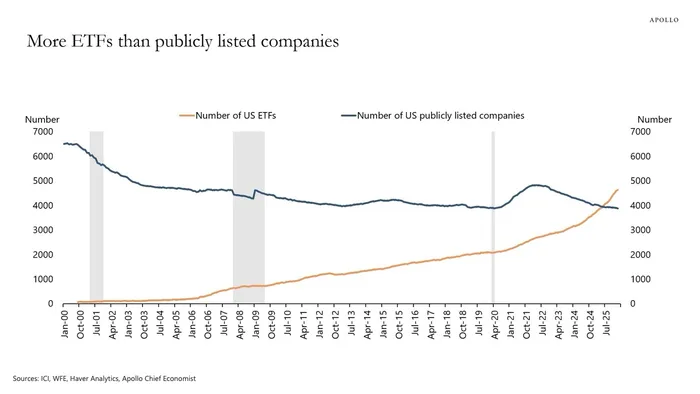
There are now more exchange-traded funds than publicly listed companies. The Apollo chart showed the number of publicly traded U.S. companies continuing to shrink while ETF launches accelerate, underscoring the growing dominance of passive investing and thematic trading vehicles across Wall Street.
The shift has reinforced concentration in large-cap technology names, helping fuel the Nasdaq’s continued outperformance during the AI boom while also raising questions about liquidity and market structure during periods of volatility.
Investors later this week will closely watch Salesforce, Snowflake, Dell, Marvell Technology, and key inflation-sensitive developments tied to the Iran War as markets assess whether the recent AI-driven rally can continue alongside elevated geopolitical risks.