

The investment case for Nel hinges on a single, critical question: can it convert its record order backlog into revenue fast enough to navigate the steep adoption curve of green hydrogen? The numbers reveal a stark disconnect. At the end of the first quarter, the company's order backlog stood at NOK 1,113 million. That figure is the test for future sales conversion. Yet, the near-term path is fraught with headwinds. Order intake plunged 73% year-over-year to NOK 85 million in Q1, signaling a severe slowdown in new business generation.
This pattern of disconnect is not new. It mirrors a troubling historical trend. In the fourth quarter of 2025, Nel saw a massive 364% surge in order intake, yet customer revenues for that same period contracted by 20%. The year-end backlog was then over NOK 1.3 billion, but the company still posted a net loss. The core challenge is clear: the company is building a backlog, but the conversion to revenue is lagging, creating a gap that pressures cash flow and profitability.
This S-curve friction is the central vulnerability. For a company betting on exponential growth in hydrogen infrastructure, the ability to convert orders into sales is the fundamental metric. The recent sharp drop in new order intake suggests the market is cooling, while the historical lag in revenue recognition from past surges shows the operational friction in scaling production and delivery. Until Nel demonstrates a consistent ability to close this gap, the stock will remain caught between a promising backlog and a fragile revenue stream.
The Paradigm Shift: Next Generation Pressurized Alkaline Platform
The technological catalyst that could finally close the S-curve gap is now moving from prototype to factory floor. After a seven-year development program, Nel's Board has taken the final investment decision to begin construction on up to 1 GW of production capacity for its Next Generation Pressurized Alkaline platform at the Herøya facility in Norway. This is the infrastructure layer the hydrogen economy needs-a shift from incremental improvement to a potential paradigm change in cost structure.
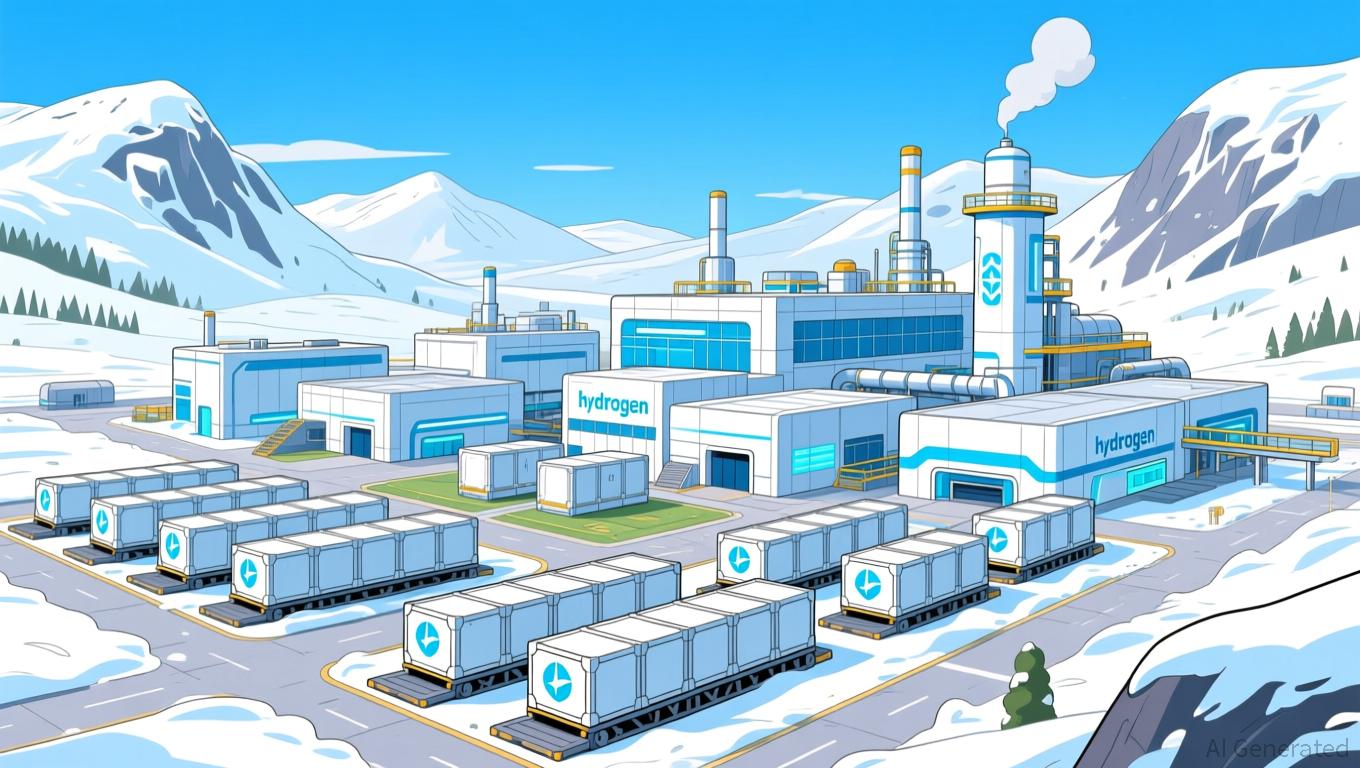
The platform's design aims for a breakthrough in the levelized cost of hydrogen (LCOH). By dramatically reducing system capital expenditure (CAPEX) and improving energy efficiency, it targets the fundamental economic barrier to widespread adoption. The company expects this leap to unlock business cases that were previously not viable without significant subsidies. More than just a product upgrade, it's a re-engineering of the delivery model. The system uses a fully modular, skid-based design where every unit is pre-fabricated and factory-tested, simplifying logistics and installation. It's designed to operate reliably outdoors, eliminating the need for costly dedicated buildings.
Commercial launch is set for the first half of 2026, with scale delivery targeted for 2027. This timeline is critical. It aligns with the next phase of the hydrogen adoption S-curve, where cost reductions must accelerate to drive exponential growth. The project is supported by a significant EU Innovation Fund grant of up to EUR 135 million, which covers up to 60% of relevant CAPEX and operational costs. This funding not only de-risks the initial investment but also validates the technology's potential on a European scale.
For Nel, this represents a potential inflection point. Success here could transform its revenue trajectory from one tied to a lagging backlog to one driven by a scalable, lower-cost product. The company is already looking at the book value of its two currently idling atmospheric alkaline production lines, signaling a clear pivot toward this next-generation infrastructure. If the platform delivers on its promises, it could finally provide the exponential cost reduction needed to move the entire industry up the adoption curve.
Financial Health and the Path to Exponential Growth
The investment thesis now hinges on a financial test of endurance. As Nel builds the next-generation platform, it must navigate a period of significant operational pressure. The first quarter results show a company under strain but showing signs of control. The company posted a net loss of NOK 144 million, with revenue dipping 4.5% year-over-year. Yet, there is a critical signal: the operating loss narrowed from NOK 187 million to NOK 150 million. This suggests management is executing cost discipline, a necessary step to conserve cash during the heavy CAPEX phase ahead.
The headwinds are clear and structural. Management cited delays in subsidy programs, higher interest rates, and rising costs as the primary factors dampening near-term order intake, which plunged 73% year-over-year. This isn't a demand problem; it's a timing and financing friction. The market for green hydrogen is still forming, and these policy and capital cost barriers are slowing the conversion of interest into firm orders. For a company betting on exponential growth, this creates a classic "valley of death" between current cash burn and the future revenue inflection from the new platform.
Yet Nel is not without a runway. The company explicitly states it is well-positioned with a strong cash balance and strategic partnerships to capitalize on future demand. This positioning is its lifeline. The strong cash position provides the operational buffer needed to fund the NOK 1 billion investment in the new production lines without immediate distress. The partnerships offer a potential anchor for future sales, helping to de-risk the commercial ramp-up. The path forward is a patient one: survive the current headwinds, execute the platform build, and then capture the surge in demand as subsidies unlock and costs fall.
The bottom line is that Nel's financial health is a function of its transition strategy. The narrowing loss is a positive sign of control, but the deep net loss and collapsing order intake highlight the fragility of the current model. The company's ability to reach the next growth inflection depends entirely on its cash balance lasting until the new platform begins scaling in 2027. If it does, the exponential cost reduction could finally propel the entire industry-and Nel's stock-up the adoption curve. If not, the valley may prove too wide.
Catalysts, Risks, and What to Watch
The final stretch before the hydrogen S-curve takes off is now in motion. The investment thesis hinges on a handful of forward-looking events that will validate or challenge the pivot from development to commercial scale. The primary catalyst is the commercial launch of the Next Generation Pressurized Alkaline system in the first half of 2026. Success here is not just about a product release; it's about proving the promised leap in economics. The first deliveries will be the real-world test of the platform's modular design and outdoor reliability, and they must begin to flow before the end of the year to signal the start of exponential adoption.
Yet the path is fraught with execution risks. The company's own Q1 report highlighted the friction points: delays in subsidy programs, higher interest rates, and rising costs are the primary headwinds. Prolonged subsidy delays could stall the very projects the new platform is meant to make viable. Continued high interest rates will pressure the capital intensity required to build the new 1 GW production capacity, which is estimated at about NOK 300 million before grants. The company's ability to manage this CAPEX while navigating a weak order book is the ultimate test of its financial discipline.
For investors, the critical metric to watch is a clear reversal in the order intake trend. The collapse to NOK 85 million in Q1 is a red flag for near-term demand. The setup for the second half of 2026 must show a sustained uptick, signaling that the new platform's cost advantage is resonating with customers and that policy headwinds are easing. This would be the first tangible sign of the exponential growth the technology promises.
The bottom line is that Nel is now in a race against time and friction. The company must successfully launch its next-generation infrastructure while its current model burns cash. The coming months will determine if the valley of death is survivable or if the S-curve will finally begin its steep ascent.