

Why the size of NeuroOne's restatement matters less than the timing
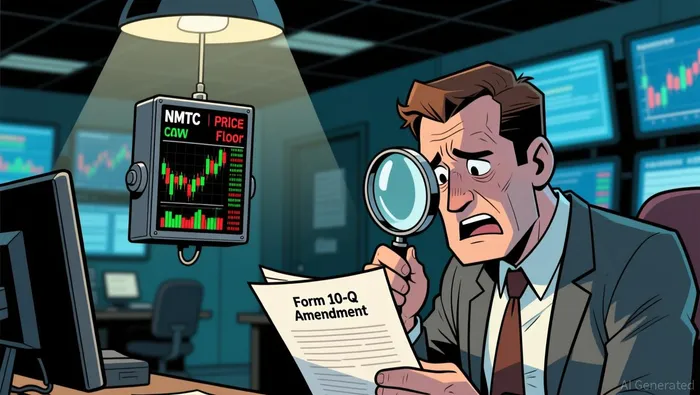
At $3.90 as of May 21, 2026, the correction does not look balance-destroying. But for a stock trading close to its 52-week low, investors care less about the dollar amount on paper and more about what the correction says about management's next disclosure. That is why the timing matters more than the headline figure. Management found the problem during a post-release review process after the Form 10-Q filed on May 12, 2026 was already public, and the company only concluded last week that it would restate the quarter.
A one-time error or an early warning?
Bulls can focus on the mechanics. NeuroOne says a customer order modification at quarter-end led to a revenue overstatement of approximately $0.5 million and a net loss understatement of approximately $0.3 million, with no prior periods impacted. If that is all it is, the issue should fade quickly.
Bears focus on the sequence. If this were a simple booking mistake, it is reasonable to ask why it surfaced only after the filing was public. That view is not proven yet. But in a low-priced stock like this, one weak answer can make investors question more than just one quarter.
Why the reverse split and low share price raise the stakes
The real issue is not just the correction itself. It is what kind of stock NeuroOne has become after the one-for-six reverse split and a trading range anchored near $3.90 as of May 21, 2026. In that setup, the market is less likely to give management the benefit of the doubt. When a stock is priced this low, investors often lean harder on the story; when that story gets questioned, confidence can shift quickly toward cash, guidance, and disclosure quality.
The bull case still has real operating points
Bulls are not starting from nowhere. NeuroOne still has exclusive partnerships with Zimmer Biomet and the Mayo Clinic, plus three FDA 510(k) cleared products and a platform narrative around neurological disorders. That gives investors a reason to keep the upside case alive.
Management is also arguing that operations are intact. CEO Dave Rosa said the correction does not change our revenue projections and that the company still expects product revenue for fiscal 2026 of at least $10.5 million. He also said the restatement does not affect the company's cash position or its continued business activities or growth plans. If investors accept that, the restatement may prove to be more of a credibility bump than a fundamental break.
Why trust matters more in a low-priced stock
The bear case is not really about the $0.5 million itself. It is about what happens when investors stop valuing future possibility and start stress-testing the numbers behind it. In a small, low-priced name, that shift can happen fast.
A reverse split can also change the make-up of the investor base. After the one-for-six reverse split, more of the ownership may be tactical or event-driven rather than long-duration capital. That does not guarantee a worse outcome, but it can make trust more important and more fragile.
What to watch in the amendment and ownership signals
The next move is a filings trade, not a headlines trade.
Start with the amendment
The first real test is the company's promise to file an amendment to the Form 10-Q in the next few weeks. Investors should read that filing carefully, not just the press release. The key questions are straightforward: does the amendment keep the issue contained to the same quarter, and does it still match management's claim that no prior periods were impacted? If the corrected 10-Q stays narrow, the bear case gets weaker. If the language broadens, the stock's story can get repriced quickly.
Also watch for any 8-K updates before the amendment lands. In a stock this small, interim disclosures can matter a lot because they may show whether the issue was isolated or part of a broader problem.
Ownership is still an important signal
Headline momentum means less if investors cannot see alignment from inside the company. The cleaner signal is genuine insider buying, or at least steady insider ownership, while the restatement debate is still live.
If the stock rallies before the amendment but insiders are not adding and may be reducing exposure, that is worth treating as a warning sign. In a low-liquidity name, a pre-filing rally without insider alignment or clearer institutional support can reverse quickly.
What would soften the bearish view?
The bearish case weakens if a few things happen together:
- the amendment is clean and contained to the quarter already disclosed,
- management continues to say operations, cash, and growth plans are unchanged, and
- insiders hold firm or add to their positions while the issue is still being debated.
If those signals stay weak, this is likely to remain more than an accounting footnote. If they improve, the market may be willing to treat it as a contained correction.