

Nike at 29x earnings still assumes more recovery than the numbers show
Nike may look cheaper than it did a year ago, but cheaper is not the same as a bargain. The stock now trades at about 29.58x to 29.0x earnings, down from roughly 40x earlier this year, yet that still prices in a recovery that has not fully shown up in the financials. The last full-year print still showed revenue down 9% on a currency-neutral basis, and management warned earlier this month of slower-than-expected progress on its turnaround. A lower multiple on a shrinking business is only compelling if the earnings base is about to turn. So far, investors are still being asked to pay for hope rather than realized improvement.
June 25 is the next real test
That makes June 25, after the market closes more important than a routine calendar event. Bulls can argue the stock has already absorbed much of the bad news and that even modest improvement could trigger a rerating. Bears will counter that 29x earnings is still rich for a company dealing with softer traffic, weaker sportswear demand, excess inventory, and a difficult China backdrop. On valuation, I lean to the bears. If June confirms a real recovery, today's price may look early. If it does not, Nike is not a value stock; it is still a turnaround story carrying too much expectation.
Nike's moat is still visible, but it is not compounding yet
Nike still has the assets of a durable brand: scale, equity, and a business model that continues to generate $3.27 billion of free cash flow even during a rough patch. That matters. A broken business often stops producing cash altogether. But a visible moat is not the same as a compounding one. Right now, Nike is still spending energy just to stabilize after a 10% reported revenue decline for fiscal 2025, with Nike Direct down 14% and fourth-quarter gross margin down 440 basis points.
The stabilization case has some support
The strongest bull argument is not that Nike is growing well today. It is that the brand may be durable enough to rebound faster than expected. That view has some early support: first-quarter fiscal 2026 revenue came in at $11.72 billion, ahead of expectations for roughly $11 billion, and EPS reached $0.49 versus $0.29 expected. The next quarter then showed $11.28 billion in revenue and 0.1% year-over-year growth. Skeptics will say that is not a turnaround. Bulls will say it is the first sign of stabilization after a steep slide. That case deserves respect, because brands with Nike's reach can regain momentum faster than expected once product cycles and execution improve.
China is still the pressure point that drags the whole system
The problem is that the weakness is not isolated. The direct-channel decline suggests customer engagement is not as sticky as it once was, while the margin pressure shows Nike is still clearing product and rebuilding momentum rather than fully harvesting pricing power. More important, China remains a major drag. Greater China is roughly 15% of revenue, and Nike is facing six straight quarters of decline there, including a 20% drop in footwear. Management has effectively acknowledged that it needs to reset its approach in the market.
That matters because a global moat compounds more easily when the biggest pressure point is no longer pulling on the entire business. In China, the problems look both structural and operational: domestic rivals are pressing harder, consumer conditions are softer, and insiders have pointed to top-down decision-making that limits local responsiveness. That does not mean the moat is gone. It means the moat is no longer widening on autopilot.
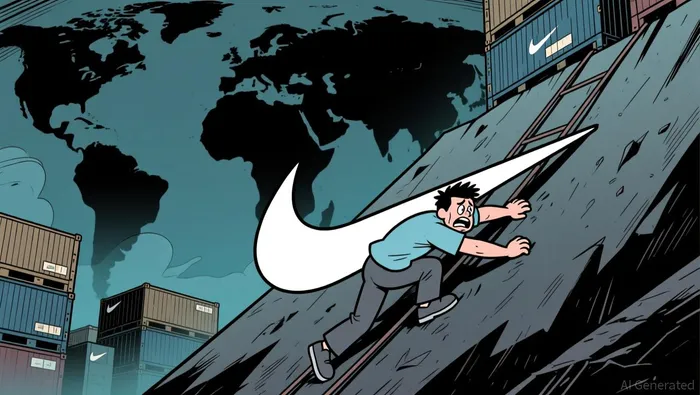
What would create a real margin of safety
A real margin of safety here would come from either a lower stock price or proof that Nike is moving from repair mode back toward durable compounding. The brand is still capable of producing $3.27 billion of free cash flow, which matters. But at roughly 29.0x earnings, Nike is being valued more like a recovery story than a distressed asset. That is an important distinction. A premium multiple fits a business whose moat is widening, not one still recovering from a 10% reported full-year revenue decline.
What to watch on the next report
Nike reports June 25, after the market closes, and the key question is whether $11.28 billion in revenue and 0.1% revenue growth were a pause button or the start of something better. The more constructive read would require evidence across three areas:
- Demand: a clearer move from stabilization to sustained growth.
- Margins: less pressure from promotions, inventory, and cost inflation.
- China: at least a pause in the sales slide after six straight quarterly sales declines in China.
What keeps the bear case intact
The downside triggers are straightforward: higher trade-related costs squeeze margins, while softer store traffic and weaker sportswear sales continue in parts of Europe, the Middle East and Africa. If those pressures persist, more compression is possible and the current multiple becomes harder to justify.
My invalidation signal is simple: if the next few quarters deliver clearer growth, healthier margins, and firmer guidance, this thesis is wrong. Until then, the more prudent stance is patience-wait for proof, not promise.