

The Nikkei 225 closed at 58,753 on Thursday, marking its highest-ever finish and extending the record-breaking streak to a second consecutive session. The index briefly surged past 59,000 intraday before pulling back on profit-taking, but still secured a 0.29 percent gain.
The rally traced back to strength in New York the night before, which set a bullish tone for Asian markets. Software stocks drove the advance, outpacing broader market gains. This follows Wednesday's 2.2 percent jump, when the index first broke above 58,000.
BOJ Hold and the Rate Expectation Trade
The Bank of Japan held rates at 0.75% in an 8-1 decision, with Hajime Takata dissenting in favor of a 1% hike eight of nine members voting. That lone dissenter's view carries weight-it signals at least one policymaker sees inflation risks as urgent enough to act now, not later.
But the market heard something else entirely.
The BOJ's statement acknowledged inflation risks are "tilted to the upside" due to the Iran conflict and rising crude oil prices. Yet the decision to hold-coming after the Fed maintained rates-reinforces a cautious narrative. Analysts at State Street called it a "very important dovish pivot." The message: normalization is underway, but the BOJ will proceed deliberately, waiting for evidence that inflation is durable and domestically driven.
That distinction matters for the rate expectation trade.
When the BOJ holds while signaling future hikes, the market's job is to price in when those hikes arrive. The delay pushes expectations later-and a later hike means a weaker yen in the interim. That's the mechanism driving equity flows: investors borrow in yen, invest in yen-denominated assets, and ride the carry while the BOJ stays on hold.
Adding to the dovish pressure is reported political reluctance. Prime Minister Sanae Takaichi has reportedly conveyed to Governor Ueda her hesitation about pushing for rate hikes amid the geopolitical turmoil, emphasizing economic stability over tightening. That kind of political headwind makes aggressive BOJ action even less likely in the near term.
Former BOJ director Masaaki Kaizuka argued the bank should have acted now. He pointed to newly released data showing a positive output gap since 2022 and price growth around the 2% target as groundwork for a hike. His minority view underscores the tension: some inside the system see the case for action, while the majority opted for caution-and political pressure reinforces that caution.
The market's interpretation is clear: if the BOJ is this hesitant now, with inflation already above target and geopolitical headwinds mounting, future hikes will come slower than anticipated. That keeps the yen weak and the equity rally funded.
The Oil Price Complication and Inflation Risk
The BOJ's own statement just admitted it: inflation risks are now "tilted to the upside" due to the Iran war eight of nine members voting. That single sentence introduces a critical wildcard into the current rally narrative.
Japan imports roughly 95% of its energy from the Middle East the country gets about 95% of its energy imports from the Middle East. Any sustained disruption to crude flows hits Japan directly and immediately. The BOJ acknowledged this explicitly, noting the conflict will exert "upward pressure, affected by the recent rise in crude oil prices" the conflict in the Middle East will exert upward pressure.
Here's the dual threat this creates.
First, higher crude prices mean higher input costs for Japanese manufacturers across the board-transportation, chemicals, plastics, everything energy-intensive. That pressures margins at exactly the moment the equity rally has gotten ahead of itself.
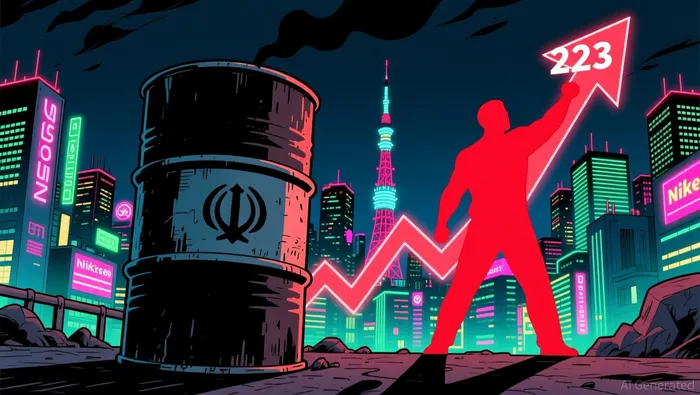
Second, and more dangerous for the current trade, is the potential for renewed inflation forcing the BOJ's hand sooner than expected. The central bank's own projection has core inflation temporarily dipping below 2% before facing renewed upward pressure from crude CPI inflation is expected to dip below 2% temporarily before facing renewed upward pressure. That "before" is the key word. The BOJ is watching this closely and has flagged it as a risk that could accelerate tightening.
Prime Minister Sanae Takaichi has pledged to keep retail gasoline prices "in check" at around 170 yen per liter Takaichi pledged to keep retail gasoline prices in check. This is political theater, not structural solution. She can subsidize prices temporarily, but she cannot control global crude markets or Japan's fundamental import dependence.
Market's current setup-borrowing in yen to buy equities-relies on the BOJ staying dovish. But if oil prices stay elevated and inflation re-accelerates, the BOJ's "deliberate" pace could speed up. That would weaken the yen carry trade at precisely the wrong time.
For now, the rally treats the BOJ hold as pure fuel. But the oil complication is a real risk that could flip the narrative within weeks, not months.
Catalysts and Risk Scenarios
The Nikkei's record run faces a critical 6-8 week window where specific events will determine whether the rally sustains or reverses. Four catalysts demand close monitoring.
April 28 BOJ Policy Announcement
Governor Ueda's next scheduled public speaking engagement comes Monday, and BOJ watchers are waiting to see if he will give a clear signal on the likely outcome of the rate decision ahead of the April 28 policy announcement as he did in December. That December signal preceded a rate increase. If Ueda provides similar clarity now-especially signaling a hike is coming-the market's carry trade positioning could unwind rapidly. Investors borrowing in yen to buy equities would face immediate pressure if the rate path becomes clearer and later hikes appear more certain.
Yen at ¥160: The Carry Trade Threshold
The yen breaking above ¥160 to the dollar already signals maximum carry trade enthusiasm Tokyo stocks declined to a 2026 low after yen broke ¥160. That move triggered a sharp reversal-stocks fell to a five-month low. The market treated that yen strength as a warning sign. If the yen retests or breaks above ¥160 again, it will test whether the carry trade has gone too far. A reversal from that level could trigger aggressive profit-taking, especially if it coincides with any BOJ hawkish surprise.
Oil Prices: The Elevated Baseline
News of a temporary ceasefire in the Iran war triggered a drop in crude and sent a wave of relief through global financial markets despite the fall in crude. The market's current setup assumes oil stays elevated but stable. Any fresh supply shock-another escalation, a strait closure, direct Iran-Israel confrontation-would reset that assumption immediately. The BOJ already acknowledged inflation risks are "tilted to the upside" due to crude prices. A sustained oil spike forces the bank to reconsider its hold stance sooner than expected, potentially accelerating the very tightening the carry trade is betting against.
Trump Risk: The Wildcard
Former BOJ director Masaaki Kaizuka identified the biggest risk to the current setup: "If Trump does something unwise the day before the policy meeting, everything could get blown away" referring to the possibility of a rate hike being scrapped. He called it the economy's biggest risk factor. This refers to potential trade disruptions or tariff impacts that could abruptly change the global outlook. For a rally built on stable assumptions-dovish BOJ, weak yen, steady oil-sudden trade policy shifts create immediate uncertainty. The BOJ probably wouldn't write it explicitly in the Outlook Report, but the 'Trump risk' is probably the economy's biggest risk factor.
The Setup
The rally's foundation is fragile because it depends on specific conditions holding: BOJ stays dovish, yen stays weak, oil stays stable, no external shocks. Any one of these four catalysts flipping against the trade creates immediate pressure. The 6-8 week window through late April and May will test whether the market's positioning is justified-or whether it has gotten ahead of the fundamental story.