

Nokia's Indonesia deal is about more than radio hardware
Nokia has won a three-year deal to expand 4G and lay the 5G foundation across 1.4 million square kilometers in Indonesia, with ReefShark-powered AirScale deployment starting this month. The scope is broad, and it is landing inside a newly merged operator with roughly 110 million subscribers. That gives Nokia a large, live network to work with as Indosat consolidates and prepares for the next phase of service upgrades.
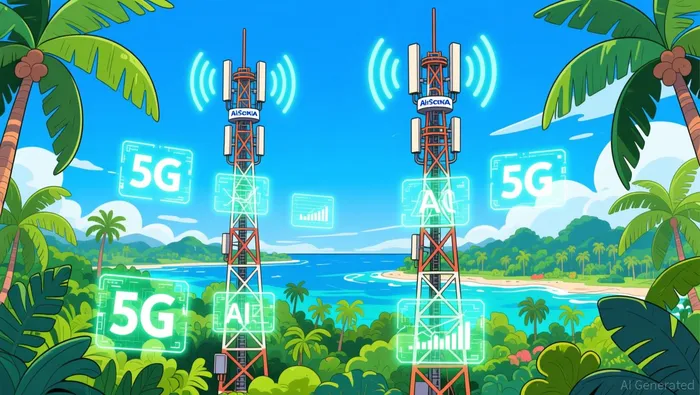
The more interesting question is what sits on top of the hardware. Indosat has already shown an AI-integrated 5G network with Nokia and NVIDIA, where AI software actively optimized radio resources in real time. Indosat also plans to deploy four AI-RAN clusters across Indonesia, which would move the network beyond simple connectivity and into AI-driven operations and services.
Nokia is also supplying Energy Efficiency software as part of its Autonomous Networks portfolio. The solution can automatically shut idle or unused radio equipment during low-demand periods, and it is offered in a SaaS model. That matters because software-led efficiency can broaden Nokia's revenue mix beyond one-time equipment sales.
This is still, at its core, a network expansion win. But the setup matters because the network is being built to be software-upgraded to 5G, while AI-RAN moves from demonstration toward deployment.
AI-RAN shifts intelligence closer to the radio edge
What changed in the Indosat-Nokia-NVIDIA demo
In Indosat's AI-integrated 5G demo with Nokia and NVIDIA, AI software actively optimized radio resources while carrying voice, video, and data in real time. Crucially, the AI computing was integrated directly into the RAN instead of being routed back to a centralized cloud. That design is meant to reduce latency, improve spectrum efficiency, and make the network more responsive to changing traffic conditions.
Indosat is now taking that architecture from proof-of-concept toward deployment, with plans for four AI-RAN clusters across Indonesia. For Nokia, that means Indonesia is not only a coverage expansion project; it is also a live environment where AI-RAN concepts can be tested at scale.
Software can create additional revenue touchpoints
The hardware build is the first layer. Nokia said Indosat will be able to quickly and easily upgrade to 5G services remotely with a software update or with a plug-in card. That matters because it suggests the installed base can be enhanced through software, rather than relying only on additional site construction.
Nokia already has a working example of that service model. Through Nokia Energy Efficiency, Indosat can automatically reduce energy use by shutting down idle radio equipment during low-demand periods, with the solution available in a SaaS model. For operators, that turns optimization into a service rather than a one-off hardware purchase.
What to watch during the 2025-to-2027 partnership
The current agreement is the two-year extension running from 2025 to 2027. Over that period, the clearest signals will be:
- whether 4G expansion translates into smooth 5G upgrades across the 1.4 million square kilometer footprint
- whether Indosat's four planned AI-RAN clusters move from planning into operational use
- whether energy-efficiency and other software services expand beyond the current deployment
If those steps happen, the deal will look less like a routine equipment win and more like an early platform for AI-driven network services.