

May's 0.2% CPI eased the headline, but underlying inflation stayed firm
The market is treating May CPI up 0.2% m/m and annual CPI at 3.1% as a green light for rate-cut pricing. That is the straightforward trade. The harder question is whether Norges Bank sees the same clarity. With CPI-ATE at 3.4% in May, still above headline inflation, the underlying price setup still looks sticky enough to temper policy relief.
Bulls can point to the obvious cooling: headline inflation fell from 3.4% in April to 3.1% in May. Bears, though, will focus on the fuller picture. CPI-ATE remained higher than headline at 3.4%, and the monthly underlying move was still 0.4%. That is not yet the kind of print that clearly clears the path for easing.
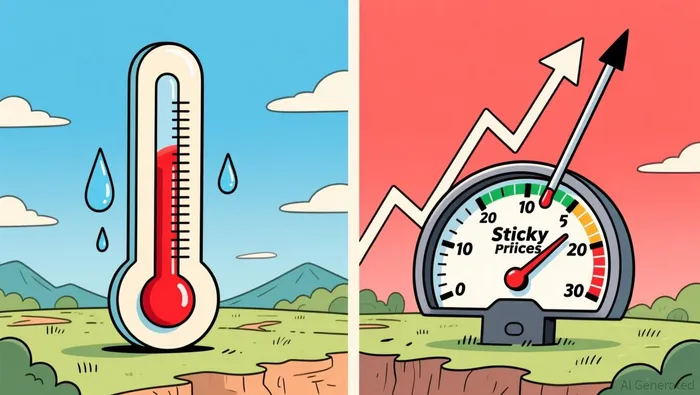
For NOK, the key issue is not whether inflation looks tame in isolation. It is whether Norges Bank feels compelled to delay easing because underlying pressure is still firm. If that happens, the policy differential can stay more supportive than a cut trade based mainly on headline comfort would suggest.
Norway's underlying inflation gauges did not confirm a clean disinflation signal
Headline improved, but the policy message stayed mixed
The market is reacting to the right fact, just not the full one. Norway's headline CPI did cool, with CPI up 3.1 per cent last 12 months in May after 3.4 per cent last 12 months in April. That is enough for traders to start pricing relief. But a central bank is more likely to look beyond the noisiest line and ask whether underlying inflation is easing in a durable way.
That is where the definition of underlying inflation matters. CPI adjusted for tax changes and excluding energy products was designed to strip out transient effects and show the cleaner trend in household price pressure. In May, that gauge still stood at 3.4%, while the month-to-month increase was 0.4%. The headline got easier, but the underlying pace did not break lower in any decisive fashion.
April's pressure points did not clearly disappear
The problem is not just the headline-core split. Some of the pressure behind April's print did not look clearly gone. In April, food and non-alcoholic beverages inflation rose to 6.6% from 1.6%, while CPI-ATE grew 3.2% year-on-year, the highest in three months and up from 3.0% in March. That matters because food inflation is not always a one-month noise item; it can feed through to expectations and keep broader price-setting behavior firm.
May did not settle that concern. The most conflicting signal came from the volatility-filtered gauge, reported as core CPI ... 1.0% in May after 0.7%. Put together, the print showed three signals pulling in different directions:
- headline inflation eased,
- CPI-ATE remained elevated,
- core CPI rose more than expected.
That is not a clean disinflation pattern, and it does not strongly support an aggressive rate-cut trade.
Definition risk matters when investors read Norway's "core" inflation
This is also why definition risk matters. Scandinavian CPI releases show why investors should monitor both total inflation measures and "core" measures, because the core measure used for one country may differ from another's. In Norway, that means giving proper weight to CPI-ATE as a gauge of underlying consumer-price growth, rather than cherry-picking one cleaner-looking measure to justify a bigger repricing than the data support.
Portfolio read: respect the NOK bid, but do not chase it as a momentum trade
This is as much a positioning question as an inflation debate.
The market wants to treat CPI up 0.2 per cent from April to May as a clean green light for easing. But Norges Bank is likely to weigh the fact that CPI-ATE remained at 3.4% and that core CPI ... 1.0% in May after 0.7% just as heavily. The practical portfolio read is to respect the NOK bid, but not chase it like a momentum trade. Size it as a policy signal that can reprice quickly on the next data point.
What would change the read
The next print needs to show a cleaner regime shift, not just a prettier headline. A stronger cut case would look more like:
- headline inflation easing further,
- CPI-ATE moving lower as well as staying below 3.4%,
- core inflation no longer running against the disinflation story.
If that combination does not appear, May is better read as a delay signal than a green light, and the hold case remains more intact than an easy cut trade assumes.