

Supply, not demand, remains the core bottleneck
Jensen Huang's message was straightforward: Nvidia still has more customer demand than it can fill. He said demand will continue to be stronger than supply throughout the year, and that demand for both platforms will outstrip supply well into next year. As long as the constraint is production rather than customer interest, the AI buildout still looks more like a capacity problem than a hesitation problem.
Strong demand is still the cleanest signal
One of the clearest signals was that Hopper did not weaken when Blackwell was introduced. Huang said Hopper demand grew throughout this quarter - after we announced Blackwell. That argues against the idea that customers broadly paused to wait for the next generation.
Huang also described demand as parabolic, and the operating numbers were still very strong: data center revenue climbed 92% year over year. In that kind of environment, the key question for investors is less about whether demand exists and more about how many chips Nvidia can actually ship.
Why the revenue guide matters
Nvidia expects roughly $28 billion in revenue for the next quarter, within a 2% range. If supply keeps improving but still lags demand, investors are likely to keep revising shipment expectations rather than questioning customer appetite.
Better supply can support revenue without ending scarcity
Improved supply is bullish for a specific reason: it can increase shipments without necessarily removing Nvidia's scarcity premium. Huang said supply scarcity is "fantastic" for the company, while also saying supply issues are "improving". Those statements are not mutually exclusive. If more chips can ship while demand stays strong, Nvidia can keep compounding revenue in a seller's market.
The scarcity window can stay open
Huang has described improvements across the broader supply chain, including wafers, packaging, memory, power regulators, transceivers, networking, and cables, and said cycle times are improving. That does not mean the constraint is gone. It means more units may reach customers without erasing the tight-market dynamics that support pricing power.
The same point applies to platform transition risk. Before earnings, some investors worried that Blackwell's arrival could cool Hopper demand. Nvidia's update pointed the other way: Hopper demand grew throughout this quarter - after we announced Blackwell. When demand stays firm across platforms, customers are still paying for whatever compute they can deploy soonest.
The demand backdrop remains unusually large
Huang said he sees at least $1 trillion of demand opportunity through 2027, and that he already doubled its demand forecast within the next year. The latest quarter also showed 85% year-over-year revenue growth. That combination suggests the market is not obviously topping after a spike; it is still chasing constrained supply.
In practical terms, better supply does not mean demand disappears. It means more of that demand can be converted into shipped revenue instead of staying stuck in the backlog.
Power, not just silicon, may shape the pace of monetization
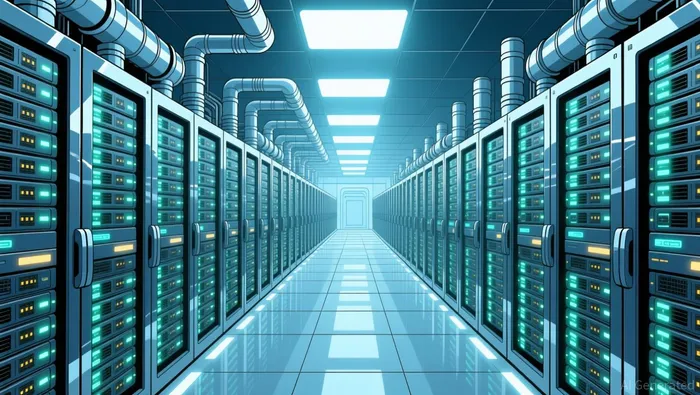
The next constraint may be less about chips and more about deployment. Huang briefly touched on electricity constraints, and Nvidia has increasingly framed the discussion around "perf per dollar" and power-limited data centers. Even if Nvidia ships more hardware, customers may still be limited by power, cooling, and commissioning capacity.
A power bottleneck delays deployment, not demand
A supply bottleneck limits what Nvidia can ship. A power bottleneck limits how quickly customers can turn that hardware into production clusters. The source cited here also notes that data center load is set to account for up to 40% of net new electricity demand added until 2030, with data center electricity demand expected to grow at a compounded annual growth rate of +23% through 2030.
If power, permitting, or grid interconnection slow rack commissioning, the result is not necessarily weaker demand. It can mean phased rollouts, longer time-to-revenue for buyers, and a more staggered revenue capture for the broader AI infrastructure chain.
What keeps the bull case intact-and what could weaken it
The case stays constructive if: - Nvidia's supply chain keeps improving without losing pricing power, consistent with supply issues are easing. - Customer interest remains urgent, consistent with demand is just so strong. - Blackwell adds volume without weakening Hopper, as Hopper demand grew throughout this quarter - after we announced Blackwell suggests.
The case weakens if: - Customer urgency fades enough to narrow the gap between demand and supply. - Power and grid limits push deployments out enough to slow monetization, consistent with the power-limited data centers warning.
For now, the key shift is subtle: the market is moving from asking whether demand exists to asking how quickly the full infrastructure chain can deliver and deploy it.