

Peace hopes are driving oil faster than physical flows
The market is pricing peace faster than physical flows can catch up. Brent at $91.54 reflects a near 17% fall since the start of May, showing traders are cutting the war premium before tankers, inventories, or export recovery fully confirm that the threat has faded. Price discovery usually moves on the scenario investors believe is most likely next, not on full certainty.
Sentiment is still overpowering the physical market
Once draft-peace headlines emerged, optimism spread quickly across assets. Reuters reported that falling prices helped investors start to price out more stagflationary outcomes. That mood can amplify every new headline: bulls hear "very close" and keep buying the relief trade, while bears focus on not there yet and sell harder. That is how markets overshoot.
The next few sessions matter more than the long-term view
The near term is still where the rerating risk is highest. Oil has swung as much as $6 for both benchmarks on conflicting signals from the talks, which shows that political tone is still steering the market more than settled supply data. Reuters said prices would remain volatile until there is clearer evidence of progress in the peace process.
So the window that matters is immediate:
- another positive signal could keep the war premium unwinding
- one broken headline could snap sentiment back toward fear
Investors waiting for hard proof may arrive after the easiest move is already done.
The Strait of Hormuz reopening may be slower than the market assumes
A ceasefire headline is not the same as restored throughput
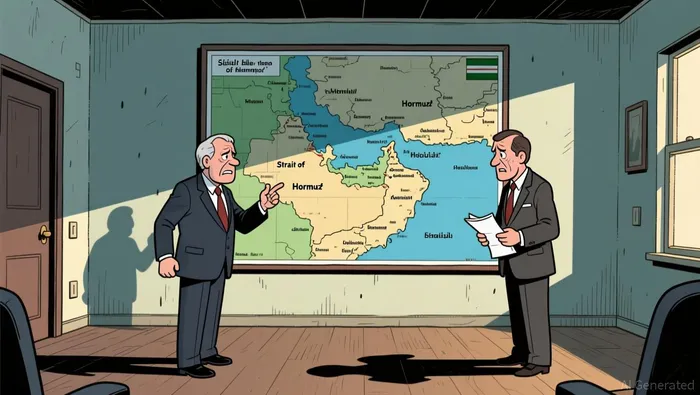
The key mispricing is not just less war. It is the assumption that the physical flow map can reopen cleanly and quickly. The Strait of Hormuz is not a light switch. It is a chokepoint where roughly a fifth of the world's oil still moves, and traffic remains a small fraction of the pre-war level. Even if diplomacy improves, the market may be expecting relief sooner than tanker evidence will allow.
Iran has also made clear that reopening is not something Washington can simply order on cue. Tehran said it would reopen the waterway according to its own pre-determined arrangements. That weakens the clean sequence many bulls are trading: ceasefire, normal passage, then the supply scare fades. The evidence still points to a more managed, possibly delayed restoration of flow, with Iran controlling the timing and conditions.
Bulls and bears are reading the same headlines differently
Bulls are leaning on confirmation bias. They hear a temporary two-week ceasefire and treat it as proof that the reopening path is already clear. In that frame, diplomacy does the heavy lifting and supply fear quickly fades. But a ceasefire can reduce headline risk without immediately restoring physical throughput.
Bears are dealing with a more fragmented picture. The headlines are improving, but the region is not snapping back to simplicity. Hezbollah has rejected a new ceasefire in Lebanon, and Pakistan said the provisional U.S.-Tehran agreement also covers Lebanon. That means investors cannot treat this as a simple U.S.-Iran bargain with one clean payoff. The conflict is still spreading across the diplomatic agenda, not disappearing.
What could form a floor under oil prices
The easy fear trade may already be gone
After the recent 17% decline since the start of May and a pullback from earlier this week's peak of $94.70, much of the obvious fear trade has already been taken. That raises the question: has sentiment reset so quickly that another leg lower becomes harder than a squeeze if diplomacy stumbles?
The bear case still rests on unproven relief and tighter markets
Bears do not need a new escalation to make their case. They can argue that the market is front-running relief that is still unproven. Oil futures fell more than 2% on Friday as traders awaited word on talks, and even after the drop, analysts still flagged concerns of falling inventories globally that could support prices later. That is the behavioral trap: improving headlines may mark the first round of de-risking, not full closure.
Tighter U.S. stocks keep the rebound case alive
The counter-case does not require fresh escalation. It only requires baseline tightness to matter again. U.S. crude stockpiles fell by 8 million barrels, about double the analysts' expectation for a 4-million-barrel draw. That does not prove prices must rise, but it does suggest the market still has a physical-market floor if the peace trade starts to fade.
The verification signals investors should watch
The next rerating will come less from calmer rhetoric than from evidence that transit is actually improving. The clearest signals are:
- real changes in tanker movements through the Strait of Hormuz
- whether Iran's reopening language turns into practical flow restoration
- whether Lebanon remains a source of fresh disruption
- whether inventory data keeps supporting the case for tighter underlying markets