

WTI crude just smashed through $110 for the first time since June 2022, hitting $110.73 during Asian trading Monday. That's the fifth straight winning session-a rare streak in volatile crude markets. Brent, the international benchmark, briefly touched $120 before pulling back, still finishing well above $110 for the first time since 2022.
The Strait of Hormuz has been effectively closed for over a week, threatening roughly one-fifth of global oil and LNG transit. Goldman Sachs estimates Persian Gulf output has been curtailed by about 14.5 million bpd, with nearly 500 million barrels drawn from global stockpiles-potentially hitting one billion bbl by June if the disruption persists.
Iraq's southern output collapsed to just 1.3 million barrels per day from 4.3 million-a two-thirds plunge. Kuwait, an OPEC member, announced precautionary production cuts as local storage facilities reach capacity. Persian Gulf producers collectively have cut roughly 6% of output due to the strait closure as storage fills up.
Stock Futures Retreat: Risk Assets Under Pressure
Contracts on the S&P 500 Index dropped 0.4% as of early Tuesday in New York, while futures on the Nasdaq 100 Index were down nearly 1%. Technology stocks lagged the most after weeks of outsized gains, with rising risks around geopolitics and inflation adding another level of uncertainty for markets already contending with elevated valuations.
Oil is now roughly 50% more expensive than before the Feb. 28 U.S. and Israeli attacks on Iran, with diesel prices up more than 50% and gasoline following a few days behind gasoline prices jumped to nearly $4.45 a gallon. The transmission is clear: energy costs are surging faster than the market can absorb, and the lag in gas prices means more pain still coming for consumers and businesses alike.
That pressure is enough to make traders pull back from risk assets, even as corporate earnings remain strong. The key tension now is whether oil stays elevated long enough to shift the inflation narrative-and with it, the Fed's path-against the market.
Supply Disruption Scenarios: What's Priced In
Brent crude's spike to $120 before collapsing back below $110 on G7 reserve release reports shows how quickly supply fears can shift. That 10% swing in a single session reveals traders are positioned for months-long disruption, but every policy signal creates violent reversals.
The numbers confirm the market's worst-case positioning: nearly 500 million barrels already pulled from global stockpiles, with Goldman Sachs projecting one billion barrels gone by June if the blockade holds highlighting the scale of the supply gap. That's roughly one month of global consumption vanishing into the Strait. Persian Gulf producers have already cut 6% of output as storage fills-Iraq's southern terminals collapsed from 4.3 million to 1.3 million bpd, a two-thirds plunge that demonstrates how infrastructure constraints amplify any shock.
Here's what's breaking the market's pricing model: US Energy Secretary Chris Wright says disruptions will last "weeks, not months" in the worst case, but traders aren't buying it. The ceasefire is effectively dead after Iran rejected the US peace proposal as "totally unacceptable," with Trump calling it "on life support" removing the near-term diplomatic off-ramp. Meanwhile, the physical risk is escalating-UAE reported an Iranian drone attack caused a fire at the Fujairah oil industry zone, and a missile threat warning was issued after Iranian drones struck an oil tanker.
The G7's strategic reserve releases provide a floor, but every new military development creates fresh upside volatility. The market is pricing in a prolonged disruption with a high probability of escalation-not a quick resolution.
Catalysts and Risk Scenarios
The market now hinges on three immediate catalysts: Strait reopening, US inflation data, and US-Iran negotiations. CPI came in at exactly 0.6% monthly increase-in line with expectations-yet markets have already scrapped rate cut expectations for 2026, with a 2027 hike looking increasingly likely. That's the inflation narrative locking in: oil-driven cost pressures are no longer seen as transitory.
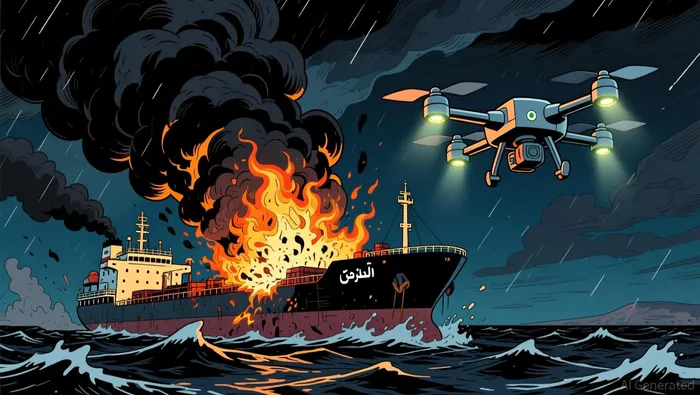
Trump announced "Project Freedom" to guide neutral ships through the Strait, but implementation details remain scarce. US Central Command said it would provide guided-missile destroyers, aircraft, and drones-but this is a stopgap, not a resolution. The ceasefire is effectively dead after Trump called Iran's response "a piece of garbage" and described the truce as on "life support". Without a diplomatic off-ramp, the physical disruption continues.
Here's the price action setup: if supply disruption extends beyond weeks, oil tests $120 before prices fell back-meaning $120+ is in play. If ceasefire materializes, rapid pullback to the $90s is likely. Any resolution on Strait reopening will trigger an immediate 5-10% swing. The market is positioned for months-long disruption, but every military development creates violent reversals. Right now, the bias is toward escalation-not resolution.