

Oil sold off as the immediate escalation risk faded
The pullback looks more like volatility compression than a clean de-escalation. After prices reached $95.04 a barrel for Brent and $91.99 for WTI, crude eased as the direct Israel-Iran exchange cooled. Brent then slipped below $93 a barrel, while WTI traded near $90. Traders appear to be cutting exposure when the near-term escalation path weakens, even though the underlying supply risk has not gone away.
The truce bought time, not certainty. Both sides have effectively paused direct attacks, but each also warned it would strike again if provoked. Israel said it would halting offensive strikes will respond should Tehran attack again. That leaves the market in a fragile, event-driven state rather than a normal post-crisis unwind.
The physical risk has not disappeared either. The Strait of Hormuz is still effectively closed by the existing blockade, and enforcement continued even during the lull, including the disabling of an oil tanker in the Gulf of Oman. So the near-term trade is straightforward: oil is reacting to lower headline fear, while the bigger rerating still depends on whether Hormuz actually reopens.
Diplomacy, not the battlefield, is now the main price driver
The ceasefire still matters because oil has shifted from a pure war-scare trade to a diplomacy-odds trade. In this setup, headlines do more than create noise; they change the market's probability map for Hormuz and, with it, the risk premium.
Timing matters while the signal remains noisy
The key catalyst is timing. Trump told reporters that "we could have at least an idea one or two days from now" on a deal. That is short enough to dominate trading behavior. When an agreement looks close, traders start discounting the worst-case supply scenario.
But the signal quality is still poor. Earlier this week, Tehran had suspended indirect negotiations with Washington per Tasnim, while Trump said talks with Iran were ongoing. Conflicting reports do not settle risk; they keep the market in a high-beta information phase, which helps explain why even small updates can move prices.
The bullish case is that diplomacy remains the cleanest path to de-risking the market, because the status of U.S.-Iran negotiations is what will determine whether the risk premium unwinds. The bearish counter is that the battlefield still undermines that view: Iran and Israel kept exchanging strikes, and the Houthis announced they would ban Israeli maritime navigation in the Red Sea, keeping the physical-disruption case alive.
Near term, the diplomatic track still looks more important for price direction than another round of limited strikes. If the talk track sharpens, the premium can compress quickly. If it breaks again, the premium is likely to return.
Hormuz is still the real supply constraint
If the strikes cool, the next question is not whether headlines improve, but whether physical flows improve.
Chokepoint friction has not disappeared
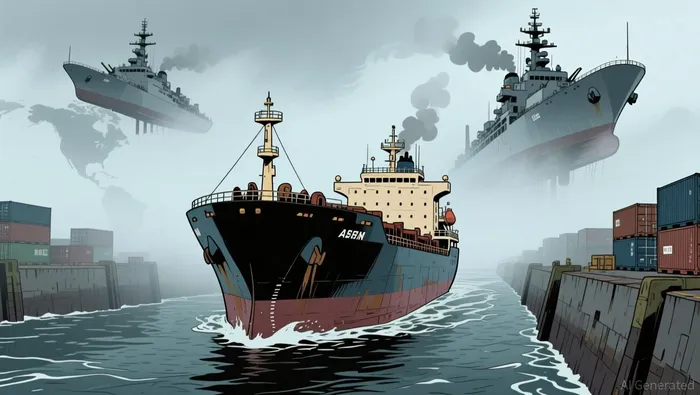
The Strait of Hormuz is not behaving like a normal transit route. Reports show minimal traffic amid heavy signal jamming, which matters because low traffic and poor communications raise operating risk well beyond what missing tonnage alone would suggest. That helps explain why the earlier oil spike was so sharp: traders were pricing an effective closure of a chokepoint that normally handles a fifth of the world's oil, while tanker traffic through the strait has largely halted.
Even after the latest pullback, the blockade remains in place, and the market still has to underwrite Gulf energy flows through a corridor that is not functioning normally.
Commercial signals still reflect disruption
Commercial operators are still pricing in war-related friction. MSC has set Asia-Europe container rates at $6,000 per 40ft from mid-June, a sign that shipping costs, vessel availability, and scheduling risk remain tight.
For oil, the same mechanism applies. If shipping is expensive and uncertain, marginal barrels do not move as freely, and that keeps upside risk embedded in crude even without fresh escalation.
The damage record argues against a clean unwind
The physical toll also argues against treating this as a clean de-risking trade. The Hormuz crisis has already left at least 17 merchant ships damaged, with 7 abandoned and 2 merchant ships captured. That is a meaningful record of disruption, and it suggests the barrier is not only political rhetoric.
Reopening is still possible. Reports say the U.S. and Iran are discussing a plan to reopen the Strait of Hormuz about 30 days after the two countries reach a deal. But that is still a process, not a settled outcome.
Until traffic actually returns, oil still looks more like a risk-managed Persian Gulf supply trade than a post-crisis normalisation story.
The market is still long Hormuz risk, not long a return to normal
The base case remains tactically bullish on crude, but only in a risk-managed way. The market should stay exposed to Persian Gulf supply risk and shipping friction, not to a full return to normal. The evidence still points to an impaired transit regime: war risk insurance for Persian Gulf transits remains 1-2.5% of H&M value, while Hormuz is still seeing minimal traffic amid heavy signal jamming. That keeps the premium alive.