

Israel-Iran de-escalation unwound the scare premium quickly
Oil fell sharply as hopes for a broader Middle East deal improved. Brent slipped below $93 and WTI traded near $90 after the halt in attacks, while Trump said investors could have at least an idea one or two days from now on the wider deal. The immediate takeaway is that the fastest part of the de-escalation move has already happened.
The speed of the drop matters. With Brent down almost 19% for May and about 20% from its 2026 peaks, a large chunk of the fear premium appears to have been compressed out of prices all at once rather than spread over a longer repricing. That leaves less room for simple headline-driven moves and more room for fundamentals to matter.
What the market has to decide now
Bulls can argue the drawdown already did most of the deleveraging. If the diplomatic window holds, geopolitics may drive fewer extreme swings and the market can focus more on real supply and demand.
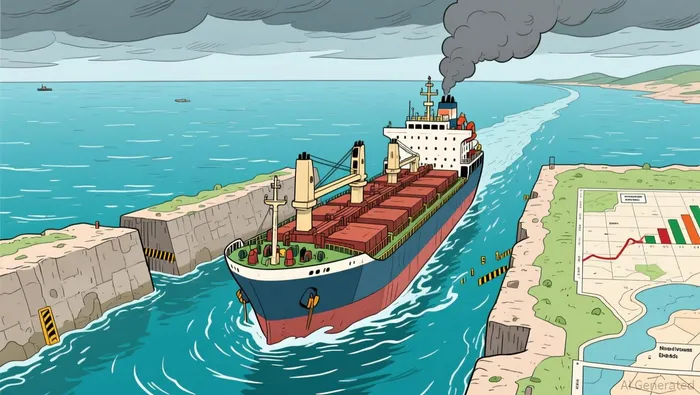
Bears have the cleaner boundary condition: the Strait of Hormuz is still effectively closed, and even a deal would still face mine clearance, months to restart fields, and infrastructure repairs. That keeps the supply recovery curve much slower than the premium unwind.
So this is no longer a clean war-trade setup. The next move is more likely to depend on demand destruction versus lagged supply recovery.
Hormuz closure keeps physical supply disconnected from sentiment
The ceasefire improved sentiment faster than it improved flows. That gap is the real variable now. Even after the agreed end to attacks, the Strait of Hormuz is still effectively closed. In oil terms, that means political relief can hit the tape immediately, while physical barrel availability still sits behind a recovery curve.
A truce can ease fear without restoring flows
A truce can reduce fear in hours. It cannot clear a strategic chokepoint overnight. Even if diplomacy keeps advancing, mines in Hormuz must be removed, shut-in fields may take months to restart, and damage to energy infrastructure needs repair. That is why another clean war-spike unwind looks less likely now than it did at the first sign of de-escalation.
Transit is still constrained
The operating data still point to friction, not normalization. War-risk insurance for high-risk vessels has climbed to up to 10% of hull value. More telling, only 29 of 109 non-Iranian vessels exited the Gulf with US informational support. That is not what free flow looks like. It suggests transit is still expensive, uncertain, and heavily managed.
Supply recovery likely comes later than the headlines
Kuwait made the timing explicit: oil output will not recover for 10 to 12 weeks after Hormuz reopens. Combine that with the Strait of Hormuz still being effectively closed, and the sequence becomes clearer. De-escalation lowers the scare premium first; supply normalization comes later, and not in a straight line.
China's weaker demand may now do more to cap oil upside
That supply lag still matters, but the more durable constraint on oil upside may now be demand.
China already used its shock absorbers
China did not need to wait for a full repricing. It used the tools already in the box: export curbs, refinery run cuts and drawdowns from massive inventories. That matters because it means part of the Gulf supply shock was absorbed domestically rather than passed through immediately into tighter global markets.
The clearest signal is import behavior. China's crude imports last month fell to the lowest level in more than eight years. That is not a minor wobble. It suggests marginal demand weakened significantly at the same time the market was still pricing serious supply disruption.
Weak demand may outlast the headline crisis
This is the part bulls often underwrite too lightly: once demand weakens, it does not necessarily snap back the day fear fades. Chinese processors have leaned harder on refinery-held inventories rather than fresh imports, while state-owned refiners have cut processing rates to record lows. Gasoline and diesel sales also posted double-digit declines in April.
That is why another rally may lack fuel. Even downstream capex is bending to the weakness, with about 500,000 barrels per day of refining capacity delayed or postponed. In portfolio terms, that reduces the quality of mean-reversion longs: if Chinese throughput and product demand stay soft, rallies into any partial supply normalization may get sold.
Why this matters for the next leg
The buffer is large. China had built massive inventories before the war, giving it room to import less without an immediate operating crisis. So the upside path is not "China suddenly bids barrels back up." The more likely path is a slow demand reacceleration, if it comes at all.
Watchpoints: - May import data staying near 7.8 million barrels a day - Processing rates at record lows - 500,000 barrels per day of refining capacity delayed or postponed - Any sign imports could remain subdued for months, as analysts have estimated
Portfolio posture: range-trade until reopening proof arrives
After the headline-driven unwind, the practical move is range trading, not chase trading. Even after Brent fell 11.25% in the past month, it remains 38.30% higher than a year ago. That is not a normalized market. It is still a balance sheet that prices meaningful scarcity.
Stay range-minded while the reopening proof is missing
Stay range-minded while: - the Strait remains effectively closed - only 29 of 109 non-Iranian vessels exited the Gulf with US informational support - China's May demand remains soft at about 7.8 million barrels a day
Rotate toward the lagged supply story only with evidence
Rotate toward the lagged supply story only when: - vessel traffic through Hormuz improves in a sustained way, not as a one-day spike - Kuwait's 10 to 12 weeks after Hormuz reopens recovery clock starts to matter more than the ceasefire narrative - downstream weakness in China stops worsening, rather than still showing 500,000 barrels per day of refining capacity delayed or postponed
The invalidation signal is simple: if shipments begin clearing and demand holds up better than the current import data suggest, then the lower end of the range can break higher faster than models expect. Until then, evidence first, exposure second.