

Oil prices spiked sharply Monday following the US announcement of a blockade on Iranian ports, with US crude surging 8% to $104.24 a barrel and Brent climbing 7% to $102.29 in early trading. For a portfolio manager, this is the kind of gap-up move that instantly reprices risk across the entire energy complex-and it's only day one.
The blockade targets all Iranian ports on the Persian Gulf and Gulf of Oman, yet notably permits transit through the Strait of Hormuz for non-Iranian vessel traffic. That distinction matters for modeling the supply shock. Around a fifth of the world's traded oil flows through the Strait of Hormuz daily-Saudi Arabia, Iraq, the UAE, Kuwait, and Iran are all major exporters relying on this chokepoint. Any disruption here ripples through the entire energy complex, and the market is already pricing in elevated volatility.
Brent has swung dramatically during this conflict, rising from roughly $70 per barrel before the war in late February to more than $119 at times, then pulling back to $95.20 on Friday ahead of peace talks. The blockade resets that range. The immediate risk is a supply deficit that pushes prices higher still, but the structural risk is what happens if traffic through Hormuz gets constrained-even temporarily. Marine trackers report over 40 commercial ships have crossed since the ceasefire began, well below normal throughput.
From a portfolio perspective, this is a classic volatility event with asymmetric downside. Energy equities, energy-linked currencies, and inflation-sensitive assets all carry elevated correlation risk here. For systematic strategies, the setup demands tighter stop-losses and larger position-size adjustments-the risk-adjusted return profile on long oil positions has improved, but the tail risk on a prolonged disruption is material. Hedging via puts or call spreads on crude, or rotating into energy sector hedges, becomes a meaningful consideration for any portfolio with meaningful energy exposure. The market is pricing in pain now; the question is whether the supply shock persists or resolves as negotiators work toward opening the strait.
Price Volatility Profile: What the Range Tells Us
The intraday and inter-day volatility in crude oil over the past six weeks reveals a market pricing binary outcomes rather than gradual supply normalization. For a systematic strategy, this whipsaw pattern fundamentally alters the risk-adjusted return profile on energy positions.
Brent crude's range tells the story: from roughly $70 per barrel before the war in late February, it spiked above $119 at peak, collapsed to $95.20 on Friday ahead of peace talks, then rebounded to $102.29 Monday following the blockade announcement a 70% swing from trough to peak. That's not a trend market-that's a market oscillating between war escalation and de-escalation scenarios with no stable equilibrium.
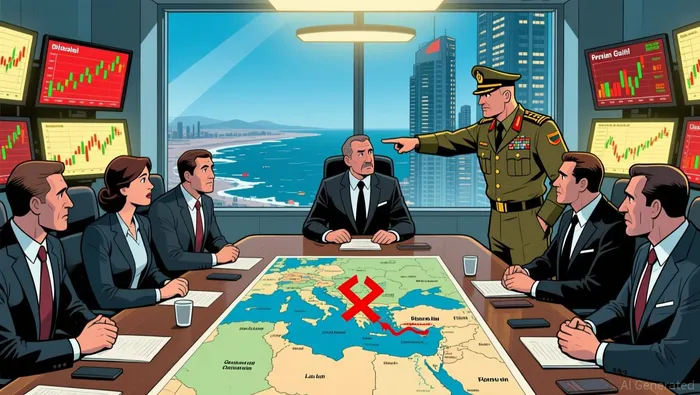
The Friday relief rally followed by Monday's reversal is particularly instructive. When Iran declared the Strait of Hormuz open for commercial traffic, Brent fell 9.1% to $90.38 and the S&P 500 surged to an all-time high with the Dow jumping 868 points. The market rallied on hopes of supply normalization. Yet minutes after that optimism peaked, the Trump administration confirmed the U.S. Navy's blockade of Iranian ports remained "in full force" reversing sentiment within hours. Monday's 7-8% spike was the market's answer.
This is classic binary pricing. Traders aren't modeling gradual supply recovery-they're assigning probability mass to discrete events: either the Strait stays open and prices collapse back toward $80, or the blockade tightens and we test $120 again. The result is elevated volatility as the new baseline, with mean reversion plays getting crushed by gap moves.
For portfolio allocation, this changes the calculus. Long-dated call options on crude have become expensive relative to short-dated puts-the volatility surface is pricing in asymmetric tail risk. A systematic strategy focused on risk-adjusted returns needs to either size positions smaller and accept lower gross exposure, or deploy hedging instruments (put spreads, collars) to protect against another 10%+ gap move. The correlation between energy equities, energy-linked currencies, and inflation-sensitive assets has spiked-diversification benefits are temporarily gone.
The key question for alpha generation: is this volatility structural or transient? If the blockade resolves within weeks, today's option premiums represent overpaying for insurance. If the disruption persists, today's levels are the floor, not the ceiling. For now, the risk-adjusted return on long oil positions is attractive-but the drawdown risk on a prolonged disruption is material. Tighter stop-losses and larger position-size adjustments are warranted.
Portfolio Implications: Hedging and Allocation
The 7-8% oil spike Monday isn't just a price move-it's a signal that portfolio risk parameters need immediate adjustment. For a diversified portfolio, energy sector exposure now carries elevated tail risk that demands action.
The immediate step is to reassess long oil positions. At $104.24 for US crude and $102.29 for Brent, the risk-adjusted return on long positions has improved-but only if you're prepared for another 10%+ gap move either direction oil prices rose 8% to $104.24 a barrel. A systematic strategy should either size positions smaller or deploy hedging instruments. Put options on crude, or call spreads with strikes above $110, provide asymmetric protection against another escalation wave. The volatility surface is pricing in binary outcomes, and that makes unhedged long exposure a drawdown risk, not a return generator.
But energy is only one side of the equation. Higher crude prices pressure transportation costs across logistics, airlines, and chemical sectors-energy-intensive industries that operate on thin margins. The correlation between energy equities and these sectors has historically been negative (higher oil hurts airlines, helps energy stocks), but that relationship breaks down when oil moves 8% in a single day. Portfolio allocation now requires sector rotation: reduce exposure to oil-sensitive industries while the spread widens, then reassess when volatility normalizes. The key is timing-rotate out before the market fully prices in the cost pressure, but not so early that you get whipsawed if the blockade resolves quickly.
The wildcard is Iran's response. The US blockade targets Iranian ports but explicitly allows non-Iranian vessels to transit the Strait of Hormuz around a fifth of the world's traded oil typically flows through the Strait. Iran has been "effectively controlling" the strait already, with marine trackers reporting just 40 commercial ships crossing since the ceasefire began. If Tehran escalates and actually closes the strait-not just controls it but blocks transit-prices could retest the $119+ range within days. That's the tail risk that makes hedging mandatory, not optional.
For now, the setup is clear: tighten stop-losses on energy positions, add put option protection, rotate out of energy-intensive sectors, and watch for any sign Iran is moving beyond controlling the strait to actually closing it. The risk-adjusted return profile favors caution until the blockade's duration becomes clearer.
Catalysts to Watch
For a systematic strategy, the key question is whether Monday's 7-8% spike represents a new price floor or a transient gap. Three catalysts in the coming weeks will determine the answer-and the risk-adjusted return profile on energy positions.
First, monitor enforcement actions against non-Iranian tankers. US Central Command stated the blockade would be "enforced impartially against vessels of all nations" entering or departing Iranian ports enforced impartially against vessels of all nations. That language is deliberate-it signals the US is prepared to interdict ships regardless of flag state. If American naval forces actually stop and inspect non-Iranian tankers attempting to load at Iranian terminals, the supply shock becomes structural, not symbolic. Current traffic through the Strait of Hormuz is already depressed at just over 40 commercial ships since the ceasefire began, well below the ~20% of global traded oil that typically flows through the chokepoint around a fifth of the world's traded oil. Any enforcement action that further constrains throughput pushes prices toward the $119+ range. For portfolio allocation, that scenario demands immediate hedging-call spreads or long-dated calls become mandatory, not optional.
Second, watch for diplomatic breakthrough or ceasefire extension. The market is pricing in a worst-case scenario, but expert opinion suggests the blockade may be as much negotiation tactic as permanent disruption. Claudio Galimberti of Rystad Energy characterized it as "a negotiation tactic, which eventually resolves into a full opening of Hormuz" a negotiation tactic that eventually resolves. If peace talks produce a ceasefire extension or formal agreement, Monday's gains are vulnerable to a sharp reversal-Brent fell 9.1% in a single session earlier this week on similar hopes. For a systematic strategy, this creates a classic binary: the volatility surface is pricing in asymmetric tail risk, but if de-escalation materializes, those option premiums represent overpay. The risk-adjusted return on long positions improves dramatically if the blockade lifts within weeks.
Third, EIA inventory data next week will reveal whether strategic reserves can absorb a sustained supply gap. The US maintains significant crude stockpiles, and any draw in weekly inventories will signal whether the market has buffer capacity or is running deficit. If EIA data shows inventories falling below seasonal norms, the supply deficit becomes undeniable-and prices stabilize at elevated levels. If stocks remain adequate, the market gains confidence that disruption is temporary.
The correlation between these catalysts and portfolio risk is direct. Tighter supply enforcement = higher correlation across energy, commodities, and inflation-sensitive assets = reduced diversification benefit. Diplomatic progress = volatility collapse = potential drawdown on long oil positions if hedging isn't adjusted. Inventory draw = sustained higher prices = improved risk-adjusted return on long exposure, but elevated tail risk if the disruption persists.
For now, the setup favors caution. The blockade's duration remains uncertain, and the market has already priced in material disruption. Any systematic strategy should maintain hedging coverage until one of these catalysts provides clearer visibility-preferably through a diplomatic resolution that opens the Strait, not through a prolonged supply shock that damages the broader economy.