

The weirdest thing about oil right now is not the price. The weirdest thing is that the price barely has anything to do with supply or demand. Brent crude is hovering around $110 a barrel, up roughly 68% year-to-date, and the primary driver of every move is a phone, a Truth Social post, or a Gulf diplomat's request. The Strait of Hormuz - which carries about 20% of the world's daily oil supply - is effectively closed. Iran has been selectively throttling traffic since the conflict began on February 28, allowing roughly 11.7 million barrels per day through instead of the usual 21 million. That is the supply shock. Everything else is just people arguing about how long the shock will last.
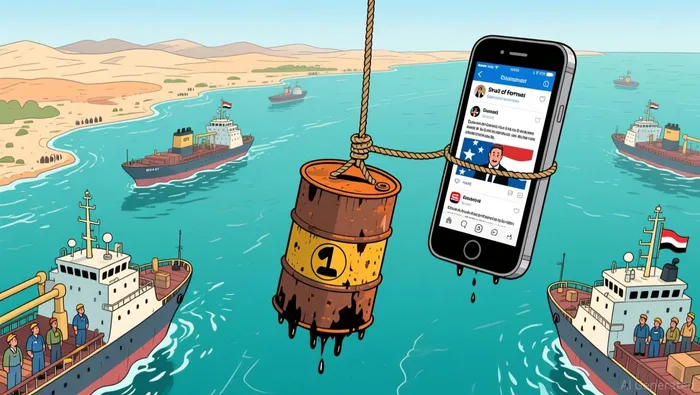
The competitor headline says oil fell amid prospects of a potential U.S.-Iran peace deal. That's the literal story. The actual story is that the oil market has become a political derivative - a contract whose payoff is determined not by barrels and refineries but by whether two governments can agree on language that lets each side go home looking reasonable.
Here's what happened in the last week. On May 11, Trump said the ceasefire with Iran was "on life support" after rejecting Tehran's latest peace proposal. Oil jumped. On May 18, he called off a planned military strike against Iran - at the request of Gulf allies - citing a "pending deal." Oil dumped, then partially recovered overnight as Trump followed up with a warning that "the clock is ticking." Brent was at roughly $110 on May 19, still elevated but having whipsawed through the day. Meanwhile, the Strait of Hormuz remains effectively closed. The U.S. Energy Information Administration, writing in mid-May, assumed it would stay that way through the end of the month. Nothing physical has changed. Only the script has.
This is basically the old oil embargo game, but instead of a formal OPEC decision, the leverage comes from a single country controlling a single chokepoint and a single politician controlling the timing of his own threats. Iran holds the Strait. Trump holds the announcement. The market holds the bag.
The mechanical point is simple. Iran doesn't need to shut the Strait entirely to move prices. It just needs to create enough uncertainty that shipping insurers, tanker operators, and refinery planners start pricing in disruption. They do. Tanker premiums spike. Inventories get drawn down faster. The EIA revises its supply assumptions. And oil moves on the expectation that the Strait might stay closed for weeks, not on the reality of how many barrels actually make it through.
On the American side, the mechanism works the other way. A threatened strike keeps oil elevated. Calling off a strike lets it fall. Neither action requires the underlying situation to change - it just requires the market to believe the change is coming or receding. Gulf allies benefit from both elevated oil prices and the absence of active combat, which is why Trump cited their request when he stood down the May 18 strike. That's not a random detail. It's the incentive structure made visible: the Gulf doesn't need war to resolve. It needs war to be threatening enough to justify the oil price, but not active enough to blow things up.
Now, here's the part that the headline doesn't tell you. This dynamic isn't new to anyone who actually trades it. Back in March, according to Financial Times reporting, someone placed roughly $580 million in bearish oil bets - about 6,200 Brent futures contracts - in the 15 minutes before Trump posted about Iran ceasefire talks. Normally, roughly 700 contracts trade in that window. The oil price fell roughly 10% after the announcement. The US dismissed insider trading claims, but the math is the math: someone knew or guessed the news was coming and positioned accordingly. That wasn't a one-off. It was a demonstration that this market can be front-run if you have good information about what Trump is about to say.
The official label for what's happening is "geopolitical risk premium." In practice, this is closer to a structured volatility product where one party - Iran - controls the underlying asset, another party - the US president - controls the announcement schedule, and the rest of the market is left buying and selling expectations of both.
So what does the investor actually do with this? You can't model it. You can put in inventory drawdowns, EIA supply assumptions, and tanker throughput data, and you'll still be wrong about the direction because none of that captures whether Trump is going to post something on Truth Social at 2 AM. The EIA's own forecast - Brent around $106 in May with the Strait assumed closed through month-end - is already a month behind the headlines. The market is trading diplomacy, not energy economics.
The simplest model is this: as long as the Strait is disrupted and no deal is signed, oil stays elevated. The floor is set by how badly global inventories are being drawn down. The ceiling is set by how credible the threat of renewed combat feels. And everything in between is noise - except the noise is what the entire market is trading.
The structural implication is not about where oil goes next week. It's about what this means for anyone who thought oil was a commodity you could analyze like a commodity. It isn't right now. It's a contract on two governments' patience. Iran's patience with sanctions and isolation. America's patience with Gulf allies and Congressional war-powers deadlines. The market's patience with the gap between the label - peace deal prospects - and the mechanism, which is just two sides posturing while the Strait stays closed and the price stays high.
When the Strait actually reopens, if it does, prices will fall. But the market already knows that. What the market doesn't know - and can't price - is whether the reopening will happen because of a real agreement, or because everyone just gets tired of pretending the situation is heading somewhere that isn't exactly what it already is.