

A 1% drop in proved reserves is not the same as a supply emergency
A 1% decline in U.S. crude reserves sounds alarming, but it does not mean America is running out of oil. At year-end 2024, U.S. crude oil proved reserves fell from 46.4 billion barrels to 46.0 billion barrels, even as U.S. crude oil and lease condensate production increased 2% in 2024. A system still increasing output does not look like an immediate supply emergency.
What "proved reserves" actually measures
The confusion starts with the word proved. Proved reserves are not a tally of every barrel underground. They are the volumes companies can recover with reasonable certainty under existing economic and operating conditions-or, in the dataset's wording, under current prices and technologies. When prices weaken, some barrels no longer meet the commercial threshold and are removed from the reserves report. The accounting figure can shrink before any physical shortage shows up.
That helps explain why the headline felt alarming when it appeared. Earlier this week, the EIA reported a record 17.8 million-barrel crude stock draw, leaving U.S. crude stocks at the lowest level in 11 months. The takeaway is not that the country is running out of oil. It is that proved reserves can shrink for pricing and reporting reasons at the same time near-term storage conditions tighten.
Why a smaller reserves number does not mean less oil underground
A falling reserves figure can precede a shortage, but it can also reflect economics rather than geology.
Proved reserves are more like a commercial filter than a total count
U.S. crude proved reserves declined 1% from 2023 to 2024, and lower prices in 2024 heavily influenced proved reserves estimates. That makes the reserve change largely a financial and operational snapshot, not proof that the physical resource base suddenly disappeared.
State-level data shows local economics, not a national exhaustion story
When the numbers are broken down by state, the picture gets clearer. Texas reported the largest annual net decline (529 million barrels) reported among all states in crude oil and lease condensate reserves. For the country's biggest producing state, a reserve pullback can reflect tighter project economics rather than a broader shortage.
Alaska moved the other way. Even with weaker prices nationwide, Alaska's crude oil and lease condensate proved reserves increased 5% in 2024, helped by increased development activity such as the Conoco Phillips' Nuna project became operational. The same national price environment produced a reserve decline in one region and a reserve increase in another. That points to local economics, not a sudden geological shock.
Production is the better reality check
For investors, production matters more than the reserves headline. Earlier this month, U.S. crude output was still above 13,600 thousand barrels per day. A country can experience a modest reserves reset and still keep producing at record-like rates. That is more consistent with margin pressure than with the well running dry.
The practical watchpoint is simple: if production remains firm while reserves stabilize, the market was likely reacting to accounting and economics rather than an imminent shortage. If production begins to fall alongside reserves, that would be a different signal.
The bigger risk is price exposure, not running out of oil
The reserve change was the setup. The more immediate risk is that tighter global conditions can keep prices firmer for longer.
Earlier this week, the EIA pulled a record 17.8 million-barrel crude stock draw, leaving stocks at their lowest in 11 months. At the same time, Exports of crude stood at around 5.6 million barrels per day, the second-highest on record. That matters because higher export dependence can tie U.S. market outcomes more closely to global supply stress.
Why exports matter in a tighter world market
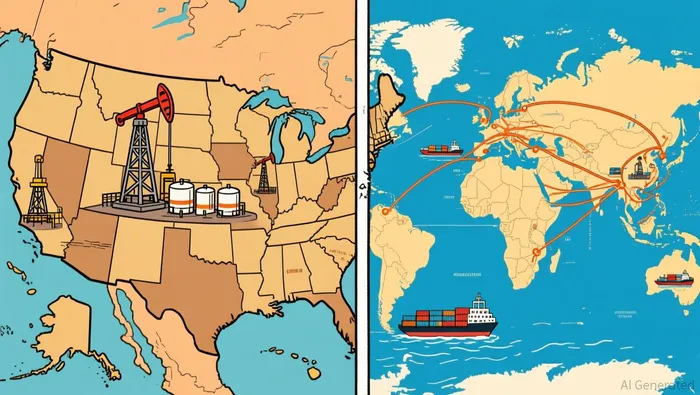
A more export-oriented U.S. system is not automatically insulated from tight markets. If global supplies tighten, exported U.S. supply is more likely to follow higher prices rather than fully shield the domestic market. That fits the 2026 picture: the United States is now a net exporter of oil, so firmer global prices can support producer revenue while raising costs for consumers.
The global buffer is also getting thinner. EIA's latest outlook says disruptions in the Middle East shut in 10.5 million barrels per day (b/d) of crude oil production in April, and it now expects global oil inventories will decrease by 2.6 million b/d this year, compared with a 0.3 million b/d decrease in last month's STEO. That is a meaningful revision to the global supply cushion.
What matters most from here
The reserve headline misses the more relevant debate. One side will argue the U.S. is not vulnerable because production remains strong. The other side will argue that strong production, strong exports, and weaker storage make price exposure more important, not less.
The evidence supports the narrower conclusion: America is not suddenly running out of oil. But because the U.S. system is producing heavily and sending more oil abroad, it can still feel the impact of a tighter global market.