

Iran talks have sparked a relief bounce, not a surplus signal
The recent rebound looks more like a fast sentiment trade than a durable de-escalation setup.
After a sharp 7% drop in the previous session, oil rebounded quickly: Brent reached US$98.50 a barrel, up 2.5%, while WTI crude futures hovered above $93 per barrel. That move shows markets are still sensitive to headline risk, not that the underlying supply constraint has disappeared.
Why the rebound can reverse as quickly as it arrived
This remains a short-horizon volatility setup. The bullish case has some near-term support: Trump said talks were in the final stages, and Reuters reported that regional powers are pressing Washington to pursue diplomacy. But the counterpoint is still important: Rubio said any deal could take several days to complete, and unresolved issues around safe passage through Hormuz keep the market exposed to another sharp reversal.
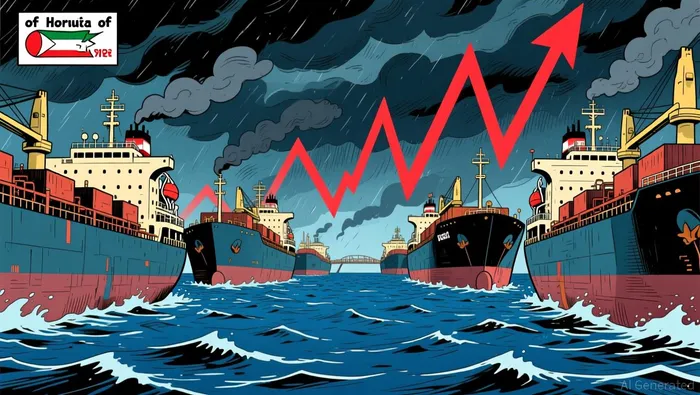
The practical takeaway is simple: do not mistake a headline-driven relief rally for a structural bottom in oil.
Hormuz disruption is still the main support for prices
The market has stabilized more because buffers have absorbed shock so far than because flows have normalized. Reuters noted that roughly 10.5 million barrels per day now shut in reflects the scale of the supply disruption, and that remains large enough to keep a risk premium embedded in prices.
Stocks have cushioned the shock, but they do not prove balance
When a chokepoint tightens, the market usually responds with rerouting, substitution, and inventory draws before demand destruction kicks in. That helps explain why oil has not simply retested panic lows every time headlines improve.
In the U.S., crude fell last week, showing the system is still drawing on stocks to absorb the gap. That does not prove the market is balanced; it shows the cushion is being used. Reuters also reported that the industry has shown remarkable resilience, while warning that, barring a breakthrough, the market could be months away from a harder adjustment. In other words, each extra week of constrained flows burns through buffers and raises the odds of a sharper repricing later.
Political progress has outpaced physical restoration
Even after the rebound, no deal has been reached, and Rubio said any agreement could still take several days to complete. Hormuz remains the key constraint: Reuters reported hesitation to guarantee unrestricted passage through Hormuz, and the EIA still assumes the strait will be effectively shut through late May.
Until transit actually improves, diplomacy can cap rallies, but it is unlikely to remove the risk premium completely.
Positioning still looks tactical rather than structural
The cleaner setup is still a short-dated trade on the gap between relief rallies and real supply restoration, not a multi-quarter directional call on crude.
What has the best risk/reward if talks slip again?
If diplomacy stalls, the most direct exposure is near-month crude or short-dated spreads, where headline-driven backwardation can expand quickly. WTI had already climbed as high as $98.00 a barrel on doubts about a breakthrough, while Brent was trading at US$98.50 a barrel, up 2.5% as uncertainty rose. The same logic can favor selected energy names with direct sensitivity to tight product markets, especially while the EIA assumes Hormuz will be effectively shut through late May and has raised U.S. motor-fuel-price forecasts.
Why long crude alone is still a noisy trade
The market was quick to reward it and price in the hope of a resolution, then unwound that positioning just as fast. That makes plain-vanilla long crude a volatile beta exposure unless the investor specifically wants a longer-term inflation hedge.
A more disciplined approach would: - Treat oil as a hedge or tactical trade, not a set-and-forget directional position. - Use diplomacy as the signal: if talks produce another credible step toward safer transit, reduce crude exposure quickly. - Size positions for catalyst clarity, not narrative strength.
What would confirm de-escalation, and what would invalidate it?
Bullish de-escalation: - A credible step toward a deal or extended pause - Evidence that Hormuz is reopening rather than remaining constrained
Escalation: - Stalled talks - New airspace violations - A refusal to guarantee passage through the strait hesitation to guarantee unrestricted passage through Hormuz
If diplomatic progress stalls and the market still cannot keep WTI in the mid-$90s and Brent above $100, the squeeze thesis is weakening. Recent price action shows sentiment can move crude sharply on its own, with WTI climbing as high as $98.00 a barrel and Brent rising 2.5% in a session. For now, the setup still looks more about trading relief rallies than trading restored flows.