

OpenAI has officially launched a pilot program that fundamentally alters the economics of early-stage startup financing. By offering $2 million in AI API tokens to every startup in Y Combinator's spring and summer 2026 cohorts in exchange for equity, the company is effectively replacing traditional cash seed investments with prepaid compute credits . This strategic maneuver, described by Y Combinator partner Tyler Bosmeny as a "mic drop moment," signals a structural shift in the venture capital landscape where access to frontier AI models is becoming a primary form of startup capital .
The initiative is designed to address one of the most significant financial burdens facing modern AI-native companies: the exorbitant cost of infrastructure. As startups race to build products heavily reliant on large language models, their early-stage budgets are often consumed by API bills before they can even hire additional staff or refine their product-market fit. By providing substantial token allotments, OpenAI is directly subsidizing these core operational costs, allowing founders to iterate rapidly and scale their engineering efforts without the immediate pressure of cash burn . This shift toward "tokenmaxxing" reflects a broader industry trend where lean teams are increasingly prioritizing compute expenditure over headcount, fundamentally changing the unit economics of software development .
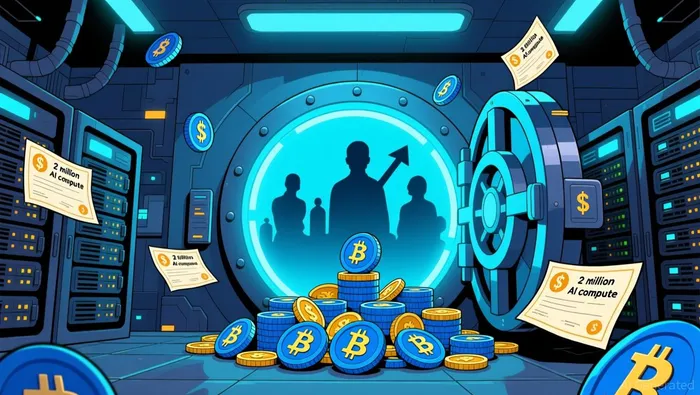
How Does OpenAI's Token Offer Change Startup Equity?
The financial mechanics of this deal are as novel as they are impactful. The $2 million in tokens are not given as a grant; they are exchanged for equity stakes via uncapped Simple Agreements for Future Equity (SAFEs) . Unlike the standard $375,000 uncapped SAFE that Y Combinator typically uses—which includes Most Favored Nation (MFN) protections to safeguard early investors—OpenAI's agreement lacks these provisions . This means that the equity percentage OpenAI will ultimately hold is not fixed upfront but will be determined during the startup's next priced round, usually the Series A .
For founders, this structure offers a distinct trade-off. On one hand, it removes a massive line item from their early financial statements, effectively extending their runway and reducing the need to raise additional cash immediately. On the other hand, it introduces the risk of significant dilution. Industry estimates suggest that if a startup achieves a $100 million valuation, OpenAI could end up holding approximately 2% of the company . When combined with Y Combinator's standard 7% stake, founders are surrendering a notable portion of their cap table in exchange for infrastructure rather than cash. Furthermore, because the SAFE is uncapped, there is no ceiling to protect founders if the company experiences explosive growth, potentially resulting in higher dilution than a traditional, capped seed round .
Why Is OpenAI Trading Compute For Startup Equity?
From a strategic perspective, this move is a masterclass in ecosystem lock-in and vertical integration. By providing compute credits, OpenAI ensures that startups build their products directly on its infrastructure from day one. This deep integration makes it highly unlikely that these companies will default to competitors like Anthropic or Google, effectively securing a captive audience for OpenAI's models as they scale . As inference costs continue to decline, the actual cost to OpenAI of providing these tokens may be minimal, making the acquired equity increasingly cheap .
This strategy also serves as a highly efficient customer acquisition channel. Instead of spending millions on marketing or sales teams to find early adopters, OpenAI is acquiring motivated developers who are incentivized to maximize their token usage to build their products. Furthermore, by holding equity in these ventures, OpenAI gains an upside exposure to the success of the AI ecosystem it is nurturing. If even a small percentage of these startups become unicorns, the financial return on the equity stakes could vastly outstrip the value of the tokens distributed . This aligns OpenAI's financial interests directly with the success of its ecosystem partners, creating a symbiotic relationship that benefits the company's long-term market dominance .
What Are The Risks For Founders And Investors?
Despite the apparent benefits of free compute, the arrangement introduces substantial risks that founders and investors must carefully weigh. The most prominent concern is the potential for platform risk and vendor lock-in. By building their core product features on OpenAI's API, startups become heavily dependent on a single provider. If OpenAI changes its pricing structure, alters its model capabilities, or experiences service disruptions, these startups could face existential threats . Additionally, there is a fear that startups might exhaust their token budget without ever achieving product-market fit, having already surrendered valuable equity in the process .
Another critical issue is the potential for conflicts of interest. Seed investor Jason Calacanis has publicly warned founders about the dangers of this arrangement, noting that OpenAI could monitor startup activity, identify successful features, and integrate them into its own offerings . Because OpenAI is both a platform provider and an equity investor, it has a vested interest in the success of the underlying technology, which could lead to self-dealing or the leveraging of proprietary startup ideas . This dynamic blurs the lines between fair competition and platform dominance, raising questions about whether the playing field remains level for other AI infrastructure providers .
As OpenAI continues to expand its footprint in the early-stage venture capital space, the long-term implications for the startup ecosystem remain to be seen. While the offer provides immediate relief for cash-strapped founders, it also marks a significant evolution in how AI infrastructure providers are integrating with traditional venture capital. Whether this model becomes the new standard for AI-native funding or remains a unique pilot program will depend on how founders navigate the trade-offs between cheap compute and permanent equity dilution .
The bottom line is that this deal represents a high-stakes bet on the future of AI development. For founders, it offers a chance to build faster and smarter, but at the cost of long-term independence. For OpenAI, it is a strategic play to secure the next generation of AI companies while minimizing its own infrastructure costs. As the spring and summer 2026 batches progress, the success or failure of these token-backed startups will provide valuable insights into the viability of this new financial model .