

Do you know what makes dividend investing harder than a mining stock that just cut its payout? A mining stock that just started paying one - and then its primary mine goes dark.
Orla Mining (TSX: OLA) announced its inaugural quarterly dividend of US$0.015 per share in late 2025. It was paid in February. On June 1, unionized workers blockaded the Camino Rojo mine in Zacatecas, Mexico, halting operations. The stock fell 8% in a single session.
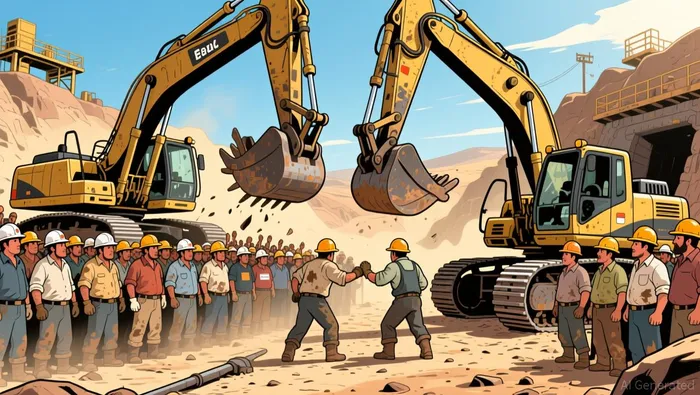
The news headlines focus on the blockade. That is not what should hold your attention. The real question for any dividend investor is whether the environment that produced this dispute is fixable - or whether it is the kind of structural governance problem that returns every few years, just when you decide the dividend is safe.
This is not a normal labor dispute.
The stoppage stems from a disagreement over worker productivity bonuses and statutory profit-sharing entitlements. Orla calls the action illegal under Mexican labor law because proper strike procedures were not followed. Whether it is legal or illegal does not answer the investor's question. The mine is not producing gold, and it is bleeding revenue.
The deeper context is that this is the third act of a dispute that the United States, Mexico, and Canada have already weighed in on. In March 2026, a USMCA labor panel found "severe" labor rights violations at Camino Rojo - coercion, intimidation, and denial of freedom of association - and ordered nine specific remedies. In May, Orla announced it was implementing those remedies.
Three weeks later, the workers blockaded the mine anyway.
I believe that tells you something about the operating environment. This is not a misunderstanding that a single negotiation resolves. It is a structural tension between a Canadian mining company and a workforce whose trust was broken, according to an international trade panel, and has not been rebuilt.
What the financials actually show.
Before the stoppage, Orla looked like a credible dividend growth candidate. Q1 2026 produced 81,206 ounces of gold, generating $378.9 million in revenue and $75.4 million in net income. Operating cash flow was $103.5 million, with free cash flow near $63 million.
All-in sustaining cost - the gold mining industry's standard measure of the total cost to produce and maintain an ounce of gold - came in at $1,668 per ounce. Gold is trading roughly around $3,300 per ounce. That gives the business wide margin room. Even with a dividend payout, there is cash to spare.
The stock trades at a forward P/E of roughly 8.5 times, implying the market expects significantly lower earnings ahead - possibly factoring in this kind of disruption. The trailing P/E sits around 18 times, which is not cheap for a junior-to-mid-tier producer, but the forward multiple suggests the market is discounting pain.
Why Camino Rojo matters more than the headlines suggest.
Camino Rojo is not Orla's only mine. The Musselwhite operation in Northern Ontario, Canada, produced roughly 204,000 ounces of gold in 2025 and has been running since 1997, with recent discoveries suggesting life beyond 2030. Musselwhite is in a stable jurisdiction with no labor disputes of this scale.
But Camino Rojo is the growth engine. The company's 2026 guidance calls for 110,000 to 120,000 ounces from Camino Rojo alone. If operations are disrupted for weeks or months - and we don't yet know the resolution timeline - that guidance is at risk. And if the disruption becomes cyclical, the dividend growth story evaporates.
The pricing power question.
In my framework, pricing power is the single most important filter. Can the company raise prices without losing customers? Gold miners are interesting because the commodity sets the price - they don't set it themselves. But that works in their favor when gold is structurally strong. As long as central banks and investors are buying gold, and as long as the company's AISC stays well below spot price, the cash flow engine runs.
Orla passes this test. Its cost structure is competitive. The threat to its dividend does not come from gold prices - it comes from operational continuity. And that is a different kind of risk.
From an income and risk/reward point of view.
Here is where the judgment call lives. I don't think an 8% stock drop tells you whether this dividend is safe or not. The market priced the immediate disruption, which it should. The question is whether this is a one-week stoppage that resolves in a negotiated settlement, or the beginning of a pattern.
I believe the USMCA panel's finding of "severe" violations gives me pause. When an international trade mechanism steps in, it means the problem is systemic. Orla has agreed to remedies, which is the right move. But remedies take time to implement, and trust takes longer to rebuild.
This is not a stock I would treat as a yield shortcut. The dividend yield at US$0.06 annualized and the current price is roughly 0.4% - not worth chasing. If you own it for dividend growth potential, the thesis is that Orla can compound production, keep costs below gold price, and grow that initial payout over years. The Camino Rojo dispute introduces a governance risk that could disrupt that trajectory.
The counterargument.
A fair case exists on the other side. Mining labor disputes happen. The USMCA process itself is a corrective mechanism - the fact that it worked suggests accountability exists. Orla's Q1 free cash flow of $63 million shows the business generates real money. Musselwhite continues operating regardless. The forward P/E of 8.5x may be overselling the disruption. If this resolves quickly, the stock's 8% drop creates entry opportunity for a company with wide gold cost margins and a new dividend.
I respect that view. I just think the resolution timeline matters more than the resolution itself. A two-week stoppage is a blip. A recurring pattern is a business model problem.
So what.
For dividend growth investors, Orla Mining sits in an uncomfortable zone. The financials are sound. The gold cost margin is wide. The dividend is real, not aspirational. But the governance risk at Camino Rojo is unresolved, and in my framework, unresolved operational risk at your primary production site is not something you layer a conviction position on top of.
This is the kind of name to watch, not to buy. Let the dispute resolve. See whether the USMCA remedies stick. Watch the next production report. If Camino Rojo returns to plan without recurring disruption, the forward multiple at 8.5x may offer a genuine entry point for a gold miner with pricing power and a growing dividend.
Until then, I believe the patience reward outweighs the urgency.