

Oil-driven inflation, not a fresh bank run, appears to be driving the selloff
This drop looks more like a macro reset than the start of a new bank run. Recent weakness came after oil-driven inflation forced markets to reprice the Fed from cuts toward hikes. For bank stocks, that matters because valuations can reset quickly when rate expectations shift.
Why the macro shock matters to banks
The market's reaction was fast. The 10-year Treasury yield rose to 4.48% from 3.97%, and futures moved to fully price in a 25-basis-point hike by January. Higher rates are not automatically bad for banks, but in this setup they raise the odds that borrowing stays expensive longer, demand softens, and credit stress builds before earnings fully adjust.
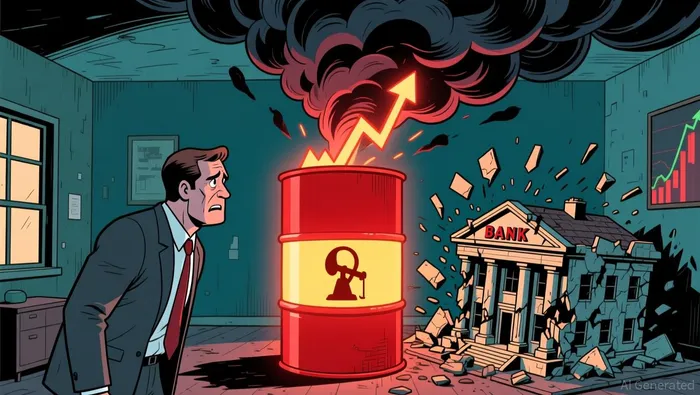
Bears see a direct threat to the credit cycle: higher rates can lift deposit costs faster than loan yields, squeezing margins, while tighter credit can make refinancing harder for borrowers. Bulls, meanwhile, think investors may be overreacting to a temporary energy shock. Oil prices shot up to more than $100 a barrel, pushing up gasoline and diesel costs, but recent research suggests the economy may be more resilient than in past energy crises. If that holds, the near-term hit could fade faster than the market expects.
Pathward fell 3.5% in a broader regional-bank selloff that also hit Axos. That suggests the initial move was sector-wide, driven by a rapidly changing rate outlook rather than an obvious company-specific unraveling.
Higher rates can squeeze bank margins and delay the 2026 recovery case
A bank's earnings do not depend only on whether rates are high, but on which side of the balance sheet moves faster.
The margin squeeze in plain English
That is the core issue behind today's selloff. In this setup, rising rates lift funding costs on deposits faster than they lift loan yields. In practical terms, banks may have to pay depositors more quickly than they can reprice existing loans, compressing margins. If that happens while the economy is still absorbing an oil shock, management teams have less room to breathe.
Refinancing is the next pressure point
The bigger risk may come from borrowing behavior. Commercial real estate loan books are already dealing with elevated vacancy rates, and tighter credit conditions can slow refinancing.
That matters because banks need borrowers to stay afloat long enough to pay interest, rebuild cash flow, and eventually roll over debt. If refinancing slows, the hit is not just about spreads; it can also show up later as higher credit losses.
The 2026 bank bull case now has a timing test
The bullish case for banks in 2026 was never blind optimism. It rested on a cleaner setup: strong revenue growth from expanding net interest income, greater capital deployment under lighter regulation, and a credit-positive macro backdrop as rate cuts continue. That setup can still work, but this week's shift makes timing more important.
Futures now fully price in a 25-basis-point rate hike by January and show an 80% probability of one by December. The key question is whether cuts simply arrive later than expected, or whether a higher-for-longer environment turns a valuation reset into a tougher earnings story.
Axos and Pathward are exposed to the same macro shock in different ways
Both names were hit in the same panic wave, but the stories behind them are not identical.
Axos still has to prove its niche holds up
Axos was hit alongside the rest of the sector, but its setup is narrower. Earlier this month, the company reported fiscal Q2 2026 results, including net income of $128.4 million for the quarter ended December 31, 2025. That does not remove the macro pressure, but it does give investors a fresh operating data point instead of forcing a read purely through the lens of fear.
If Axos can keep its small-business and digital-bank positioning intact, it can still be viewed as a niche lender rather than just another balance sheet exposed to commercial real estate stress. That is also its weakness: niche models usually have less room for error, and if execution slips, investors are less likely to keep paying a specialness premium.
Pathward looks more like a standard regional-bank story
Pathward's 3.5% fall matters, but not because it suddenly developed a unique new problem. The stock was caught in the same oil-driven inflation shock that forced markets to reprice the Fed, which remains the main issue for a broader regional franchise.
That means Pathward looks less like a pure niche story and more like a conventional bet on regional-bank earnings power. In that frame, valuation still depends on the 2026 backdrop many bulls want to lean into: strong revenue growth, expanding net interest income, and a credit-positive macro backdrop as rate cuts continue.
What the split means for investors
- Axos: Watch whether its niche strategy and latest quarter still support a separate upside path.
- Pathward: Watch whether the broader earnings-improvement case can survive a higher-rate setup.
If the macro shock fades, both stocks can recover. But the proof points are different: Axos needs its niche story to hold, while Pathward still has to earn back confidence through the more familiar regional-bank earnings script.
What to watch before treating the selloff as a bargain
This still looks like a watchlist-and-verify setup, not an automatic buy. The market has been shaken by an oil price shock above $100 a barrel that accelerated the shift from rate-cut hopes to rate-hike fears. That can create a better entry later, but only after the macro panic cools enough for investors to stop treating every bank like the same problem stock.
The cleaner entry likely shows up when headline noise fades and the next earnings cycle starts answering the real question: is this a temporary inflation scare, or the start of a tougher credit cycle? In that sense, patience is not passivity. It is waiting for evidence instead of paying panic prices.