

The first day of school is here for a historic new chapter in Richmond. After sitting empty for years, the 90-year-old building that was once Patrick Henry Elementary is reopening its doors as the city's first charter school. This isn't a new financial venture, but a community-driven revival of a neglected public asset.
The project was led by a dedicated community board and volunteers who spent six months and half a million dollars to renovate the aging structure. Their efforts culminated this weekend, with volunteers putting the final touches on classrooms just in time for nearly 200 students to start classes on Monday. The transformation is palpable, as one volunteer put it, "You can see how much time and effort has gone into making this place... coming back to life."
This rebirth is about more than just fixing a roof. The school will serve K-5 students citywide, operating within the Richmond Public Schools system but with a distinct charter model. It promises a different experience, with year-round schooling, uniforms, and a curriculum that emphasizes hands-on learning and outdoor education. The setup is clear: a historic building, a community effort, and a new kind of public school opening its doors.
The Real-World Utility: Is the Demand Real?
The community effort to revive Patrick Henry is impressive, but the real test is in the classroom. The school opens with nearly 200 students, a solid start. Yet the fact that spots are still open for kindergarten and first grade is a tangible signal. It suggests initial enrollment may be below the school's full capacity, which is a practical reality check on the demand.
The model itself is the key to understanding that demand. This isn't a traditional public school. It's built on a more hands-on curriculum that integrates learning directly with the surrounding environment. The promise is to have children in gardens and spend a lot of time outdoors, with classrooms extending into the gardens that surround the school and also Forest Hill Park. This project-based, nature-integrated approach is the unique selling point, designed to attract families seeking a different public school experience.
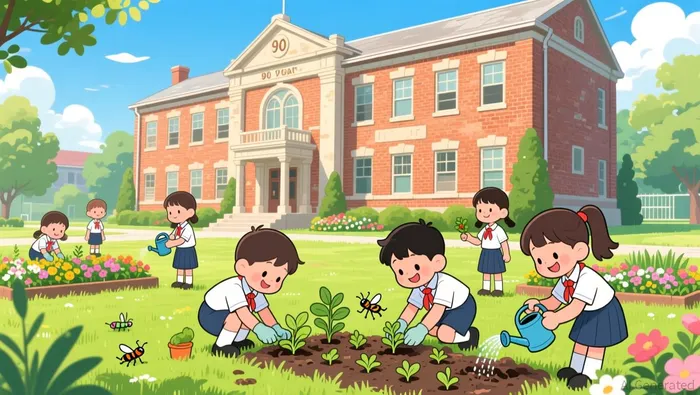
That model is not an isolated idea. It's part of a larger, coordinated neighborhood revitalization effort. The school's founding was explicitly tied to the revitalization of the Woodland Heights neighborhood, which included restoring parks and a creek. The school is a physical and symbolic anchor for that project, aiming to draw families back into the area. In that light, the demand being tested is for a holistic community renewal, not just a new classroom.
So, is the demand real? The evidence points to a real, but measured, need. The community mobilized to fix the building, showing deep local investment. The open spots indicate the school is not yet a runaway success story, but that's common for a first-year charter. The viability hinges on whether the school's specific model-its outdoor, project-based learning-resonates with enough families to fill those remaining seats and sustain itself. For now, the demand appears real, but still in the early stages of being proven.
The Financial Reality: Funding the Revival
The money for this revival came from the ground up. The half a million dollars to renovate the 90-year-old building wasn't drawn from state coffers or a bond referendum. It was raised and spent by a community board and its army of volunteers. This is a pure, boots-on-the-ground model: local people investing their time and resources into a project they believe in. The financial independence is clear, but so is the risk. There is no state safety net if costs overrun or if the school's unique model fails to attract enough students to cover its operating expenses.
This contrasts sharply with the state-level debate over how to fund new school construction. Across Virginia, localities are pushing for more state resources, as seen in the recent legislative effort to expand local financing authority for school capital needs. The state is still grappling with how to share the burden of modernizing aging facilities and building new ones. In that context, the Patrick Henry model is a radical alternative. It bypasses the slow, political process of securing state or local bond funding entirely. Instead, it leverages existing, underutilized public assets and community goodwill.
The school's financial future will hinge on its charter status. While it remains part of the Richmond Public Schools system, its autonomy likely means it receives per-pupil funding from the district. That revenue stream is essential for covering day-to-day costs like staff salaries and supplies. The initial renovation cost, however, was a one-time, community-funded capital investment. The real financial test now is whether the school's unique, hands-on curriculum can sustain enrollment and fill those remaining kindergarten and first-grade spots, generating the steady funding needed to keep the lights on and the gardens growing. The model is lean and community-driven, but its long-term viability depends on a simple, real-world metric: are enough families choosing to send their children here?
Catalysts and Risks: What to Watch
For a Main Street observer, the success of this experiment comes down to a few simple, observable facts. The primary catalyst is clear: sustained enrollment growth and community support. The school opened with nearly 200 students, but spots are still open for kindergarten and first grade. The real test is whether the school's unique, project-based curriculum can attract enough families to fill those remaining seats and build a stable, growing student body. If the parking lot is full by the end of the first year, that's a strong signal the model works. If it's still half-empty, the community's initial investment may not be enough to cover the long-term operating costs.
The key risk is whether that unique curriculum can compete. The school promises hands-on learning that extends into gardens and parks, a different experience from traditional public schools. But families have options. The risk is that the novelty wears off, or that the practical demands of a project-based schedule-requiring more parental involvement or flexibility-don't appeal to enough parents to justify the school's existence. The school's survival depends on proving that its model offers real educational value that outweighs the convenience of a standard public school.
A more distant but critical factor is state policy. The school operates under a charter, but Virginia's broader debate over school funding is relevant. The recent legislative effort to expand local financing authority for school capital needs, currently in budget conference negotiations, could reshape the landscape. If passed, it might make it easier for other communities to fund similar projects. But if it fails, it could signal that the state isn't stepping up to help localities modernize facilities, making community-driven models like Patrick Henry even more essential-and perhaps more vulnerable if they lack a stable funding stream.
The bottom line is that this is a real-world test of a community-driven idea. Watch the enrollment numbers, listen to parent feedback, and see if the gardens are bustling with students. That's the common-sense check. If the demand is there, the model can work. If not, even the most passionate volunteers can't build a school on goodwill alone.