

Bill Ackman is executing a dual IPO to list his management company (PS) alongside a new closed-end fund (PSUS), aiming to create a permanent capital structure inspired by Berkshire Hathaway to eliminate redemption risks and align investor incentives. The offering targets $5 billion to $10 billion in capital, with $2.8 billion already secured through private placements, pricing shares at $50 per unit. Investors purchasing PSUS shares receive additional equity in the parent management company, directly aligning their returns with fee generation and long-term success. While the strategy offers exposure to Ackman's concentrated portfolio of undervalued North American stocks, investors face risks including potential trading discounts to net asset value and a 2% annual management fee. The IPO marks a significant structural shift from traditional hedge funds, which typically allow direct redemptions, to a public market vehicle where shares trade freely but capital remains locked.
Wall Street's attention is fixed on Bill Ackman's latest maneuver as he attempts to redefine the asset management landscape with a high-stakes public offering. After a failed attempt in 2024, the hedge fund manager is back with a refined strategy designed to address previous market and regulatory hurdles. The proposed structure promises to give public investors a direct ticket into the concentrated portfolios that have made Pershing Square famous, but it comes with a unique set of mechanics that differ sharply from standard mutual funds or traditional hedge funds. As the roadshow kicks off, the market is watching closely to see if this dual-listing model can successfully replicate the stability of Berkshire Hathaway while delivering the alpha Ackman is known for.
What Is The Pershing Square Dual IPO Structure?
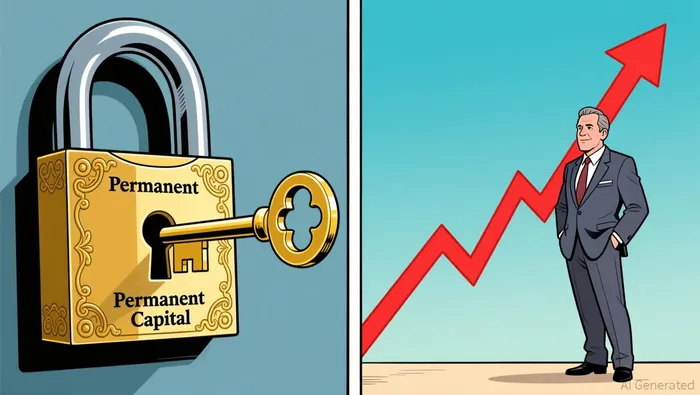
The core of this massive transaction is a dual initial public offering that combines two distinct entities into a single transaction: Pershing Square Inc. (ticker: PS) and Pershing Square USA (ticker: PSUS). The management company, Pershing Square Inc., will be listed as a traditional asset management business, while Pershing Square USA will operate as a closed-end investment company. This structure is designed to provide the firm with stable, permanent capital, a feature that has long been a competitive advantage for Warren Buffett's Berkshire Hathaway but is rare in the hedge fund world. By locking capital in a closed-end fund, Ackman can avoid the forced asset sales that often plague traditional hedge funds during market downturns when investors redeem their shares according to reports.
The pricing for this offering is set at $50.00 per share for the PSUS units. However, the deal includes a specific inducement mechanism designed to make the investment more attractive to public market participants. For every five PSUS shares purchased, investors will receive one share of the parent management company, Pershing Square Inc., at no additional cost. This bonus share structure is intended to provide immediate value and align the interests of fund investors with the management company's long-term profitability. The total proceeds from the IPO and the concurrent private placement could reach $10 billion before underwriter options, with major investment banks including Citigroup, UBS, and Bank of America leading the transaction.
Why Is Bill Ackman Launching PSUS Now?
The timing of this launch follows a significant pause in Ackman's public market ambitions. In 2024, Pershing Square attempted to take a similar fund public but withdrew the offering just days before the scheduled launch. Analysts suggest that Ackman has used this time to refine the structure to address the specific market and regulatory challenges that likely hindered the previous attempt. The current effort appears to be a more polished version, leveraging the momentum of the roadshow to gauge institutional appetite more effectively. The fund has already secured $2.8 billion in commitments from institutional investors, including pension funds and family offices, which signals a strong baseline of confidence from professional money managers.
A key driver for this move is the desire to capitalize on Ackman's concentrated investment strategy without the liquidity constraints of a traditional private hedge fund. The new fund aims to invest in a concentrated portfolio of 12 to 15 undervalued North American companies, mirroring the strategy of Ackman's existing hedge fund. This includes major holdings such as Uber, Chipotle, and Brookfield. By going public, Ackman is essentially offering the public a vehicle to participate in these high-conviction bets with a longer-term horizon. The structure allows the firm to hold positions for years, avoiding the short-term performance pressures that often dictate the behavior of publicly traded asset managers according to analysis.
How Does The Share Inducement Mitigate Investment Risks?
One of the most critical components of this offering is the inducement designed to counteract the persistent problem of closed-end funds trading at a discount to their net asset value (NAV). Historically, closed-end funds often trade below the value of the assets they hold, which can erode returns for shareholders. To mitigate this risk, Ackman has structured the deal to include a 20% share bonus for public investors. Specifically, the offering provides one PSI share for every five PSUS shares purchased, which is valued at roughly 10% of the purchase price. This bonus is intended to offset the potential discount and provide a buffer for investors if the fund shares trade below NAV in the secondary market according to industry reports.
Despite this inducement, investors must remain aware of the risks associated with this vehicle. The fund carries a 2% annual management fee, which is standard for the industry but adds to the cost of holding the position. Additionally, the shares will trade on the New York Stock Exchange under the symbols PS and PSUS, meaning their market price can fluctuate based on supply and demand dynamics independent of the fund's underlying asset value. While the structure aims to replicate the Berkshire Hathaway model, it is not a perfect copy, and the success of the inducement will depend on whether it can overcome the structural bias against closed-end funds, particularly given the recent underperformance of similar vehicles in Europe as reported.
What Are The Key Positions And Strategy For The Fund?
The capital raised through this IPO will be deployed into existing concentrated positions, rather than diversifying into entirely new sectors. This approach allows Ackman to maintain his signature strategy of identifying undervalued companies with strong growth potential. The fund is expected to hold between 12 and 15 positions, focusing on North American companies that the firm believes are mispriced by the market. Major holdings likely to be included are those already visible in Ackman's current portfolio, such as technology and consumer staples leaders like Uber and Chipotle. This concentration strategy is a double-edged sword; it offers the potential for outsized returns if Ackman's thesis plays out, but it also exposes investors to significant volatility if those specific sectors underperform according to Reuters.
The roadshow for this combined IPO has officially begun, with major banks coordinating the transaction. The offering is subject to SEC review of Form N-2 and Form S-1 registration statements, which is a standard regulatory hurdle for such large-scale public offerings. The presence of institutional backing from major Wall Street banks suggests that the transaction has the necessary underwriting support to navigate the current market environment. As the market digests this news, the focus will be on whether the unique structure can attract enough capital to meet the $5 billion to $10 billion target and whether the inducement is sufficient to drive demand in a competitive fundraising landscape as announced.