

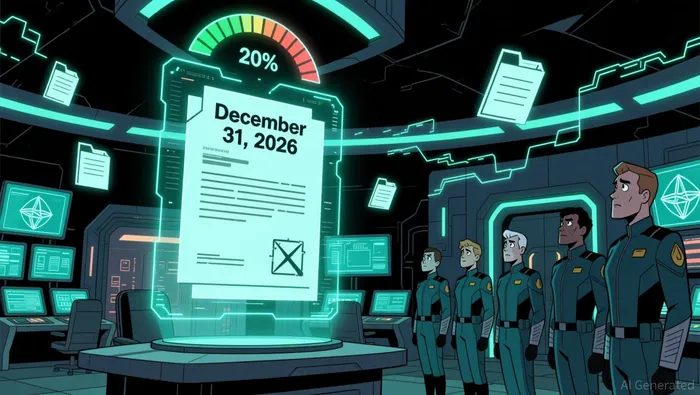
The prediction market for a 2026 alien disclosure is now firmly priced in, with Polymarket traders assigning a 20% probability to the event. This estimate is supported by significant trading activity, with the December 2026 contract alone seeing $26.5 million in volume. The market's primary catalyst is President Trump's pledge to release "very interesting" Pentagon UAP files, which has directly lifted trader estimates from earlier levels.
A competing market on Kalshi shows slightly more optimism, with a 22.5% probability for disclosure in 2026. This divergence indicates broad but not unanimous speculation, with traders across platforms weighing the same new information. The key near-term catalyst remains the scheduled release of UAP files, with FBI Director Kash Patel confirming they have already been delivered for release.
Beyond the official files, reports of meetings between church pastors and intelligence officials add a layer of narrative-driven speculation. These discussions, allegedly to prepare the church for a potential disclosure event, are feeding into market sentiment. Yet, the setup remains one of elevated odds against a concrete, high-impact event, with skepticism from figures like former President Obama still present.
Volume Flows and Liquidity Patterns
The market's liquidity is substantial, with total volume exceeding $32 million. This deep pool of capital supports active trading and price discovery. However, the distribution of that flow reveals where conviction lies. The December 31, 2026 contract dominates, accounting for $26.5 million of the volume. This heavy concentration suggests traders are betting on a late-year or even 2027 resolution, not a near-term announcement.
In contrast, earlier contracts show significantly less activity. The May 31 contract has only $1.1 million in volume, while June 30 and September 30 see $390,540 and $213,557 respectively. This pattern of declining volume toward the front end indicates far less conviction in a disclosure happening before the end of the year. The market is effectively pricing in a long wait.
The price of the December contract, at 18¢ for 'Yes' shares, directly reflects this flow. It implies a 20% probability of disclosure by year-end, a figure that aligns with the overall market consensus. The high price for 'Yes' shares, despite the massive volume, underscores that the dominant flow is not a bet on imminent success, but on a delayed, high-impact event.
Catalysts, Risks, and What to Watch
The primary catalyst is the scheduled release of Pentagon UAP files. The market will react directly to the nature and timing of this disclosure. If the files are released as promised and contain definitive evidence, the odds of a "Yes" resolution could spike. Conversely, a delayed or non-eventful release would likely deflate current expectations.
A major risk to the current thesis is the lack of a credible official source for resolution. The market relies on official information from the government or a consensus of credible reporting. This creates a vulnerability; if the files are released but deemed inconclusive, or if no high-level official makes a definitive statement, the market may struggle to find a clear resolution path, leading to prolonged uncertainty.
Watch for any official statements from the White House, Pentagon, or intelligence community, as well as any significant shift in trading volume towards the May 31 contract. The May contract currently has only $1.1 million in volume, a fraction of the December contract. A sudden surge in activity there would signal a major bet on near-term disclosure, a key signal that the market's long wait thesis is breaking down.