

The headlines focused on what could go wrong. The cash flow showed what already went right.
Pop Mart's shares fell more than 22% on March 25 after reporting 2025 results. The market reaction seemed to confirm the fear: this is a one-hit wonder too dependent on the Labubu character. But the numbers told a different story-revenue rose 185% to 37.12 billion yuan and net income more than quadrupled to 12.8 billion yuan. The market is still pricing the old concentration risk while the business is already generating the kind of cash that makes that story feel stale.
This isn't about excitement over a trendy toy. It's about a company that produced 72.1% gross margins and ended the year with 13.8 billion yuan in cash and no debt. When a business throws off that much cash, the question shifts from "will it survive?" to "what will it do with the money?" Pop Mart's answer is already visible: fund global expansion, develop new intellectual properties, and build a portfolio that looks less like a single bet and more like a platform.
The concentration narrative misses two concrete improvements. First, diversification is already working. Yes, The Monsters franchise contributed 38.1% of 2025 revenue, up from 23.3% a year earlier. But four other IPs each generated over 2 billion yuan-Skullpanda at 3.54 billion, Crybaby at 2.93 billion, Molly at 2.90 billion, and Dimoo at 2.76 billion. That's not a one-character show; that's a lineup where the supporting cast is already pulling its weight.
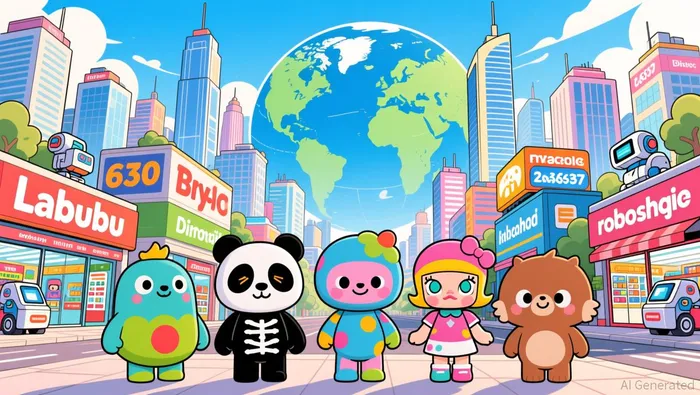
Second, the geographic mix changed dramatically. Overseas markets accounted for 43.8% of revenue, with the Americas surging 748.4% to 6.81 billion yuan. Pop Mart now operates 630 stores and 2,637 roboshops across 20 countries. The business is becoming less Chinese, less dependent on any single region, and more of a global brand-exactly the kind of risk-profile improvement that should matter to long-term investors.
The selloff created an expectations reset. Shares have retreated about 40% from their August peak. The market has moved from pricing perfection to pricing imperfection. But the operating trajectory hasn't broken; it accelerated. Over the next 12 months, the setup improves further: a Sony Pictures film featuring Labubu is in development, manufacturing capacity expanded to Mexico and Southeast Asia, and more than 100 North American stores are expected by year-end 2026.
Free cash flow is the hard proof. While the exact FCF bridge would strengthen the case, the profit and cash balance are strong proxies. At roughly 195 billion yuan market cap (based on $27B USD), the 13.8 billion yuan cash pile represents about 7% of the company's value-and that cash grew while funding rapid expansion. This isn't a business burning money to chase growth; it's a business generating surplus cash while growing at triple-digit rates.
When conviction is high and the financial bridge is explicit, a target makes sense. Here's mine: HK$240 within 18 months, representing roughly 45% upside from recent levels around HK$165. The math is simple: if Pop Mart hits Morgan Stanley's 2026 revenue estimate of 47.88 billion yuan and net income of 15.42 billion yuan, and the market awards a modest 18x multiple (down from today's implied multiple but above deeply distressed levels), the stock rerates. The tripwire is clear: if The Monsters revenue declines more than 20% over the next two quarters, or if cash generation turns meaningfully negative, the thesis breaks.
The market is still pricing IP concentration risk. The cash flow says the risk is already being managed-and paid for. Sometimes the best setups appear when everyone is asking the wrong question. They're asking if Labubu will fade. They should be asking what happens with all the cash Labubu is generating right now.