

Four dissents at the April 29 FOMC-the highest level since October 1992-deliver an immediate market signal: the Fed's unity is cracking, and near-term rate relief is off the table. One member, Stephen Miran, voted in favor of a rate cut, while three others-Beth Hammack, Neel Kashkari, and Lorie Logan-objected to the easing bias language in the statement. That's a meaningful split: even among those who accepted the hold, a significant faction doesn't want markets interpreting this as a step toward future cuts.
The immediate takeaway is straightforward: don't expect relief rates anytime soon. A rate cut by the Fed is now highly unlikely in 2026, and the committee's own guidance suggests that stance will hold through at least the near term. With energy prices climbing and inflation pressures resurging, the Fed has little room to maneuver. The dissents themselves are a catalyst-they signal that the Fed's next moves will be more contested, not less, as Powell hands the reins to his successor.
Powell's own departure is imminent. His chair term expires May 15, and while he'll remain on the Board of Governors, he loses his voting power. He will remain a governor after his term ends on 15 May 2026. That transition adds another layer of uncertainty just as the Fed is signaling a tighter stance. For markets, the message is clear: the era of predictable Fed easing is over, and the next phase will be defined by more friction, more debate, and fewer rate cuts than investors may hope.
Rate Path Reality Check: What the Dot Plot Actually Says
The Fed's dot plot just drew a line in the sand: one rate cut in 2026, at most. That's it. Markets had been pricing in more-maybe two cuts, maybe a hint of a third by year-end. The gap between what investors expected and what the Fed is now signaling is where the opportunity (and risk) lives.
The Fed held rates steady at 3.5-3.75% maintaining a target range of 3.5% to 3.75%, with the dot plot suggesting only a single cut may arrive in 2026. That's the quantifiable reality. But here's what markets are still struggling to accept: the Fed isn't just pausing-it's signaling a fundamental recalibration. Powell's language about inflation progress being "not as much as we had hoped" marks a clear downgrade from prior expectations, and the committee's own economic projections show higher inflation forecasts paired with stronger growth.
The mechanics are straightforward. Oil above $109 with Brent futures topping $109 a barrel feeds directly into inflation expectations, which feeds into the Fed's calculus. The hot PPI report already forced markets to curtail cut expectations leading futures markets to sharply curtail the outlook for rate cuts this year. Now the dot plot confirms it: the Fed sees a path of one cut, not two or three.
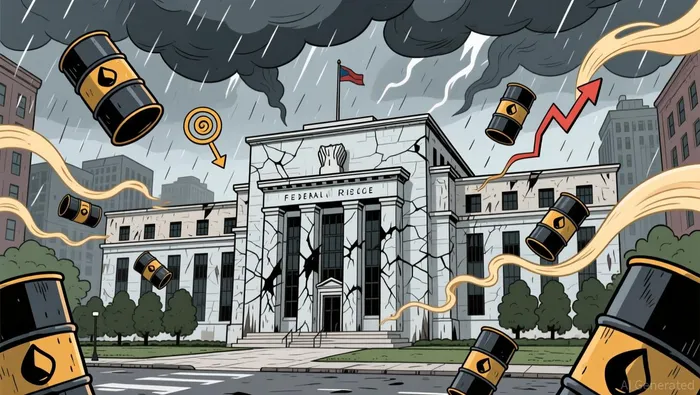
Here's the mispricing: markets are pricing contingent on oil stabilization. But the Fed's positioning suggests that even if oil stays elevated, they're prepared to deliver only one cut. Powell acknowledged the tension-risks to the labor market are to the downside, calling for lower rates, while risks to inflation are to the upside, calling for higher rates or no cuts at all. The Fed is sitting on the higher borderline of restrictive versus not restrictive.
For a tactical player, this is the setup. If you're long duration assets-bonds, growth stocks, real estate-you're exposed to the gap between market pricing and Fed reality. The Fed's one-cut path is now the baseline. Anything more requires oil to drop and inflation to cool faster than the Fed expects. Anything less, and even that single cut is at risk. The market's job now is to reprice that probability shift. The question isn't whether the Fed will cut more-it's whether oil gives them room to cut at all.
The Stagflation Question: Why Powell's Rejection Matters
Powell's outright rejection of the stagflation label is itself a market-moving catalyst-it signals the Fed's confidence (or overconfidence) in its ability to look through oil-driven inflation. That stance creates a clear tactical setup: if oil stays elevated, the Fed's credibility becomes the collateral damage.
At his press conference, Powell dismissed the term as a "1970s" phenomenon, noting unemployment is close to longer-run normal and inflation is only 1 percentage point above target. By that definition, stagflation requires "a much more serious set of circumstances." The Fed is essentially saying: we're not there, and we're not going there.
But here's the tension. Powell acknowledged that oil price shocks create "downward pressure on spending and employment" and "upward pressure on inflation" simultaneously. His offsetting argument relies on U.S. energy production ramping up-oil companies will be more profitable and may do more drilling. The catch: he explicitly noted companies will only make that judgment if they see higher oil prices for an extended period. Supply response isn't immediate. It takes time for drilling activity to translate into meaningful output.
That creates a dangerous window. If oil stays above $100 for months-as the Iran war dynamics suggest-it will keep feeding inflation while weighing on growth. The Fed's "look through" approach assumes the shock is transient. But if the shock persists, the Fed's dismissal of stagflation risks becoming a self-fulfilling prophecy: markets will stop believing the Fed can handle it, anchoring problems emerge, and the Fed finds itself chasing expectations it can't control.
For a tactical player, the setup is clear. Powell's rejection is a bet-that oil stabilizes, that productivity gains deliver, that the Fed's credibility holds. If you're positioning against that bet, you're exposed to a binary outcome: either oil drops and the Fed looks prescient, or oil stays and the Fed looks out of step. The risk isn't that stagflation is here today. It's that the Fed's dismissal removes the policy buffer just when the economy needs it most.
Catalysts and Positioning: What Moves the Market Next
The Powell era ends in days. The next major catalyst isn't a vote-it's a name. With the DOJ investigation cleared, Kevin Warsh's path to confirmation has opened considerably. Markets will price his policy leanings immediately upon nomination, and the signal will be sharp. Warsh's explicit preference for "messier meetings" and his embrace of dissent suggest he won't smooth over committee divisions. That's a volatility multiplier at a moment when the Fed already signals one cut, not two.
Here's the tactical setup: watch three triggers in the next 60 days.
Trigger one: the nomination itself. When the White House names Warsh, markets will instantly reprice Fed expectations based on his confirmation hearing statements. He signaled openness to higher rates if inflation persists. If nominated, expect a brief rally in yields as the market prices a harder line.
Trigger two: May PPI and CPI. The hot PPI report already forced markets to curtail cut expectations. Another upside surprise-especially if energy costs stay elevated-forces another reset. The Fed's one-cut path is fragile. If inflation data comes in hotter than expected, even that single cut moves into doubt.
Trigger three: the June FOMC. It will be the first under new leadership. The four dissents at Powell's final meeting weren't just about timing-they were about the easing bias language. Three members objected to interpreting the hold as a step toward future cuts. That divide won't disappear with a new chair. If anything, Warsh's embrace of "messier meetings" suggests the divisions will be more visible, not less. That creates optionality: hawks gain ground if inflation sticks, doves if labor market risks materialize.
The positioning implication is straightforward. Duration assets are exposed to a binary outcome: either oil drops and the Fed looks prescient, or oil stays and the Fed looks out of step. With the Fed sitting on the higher borderline of restrictive versus not restrictive, the margin for error is thin.
For tactical players, the play is to watch the nomination announcement and May inflation data as the primary catalysts. Position around those events. The Fed's one-cut path is the baseline-but it's a baseline built on oil stabilizing. If either trigger moves against that assumption, the entire rate cut narrative faces another reset. The window for positioning is open. It won't stay open long.