

Iran, not Trump, drove the Beijing talks
The main scorecard from Beijing was Iran, not America. Xi and Putin focused on Iran, uranium, and energy, and Moscow also pushed its idea to move Iran's enriched uranium to Russia. That makes the summit important for markets because the issue is not diplomacy alone; it is whether the Iran crisis can keep tightening oil, shipping, and risk pricing.
Moscow and Beijing also had a direct interest in sanctions exposure. Oil prices moved on mixed signals from the broader U.S.-Iran talks, which is the clearest market read-through. If Beijing helps stabilize the situation around sanctions, energy flows, or regional risk, crude, freight, and related risk premia are likely to feel it first. That is why the visit matters: markets are still trading the possibility that Middle East tension tightens global supply channels.
Beijing's own framing also weakened an easy "this was about America" reading. Moscow said there was "no connection" between Trump and Putin's visits. At the same time, Tehran warned the US was still preparing "overt and covert" moves for attack. Diplomacy may lower the odds of a wider shock; the threat may also remain live. Either way, the key question is whether Beijing helps contain the Iran blowup or entrenches a higher-risk setup for oil and shipping.
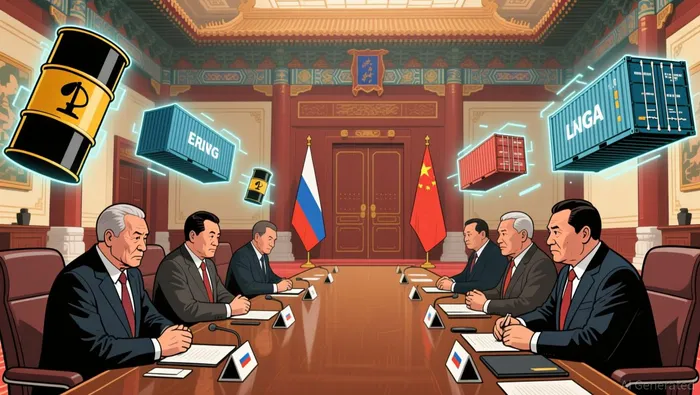
Putin's Iran strategy: keep Tehran inside a Russia-facilitated track
The mechanism is straightforward: Moscow wants to keep Tehran connected to a Russia-facilitated process so Iran becomes a bargaining lever rather than just a sanctions headline. In St. Petersburg, Putin told Araghchi that he had received a message from Iran's new supreme leader and said Russia would do everything that meets your interests to achieve peace quickly. Even pledges to bring peace matter because they keep a diplomatic channel alive. As long as Tehran still sees Moscow as a usable conduit, the nuclear crisis remains negotiable rather than fully priced as an open-ended regional break.
Why that matters for markets
This is not just diplomacy. It is also a market setup. If Moscow can advance its uranium transfer proposal, markets may get a less direct but still useful path to reduce the nuclear overhang. That keeps the risk premium in crude relevant: if uranium or Hormuz-related risk moves, prices can rerate quickly.
Beijing's role was to keep the channel usable
Beijing did not need to solve Iran for Russia. It only needed to help keep the conversation inside a sanctioned-energy corridor where Moscow could still influence events. That helps explain why the talks centered on Iran, uranium, and energy. The point was not optics. It was to avoid pushing Tehran fully into another camp and to preserve Moscow's place in whatever table gets rebuilt. In sanction-sensitive commodity flows, that matters because it can shape financing, insurance, and routing as prices stay volatile.
The quiet bear case
There is still a clear limit to the thesis. Putin left Beijing with agreements, but not the pipeline outcome Moscow most wanted. Power of Siberia 2 has no definite timetable, and Beijing stayed quiet on the contract itself. That leaves Russia's energy liquidity more dependent on workarounds than on new backbone infrastructure. If the uranium idea stays theoretical, the market is unlikely to sustain much interest.
What investors should watch next
The next read-through is operational. Beijing produced agreements, but the market cares whether Moscow can keep Iran, uranium, and energy moving through a sanction-sensitive corridor that includes China. The real fallout is not ceremony. It is whether flows, financing, and diplomacy remain usable.
Energy and shipping
- Bull case: Russia can lean on its role as a reliable energy supplier to buy time and keep Tehran tied to a Moscow-facilitated back channel rather than a pure shock trade.
- Bear case: Iran still wants to reopen the Strait of Hormuz while leaving nuclear issues for later, but the US does not appear open to that approach. That keeps Hormuz risk embedded in crude and shipping.
- Watch next: whether discussions shift around freedom of navigation through the Strait of Hormuz, and whether threats to energy infrastructure keep overriding diplomatic relief.
Russia-China sanction-sensitive flows
- Bull case: Moscow and Beijing deepen trade, investment, and payment links in a corridor already shaped by sanctions. If that translates into real transaction flow, Russian energy and dual-use movements can keep finding routes through Asia.
- Bear case: Putin left Beijing with fresh agreements, but no definite timetable on Power of Siberia 2. Without that backbone, the liquidity story stays more fragile and more dependent on workarounds.
- Watch next: whether rhetoric turns into visible payment, shipment, and routing activity.
Thesis signposts
- Thesis strengthens if: the uranium transfer idea keeps traction, China-linked channels absorb more sanction-sensitive energy flow, and Hormuz stays contested but negotiable.
- Thesis breaks if: the Moscow back channel loses utility, Beijing refuses to accommodate sanctioned flow, or talks fail in a way that revives risk to Iranian energy infrastructure and worsens Hormuz disruption.