

The scale of the disruption is clear. QatarEnergy has declared force majeure on 10 LNG cargoes, amounting to 1.4 billion cubic metres of gas. These are not minor delays; they are a direct cancellation of contracted deliveries scheduled for April until around mid-June 2026. The impact is immediate and tangible for key customers, with Italian importer Edison confirming it has received a new notification for the Adriatic LNG terminal.
The cause is a direct consequence of the escalating regional conflict. According to QatarEnergy's CEO, attacks by Iran knocked out 17% of QatarEnergy's LNG export capacity last month. The specific target was the critical Ras Laffan facility, where an Iranian strike damaged two of the country's 14 liquefaction trains and one gas-to-liquids plant. This isn't a one-off incident but part of a broader campaign. The conflict that began in late February with U.S. and Israeli attacks on Iran has now spilled over into direct assaults on energy infrastructure, with Iran retaliating by targeting oil and gas facilities across the region.
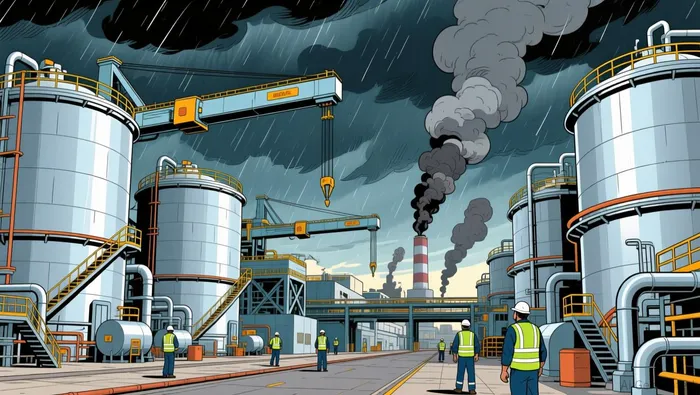
This creates a clear causal chain: the U.S.-Israel campaign against Iran led to Iranian strikes on Qatar's energy assets, which in turn caused a significant, sudden drop in production capacity. The force majeure declaration is the contractual mechanism QatarEnergy is using to excuse itself from delivering contracted volumes it can no longer produce. The damage is severe, with repairs expected to sideline 12.8 million tonnes of LNG production per year for three to five years, representing a multi-year structural hit to supply.
Market Response: Substitution and Price Signals
The market's immediate reaction shows its ability to reroute supply, but also highlights the strain. Italian importer Edison is the clearest example, having secured seven cargoes of liquefied natural gas from the United States to replace the 10 canceled by Qatar. This substitution is happening despite the disruption, with Edison's CEO stating the market offers sufficient flexibility to continue deliveries. The company pointed to the recent startup of two new U.S. LNG plants as a key reason for confidence, a move that has already begun to shift the supply balance.
This substitution is being driven by powerful price signals. The widening gap between U.S. and international prices is incentivizing higher exports. In March, U.S. LNG exports hit a record high of 17.9 billion cubic feet per day, and forecasts now see full-year 2026 exports at 17.0 Bcf/d. The economic pull is clear: the price spread between Henry Hub and European import prices has surged, with one measure up 83% from February. This spread is so wide that at least one U.S. terminal operator is considering deferring maintenance to keep exporting.
Yet capacity remains a constraint. The market is hitting the limits of what can be shipped out. While new capacity is coming online, including the Golden Pass Train 1 set to start exports in the second quarter, the overall system is operating near maximum utilization. This creates a tension: the price signal is strong enough to push exports to record levels, but the physical infrastructure is a bottleneck. The result is a market that is flexible in the short term but operating under significant pressure, with the risk of further tightening if the Qatar supply gap persists or worsens.
Structural Supply Outlook: A Market in Transition
The short-term shock from Qatar's force majeure is a stark reminder of the market's vulnerability to geopolitical events. Yet, viewed against the long-term trajectory, this disruption appears as a temporary jolt in a broader shift from scarcity to abundance. The fundamental story for 2026 is one of massive new supply coming online, which analysts expect will ease the tightness that defined the post-2022 era.
Global LNG output is projected to jump by at least 35 million metric tons this year, with new capacity from the U.S. and Qatar leading the charge. This expansion is expected to lift total global supply by up to 10% year-on-year, pushing the market from its recent state of tightness toward ample availability. The result should be a sustained pressure on prices, with forecasts for Asian spot LNG averaging between $9.50 and $9.90 per million British thermal units this year-down from an average of $12.45 in 2025.
Qatar's own North Field expansion project is a key part of this supply wave. Despite the recent operational setbacks, the project remains on track for its first production in the second half of 2026, with the CEO stating it is "looking quite positive" for a mid-2026 start. When fully operational by 2027, this expansion will boost QatarEnergy's output by some 85%, adding a massive 126 million metric tons of LNG per annum to the global pool. This long-term capacity is the counterweight to the short-term damage.
The bottom line is that the market is in a period of transition. The immediate substitution of U.S. cargoes for canceled Qatar volumes demonstrates resilience, but the underlying trend is toward greater supply flexibility. As new Atlantic basin capacity ramps up alongside Qatar's delayed but still-coming expansion, the structural pressure will be to absorb this ample availability. This sets the stage for a market where price stability, rather than volatility, becomes the norm-assuming geopolitical tensions do not trigger further, larger-scale disruptions.
Catalysts and Risks: What to Watch
The situation hinges on a few key variables that will determine whether this is a contained event or the start of sustained market stress. The first and most immediate is the duration of the force majeure. Edison has already warned that the disruption may extend beyond mid-June. If the outage persists longer than the initial 10-cargo window, it will stretch substitution capacity further. The company has secured seven U.S. cargoes to cover the canceled volumes, but any extension would require finding additional supply, which is already under pressure.
The second critical factor is regional escalation. The damage to Qatar's Ras Laffan facility is a stark warning. Further attacks on other key supply routes or production hubs could overwhelm the market's ability to reroute. The closure of the Strait of Hormuz by Iran, a critical artery for about one-fifth of the world's oil and LNG, is a major vulnerability. If the conflict spreads to other Gulf producers or disrupts shipping lanes, the substitution calculus breaks down, and the risk of a broader supply shock rises sharply.
Finally, watch the physical constraints within the U.S. export system. The market is already operating near its limits, with terminal utilization rates in the United States expected to be slightly higher than in 2025 and near maximum capacity. Low storage levels and high utilization mean the system has little buffer. If demand surges unexpectedly-due to colder weather or further supply cuts-the risk of amplified price volatility increases significantly. The recent record U.S. exports of 17.9 billion cubic feet per day in March show the system is working hard, but it is not infinite.
The bottom line is one of competing pressures. On one side, the market has demonstrated remarkable flexibility to reroute supply, buying time for the long-term supply wave to materialize. On the other, the physical and geopolitical constraints are tightening. The next few weeks will reveal whether the substitution can hold or if the market is about to hit a wall.