

QatarEnergy has cancelled 10 LNG cargoes destined for Edison, equivalent to 1.4 billion cubic metres of gas, with the disruption spanning from April through mid-June 2026. The force majeure stems from attacks on QatarEnergy's infrastructure that knocked out 17% of its LNG export capacity, and the company has indicated the disruption may extend beyond mid-June given ongoing constraints in the Strait of Hormuz.
Edison moved swiftly to plug the gap, securing seven replacement cargoes on the spot market-six of them sourced from the United States. The first replacement cargo arrived at the Adriatic LNG terminal on April 11, with subsequent deliveries scheduled through May and June. This rapid procurement has allowed the utility to cover most of the shortfall and maintain supply commitments to its final customers in Italy.
Beneath this operational response lies a substantial long-term commitment: Edison's 25-year contract with QatarEnergy, signed in 2009, obliges the Qatari supplier to deliver 6.4 billion cubic metres annually-roughly 10% of Italy's total gas consumption. Italy remains Qatar's largest European buyer, receiving approximately five cargoes per month under long-term arrangements. The fact that this contract has remained intact since 2009, even through past crises, underscores both the strategic value of the relationship and Italy's structural dependence on Qatari LNG as a cornerstone of its supply portfolio.
Macro Backdrop: Tight Markets, Elevated Prices, and the North American Offset
The Qatar disruption arrives at a pivotal moment in the LNG cycle-one defined by record European demand, robust supply growth, and a structural shift in global trade flows. Europe is set to import a record 185 billion cubic metres of LNG in 2026, up from the previous record of 175 bcm in 2025, according to the IEA the IEA's quarterly Gas Market Report. This surge reflects the EU's sustained effort to replace Russian pipeline gas with seaborne liquefaction following the 2022 invasion of Ukraine.
Global LNG supply is expanding at its fastest pace since 2019, with growth exceeding 7% in 2026 global supply is forecast to grow more than 7%. Yet despite this supply wave, market conditions remain tight. European gas storage sits at just 35% capacity-well below the levels needed to weather a prolonged disruption-while TTF spot prices hold around $11.27/MMBtu TTF spot prices dropped 6% month on month to $11.27/MMBtu. These are not crisis-level prices, but they are elevated enough to make any supply shock materially consequential for utilities and end customers.
The structural shift toward North American supply is the defining feature of this cycle. The United States has approved over 80 bcm of annual LNG capacity, with North American projects dominating new investment globally the United States led investment activity, approving over 80 bcm of annual capacity. This has given Europe a reliable alternative source, as Edison demonstrated by securing seven replacement cargoes-six from the US-to cover the Qatar shortfall. The IEA notes that natural gas trading volumes and hub liquidity reached record highs in 2025 across all major markets, including a 17% increase in the EU in the European Union and Britain gas trade increased by an estimated 17%.
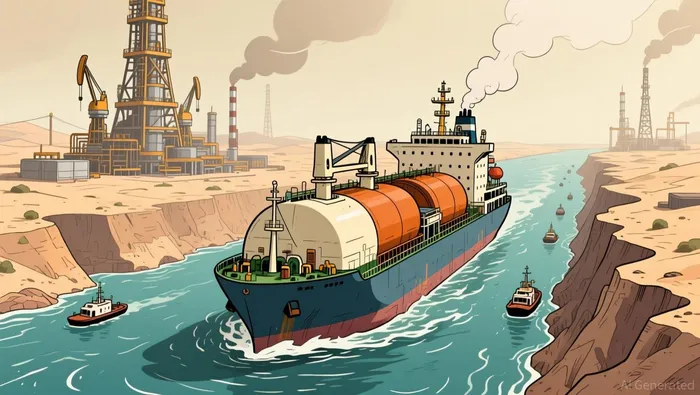
What makes the current disruption particularly significant is its concentration in a single, critical chokepoint. The Strait of Hormuz handled more than 80 million tons of LNG in 2025, with the vast majority originating from Qatar's Ras Laffan complex more than 80 million tons of liquefied natural gas transited the Strait of Hormuz. For the first time in decades, one of the world's largest baseload suppliers has been forced to halt production and declare force majeure on significant portions of its long-term contracts one of the world's largest baseload gas suppliers has been forced to halt production. This is not a regional outage-it is a systemic shock to a market that has only recently achieved greater diversification.
The macro backdrop thus creates a paradox: robust supply growth and diversified import sources should provide resilience, yet the concentration of Qatari exports through a single maritime route leaves the system vulnerable to exactly this kind of disruption. For Edison and other European buyers, the North American offset has proven effective in the short term. But the underlying tension remains-Europe's structural dependence on LNG imports, now meeting a supply chain that is more globalized yet more geographically concentrated than ever before.
Italy's Structural Response: Substitution, Not Just Replacement
The Qatar disruption has exposed a structural vulnerability, but it has also clarified Italy's strategic options. The country is not merely seeking to replace lost cargoes-it is positioning to fundamentally restructure its gas dependence.
Within twelve months, Italy could structurally replace over 85% of its demand for Qatari gas through renewables, energy efficiency and the electrification of consumption over 85% of its demand for Qatari gas. For the remaining 15%, the country could leverage existing import infrastructure, utilising spare capacity and capturing methane from flaring and venting, without resorting to new contracts or requiring further gas investment without resorting to new contracts. This is not speculative future-gazing-it is a technically grounded assessment of what a coordinated policy push could achieve in the medium term.
Yet policy signals remain contradictory. Italy's new energy decree could increase the country's demand for natural gas and at the same time disincentivize LNG imports increase demand while disincentivizing LNG imports. This creates a dangerous misalignment: utilities like Edison are scrambling to secure replacement LNG on the spot market, while domestic policy signals suggest Italy should be moving away from gas infrastructure altogether. The tension is acute-short-term supply security demands reliable import channels, but the long-term transition agenda calls for reducing gas dependence.
European leaders addressed this tension directly in March 2026. The Council conclusions reaffirmed that the energy transition must not be compromised by emergency measures, which should be temporary and targeted the Council on 19 March 2026. The message is clear: crisis responses must not lock in new fossil fuel dependencies or place excessive burden on public debt. For Italy, this means the 85% substitution pathway is not just environmentally sound-it is politically mandated at the EU level.
The strategic implication is significant. Italy's structural response is not about finding alternative LNG suppliers-it is about accelerating the transition away from gas imports altogether. This shifts the competitive dynamic: countries and companies positioned to supply the transition (renewables manufacturers, efficiency contractors, grid infrastructure) gain strategic importance relative to traditional gas exporters. For Edison and other Italian utilities, the calculation changes from "how do I secure more gas" to "how do I accelerate demand reduction while maintaining supply reliability."
The macro cycle is turning. The question for Italy is no longer how to manage dependence on Qatari LNG-it is how fast the transition can be accelerated without compromising energy security in the interim.
Investment Implications and Catalysts to Watch
The Qatar force majeure extension transforms a supply shock into a prolonged test of European gas market resilience. For investors, the key question is no longer whether the disruption will be absorbed-but how long the market must operate under constrained conditions and who captures the value created by that constraint.
Watch items fall into three categories. First, track the actual extension duration beyond mid-June. Edison's CEO has already indicated it is "reasonable to expect" the force majeure may be prolonged given ongoing Strait of Hormuz constraints reasonable to expect. A extension into Q3 2026 would coincide with the start of the heating season rebuild, creating overlapping demand pressures.
Second, monitor the pace and cost of US cargo replacements. Edison has secured seven replacement cargoes-six from the United States-with the first arriving April 11 first replacement cargo arrived on April 11. The cost differential between long-term Qatari contracts and spot US LNG is material, and utilities with flexible spot-market access are better positioned to manage this arbitrage.
Third, watch Italy's energy decree implementation. The new policy could simultaneously increase gas demand while disincentivizing LNG imports increase demand while disincentivizing LNG imports. This contradiction creates operational risk for utilities like Edison that are actively procuring spot LNG to cover shortfalls.
The primary risk is renewed Middle East hostilities extending the disruption into Q3 2026. The Strait of Hormuz handled more than 80 million tons of LNG in 2025, with the vast majority originating from Qatar's Ras Laffan complex more than 80 million tons of LNG transited the Strait of Hormuz. For the first time in decades, one of the world's largest baseload suppliers has been forced to halt production first time in decades...forced to halt production. If shipping constraints persist through summer, the market loses its primary recovery catalyst.
The opportunity lies in European storage at just 35% capacity EU storage averaged 36 bcm, or 35% of capacity and the upcoming Q3 heating season rebuild. Record European LNG imports-185 bcm set for 2026 Europe set to import a record 185 bcm of LNG in 2026-combined with constrained storage create a structural demand floor. Utilities with spot-market flexibility, particularly those who have already secured replacement cargoes, are positioned to capture higher spot prices while competitors face supply shortfalls.
The macro cycle favors those with inventory optionality and contractual flexibility. As the disruption extends, the spread between spot and long-term prices will widen, rewarding traders and utilities with liquid positions. For commodity investors, the setup is clear: monitor the extension timeline closely, favor exposure to flexible LNG traders and European utilities with diverse supply portfolios, and prepare for elevated volatility through at least Q3 2026.