

When Paul Tudor Jones says the AI bull market has plenty of room left, the obvious question is: how much room? But the real question is different. The real question is whether we're looking at a technology shift or a financial mania.
Tudor Jones is buying AI stocks. He's also warning that buying the S&P at current valuations leads to negative 10-year forward returns and that stock market cap to GDP stands at 252%-higher than the 170% peak in 2000. He sees both bubble conditions and opportunity. This isn't a contradiction if you're a macro trader playing timing games. But if you're building companies, it should make you nervous.
The market is pricing AI as if it's already transforming everything. Nvidia trades at a forward P/E of 57. Big Tech plans to spend over $1 trillion on AI capital expenditures by 2027. Yet when you look at what's actually happening inside companies, the picture is different. Only 29% of companies see significant ROI from generative AI, despite individual productivity gains of 5X. 75% of executives admit their AI strategy is "more for show" than actual guidance.
This is the tension that matters. Are we building something people want, or are we building something investors want to buy?
The way to tell isn't to look at stock prices or capex numbers. It's to look at what companies are actually doing with AI. 74% of AI's economic value is captured by just 20% of organizations. This suggests superlinear returns-the best companies get much more than their share. But it also suggests most companies are using AI for incremental improvements, not reinvention.
I suspect the market is making two different bets at once. One bet is on the infrastructure layer-the chips, the data centers, the cloud platforms. That bet looks rational: demand is real, spending is real, and the companies building this layer have pricing power. The other bet is on the application layer-the companies using AI to build new products. That bet is murkier.
When I look at the data, I see adoption but not transformation. Worker access to AI rose by 50% in 2025, and companies expect to double production projects in six months. But only 34% of companies are truly reimagining their business with AI. Most are using it to do the same things slightly better.
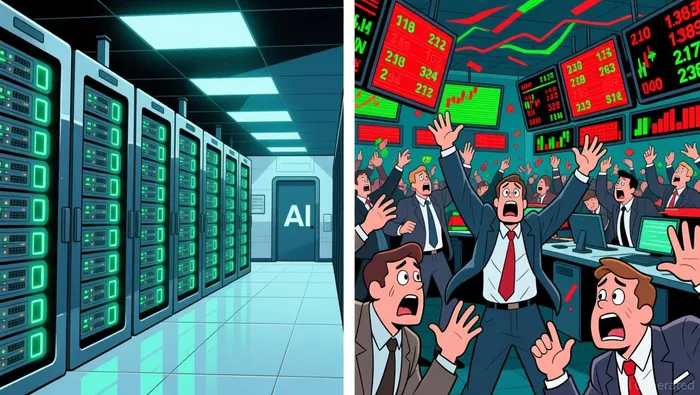
This reminds me of the early internet. In 1999, everyone knew the internet was important, but few companies knew how to build real businesses on it. The ones that did-Amazon, Google, eBay-created enormous value. The rest mostly wasted money. The difference was whether they were solving real problems for real users, or just putting "dot-com" in their name.
The test for AI companies is the same test as for any startup: are you making something people want? Not something investors want to fund, not something that sounds cool in a pitch deck-something actual users will pay for.
Tudor Jones's move is interesting because he's a macro investor, not a tech investor. When macro traders start buying tech, it usually means the story has broadened beyond the tech sector. That can be bullish in the short term-more buyers, more liquidity. But it can also signal that the fundamentals are being replaced by financialization.
I don't know whether the AI bull market has room left. But I know the question to ask: are we seeing the birth of real companies, or just the trading of pieces of paper? The answer determines whether this ends like the internet or like the dot-com bubble.
The data we have suggests both outcomes are possible. The infrastructure companies look like real businesses. The application layer is still finding its footing. And we're missing some key evidence-like how much of that trillion-dollar capex is going to hardware versus software, or which specific companies are capturing the concentrated value.
What I do know is this: the companies that succeed will be the ones that focus on users, not investors. They'll do things that don't scale at first. They'll solve specific problems for specific people. And they'll measure their progress in user growth and revenue, not stock price.
That's always been the way to build real companies. AI doesn't change that.