

Accor reported first-quarter revenue of €1.313 billion - up 2.3 percent at constant currency, with group-wide RevPAR (revenue per available room, the hotel industry's key performance gauge) rising 5.1 percent year-over-year. The headline sounds like a company riding through a storm. But the number missed analyst consensus of approximately €1.33 billion, and the Middle East segment tells a different story. In the UAE alone, RevPAR fell 9 percent, the steepest decline in any of Accor's regions.
That is the first data point the "travel is recovering" narrative needs to sit with.
Within 48 hours of the US-Iran strikes in late February 2026, Dubai hotel booking cancellations ran at 60 percent. Occupancy, which averaged 84.8 percent heading into the conflict, collapsed to between 15 and 20 percent of normal levels in the following weeks. Moody's Analytics later projected Q2 occupancy could fall to 10 percent - a drop from 80 percent to single digits in roughly two months. Dubai eventually deployed a AED 1 billion ($272 million) relief fund for hotels, which is a signal that the shock required government intervention, not just market adjustment.
The ceasefire arrived in early March. Hotel operators across the UAE shifted to a "wait-and-see" posture. That posture is still active as of May - we don't have confirmed occupancy data for May or June yet, and that absence itself is worth noting. Recovery takes time, but the window between ceasefire and full demand restoration is where capital gets at risk.
Diversification as shock absorption
Accor's geographic spread did the heavy lifting. The UAE represents roughly 3 percent of its room portfolio but 12 percent of its room revenue - meaning the region is overweight in profitability, not just footprint. A 9 percent RevPAR decline in a 12-percent-of-revenue segment drags on the top line enough to miss consensus, but it doesn't break the thesis. Group RevPAR still grew 5.1 percent because Europe, Asia-Pacific, and the Americas carried the quarter.
This is what separates an operator with global distribution from one with concentrated regional exposure. Diversification doesn't prevent damage - it distributes it. Accor's Q1 report is proof that the architecture works.
But this part is important: the damage in the UAE segment was real, not cosmetic. Accor's own Q1 materials describe activity in the Middle East, "primarily in the United Arab Emirates," as having been "strongly impacted." The group described activity elsewhere as "remarkably solid." Put plainly, the recovery Accor is pointing to is happening outside the Middle East - not inside it.
Concentration risk and the supply chain delay
Now compare that to Wynn Resorts, which reported Q1 revenue of $1.86 billion, up 9.2 percent year-over-year, but missed on diluted EPS - $1.04 versus a $1.20 estimate, an 11.8 percent miss. The revenue growth came from Wynn Palace in Macau, where operating revenues jumped to $659.3 million from $535.9 million a year earlier, and from Las Vegas operations. The earnings miss tells a different story about margins, cost structure, and forward guidance.
Then came the disclosure that changed the risk profile: Wynn confirmed a "modest delay" to the opening of its $5.1 billion mega-resort on Ras Al Khaimah's coast. The delay isn't about guests staying away - it's about supply chains pivoting away from the Gulf during the conflict. Construction materials, labor logistics, and vendor commitments all shifted when the risk premium on the region spiked.
This is the part that matters most for anyone thinking about capital deployment in Middle East hospitality. The demand disruption from guest cancellations is temporary. The supply chain disruption runs longer because project timelines, vendor contracts, and labor pipelines don't snap back when a ceasefire is announced. Wynn's delay is a leading indicator that the recovery timeline for committed capex is longer than the recovery timeline for transient bookings.
The gap between management optics and operational reality
Both companies used versions of "recovery" in their earnings messaging. Accor described overall activity as solid. Wynn said construction on the UAE resort continues to progress despite the delay. The market heard resilience.
But the data says something more nuanced. Dubai hotels are using the downtime for renovations - a rational move when occupancy is near single digits and fixed costs are running regardless. Sogno Hospitality Advisors, a regional consultancy, told CoStar that full recovery to prior occupancy levels will likely be slow. That is not the language of a company whose guests are rushing back through the door.
The debate is not whether Middle East travel will eventually recover. Dubai's structural advantages - visa ease, infrastructure quality, and wealth concentration - are real. The debate is whether the return profile on capital already committed to the region, and capital queued up, still justifies the concentration.
Where the capital goes
I believe the architecture question here is straightforward: operators with global room portfolios and revenue concentration outside any single geopolitical zone are structurally better positioned than those making billion-dollar bets on one coastline.
Accor's model - a €1.3 billion quarterly revenue base spread across enough geographies that a 9 percent RevPAR decline in a 12-percent-of-revenue segment causes a consensus miss rather than a thesis break - is the architecture that survives disruption. Wynn's model - where a single $5.1 billion capex project in a conflict-adjacent territory carries "modest delay" risk that could compound into quarters of carrying cost with no offsetting revenue - is the architecture that amplifies it.
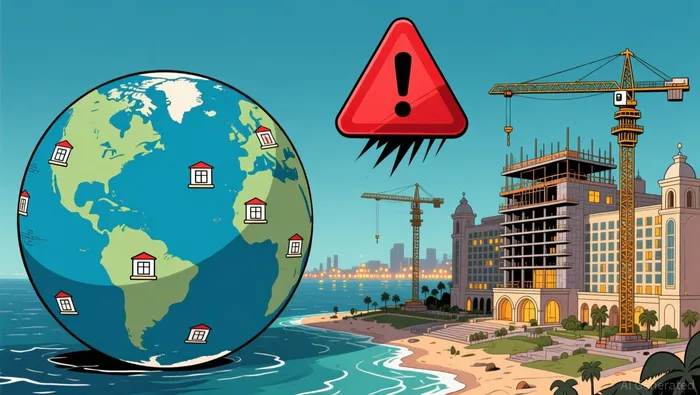
I don't have confirmed May or June occupancy data for Dubai, and I would not feel comfortable sizing a position on Middle East hospitality exposure without it. The absence of that data point is a reason to stay on the sidelines until Q2 results force the numbers into public view. When they do, the gap between management-guided recovery and actual occupancy will tell you everything you need to know about timing.
Demand is not the issue. The issue is whether the capital already sunk into Gulf mega-projects, and the pipeline behind them, has acceptable risk/reward when a single geopolitical shock can compress occupancy by 70 to 80 percent in two days and delay supply chains for quarters beyond the ceasefire.
For now, the evidence points to patience. I would watch for two signals before re-engaging: (1) confirmed occupancy data showing Dubai back above 50 percent of pre-conflict levels, and (2) Wynn updating the Ras Al Khaimah timeline with a specific reopening quarter. Until both materialize, the recovery narrative is forward-looking management commentary - not operational reality.
The question isn't whether luxury travel to the Gulf will return. It's whether the return on the billions already committed there is still worth the concentration risk. I believe the answer for now is: wait for the data to catch up to the optimism.