

Red Cat is positioning itself not as a drone seller, but as the foundational infrastructure layer for uncrewed warfare. Its strategic thesis is to vertically integrate a "Family of Systems" across air, land, and now maritime domains, aiming for 100% global coverage. This move targets a clear paradigm shift in defense procurement, where secure, NDAA-compliant US supply chains are replacing foreign platforms. The company's recent expansion into uncrewed surface vessels (USVs) via its Blue Ops division is the final piece in this multi-domain puzzle, extending its reach from the skies and ground to the world's oceans.
This infrastructure play is gaining early traction. In March, a NATO ally selected Red Cat's Black Widow sUAS on a competitive tender, with deliveries scheduled for 2026. The contract, facilitated through the NATO Support and Procurement Agency, is a significant signal. It validates the company's approach to building systems that can move quickly from procurement to deployment in contested environments. More importantly, it demonstrates that allies are actively seeking reliable, American-made platforms to replace older, potentially insecure solutions.
The bottom line is that Red Cat is building the rails for the next operational paradigm. By controlling the hardware and software stack across domains and ensuring domestic manufacturing, it aims to become the essential, secure supply chain for uncrewed systems. The NATO win is an early adoption milestone, proving the model works in a key market. The company's aggressive production scaling-targeting 1,000 Black Widow units per month this year and over 100 USVs per month soon-shows it is preparing for exponential adoption once the paradigm takes hold.
The Exponential Growth Trajectory: Revenue Surge vs. Margin Reality
The numbers tell a classic story of a company hitting the steep part of the S-curve. In the fourth quarter of 2025, Red Cat's revenue exploded to $26.2 million, a 1,985% year-over-year increase. This isn't just growth; it's the signal of a paradigm shift gaining momentum. The company is capturing market share at an exponential rate, validating the infrastructure thesis with real orders from allies in the Asia-Pacific and NATO. The full-year revenue of $40.7 million, up 161%, shows this isn't a one-quarter fluke but a sustained ramp-up.
Yet the path from explosive top-line growth to sustainable profitability is paved with cost. The company's GAAP gross margin collapsed to 4.2% in that same quarter, a sharp decline from the prior period. This brutal compression is the critical path to watch. It signals that the rapid scaling of production, facility expansions, and securing new contracts are currently outpacing the company's ability to control input costs and achieve manufacturing efficiencies. For a business betting on exponential adoption, this margin reality creates a clear vulnerability: the runway must be long enough for scale to finally kick in.
The cash position provides that runway. Red Cat's cash balance grew to $167.9 million, a staggering increase from the prior year. This war chest is the fuel for the next phase of the S-curve, funding the massive production capacity targeted for drones and the new uncrewed surface vessels. It also buffers the company against the margin pressures and the revised 2025 EBITDA forecast that now anticipates a substantial loss. The bottom line is that Red Cat is in a classic growth investment setup: it is spending aggressively to capture a future market, and the market is betting that the scale will eventually turn the corner on profitability. The coming quarters will show whether the company can navigate this cost curve before the cash burns too fast.
Scaling the Manufacturing S-Curve: Capacity vs. Demand
The company's manufacturing expansion is a bold bet on the demand side of the S-curve. Red Cat has transformed its footprint from a startup to a high-reliability producer, scaling its facilities to 254,000 square feet across four states. This is the physical infrastructure required to move from prototype to volume production. Management's claim that it is already building at a rate of 1,000 drones per month is a direct attempt to front-run future contracts, positioning the company as a secure, domestic supplier ready to deliver.
Yet, this aggressive build-out sits in tension with a recent guidance revision that suggests demand may not be as certain as the capacity plans imply. The company has revised its 2025 revenue guidance downward to between $34.5 million and $37.5 million, a drop of roughly 44% from consensus. This cut, attributed to product release delays and government shutdown impacts, introduces a note of execution risk. It raises the question: is the company building for a future that may be delayed, or is it overestimating the near-term pull from allies?
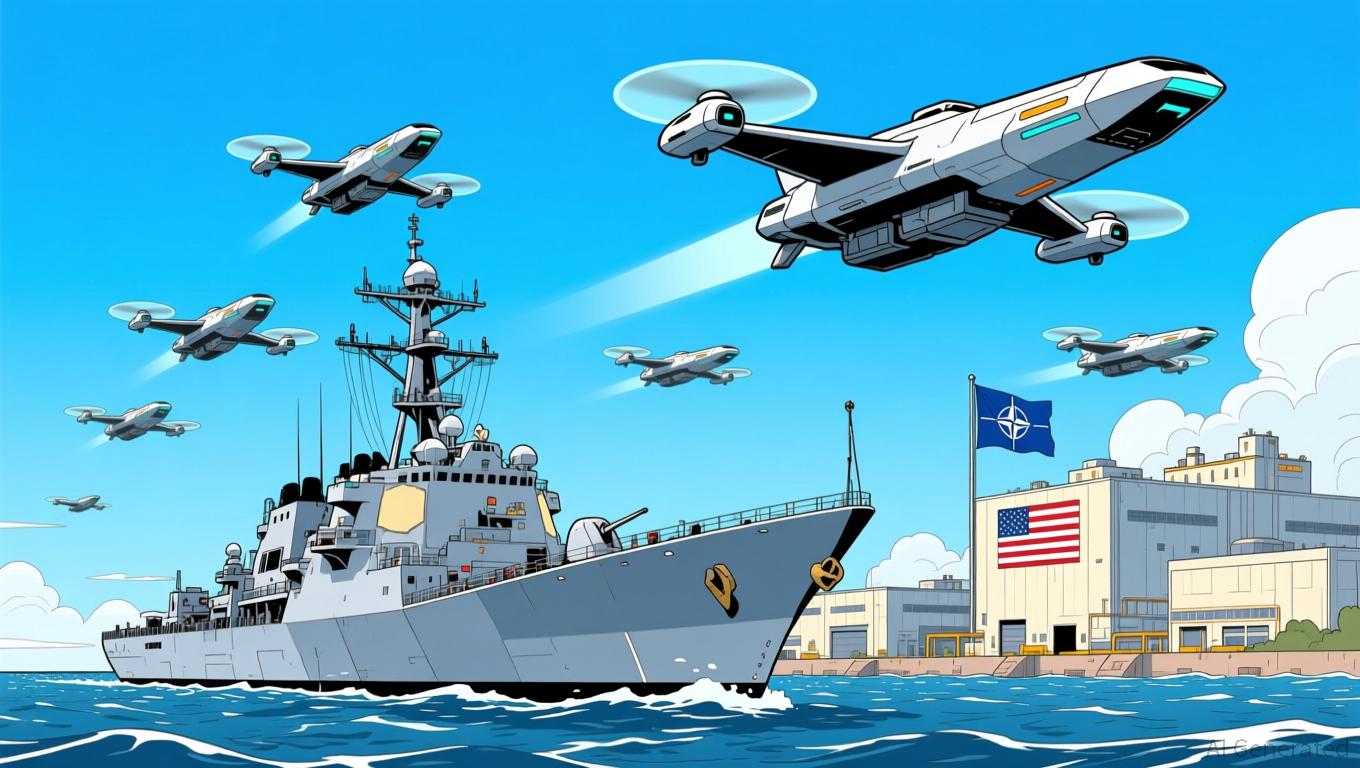
The bottom line is a race between two exponential curves. On one side, the demand for uncrewed systems is accelerating, driven by conflicts like Ukraine's massive replacement need and rising tensions in the Middle East. On the other, Red Cat is scaling its manufacturing output to meet that demand. The company's strategy of building now to ship later is sound if the paradigm shift is truly underway. But the guidance revision is a red flag that the timing of contract awards and deployments can be volatile. Success hinges on the company's ability to convert its massive production capacity into firm orders before the cash burn from this build-out becomes a liability. For now, the infrastructure is being laid, but the demand signal remains a work in progress.
Valuation and the Path to Inflection: Catalysts and Risks
The investment case for Red Cat is a classic bet on the uncrewed warfare S-curve, but the valuation already prices in a successful inflection. With a market cap of $2.04 billion, the stock is trading at a premium that assumes exponential growth from a small base. This setup leaves little room for error. The primary catalysts are now in motion: the successful execution of the 2026 NATO ally delivery contract and the ramp of the new USV (Blue Ops) division. The NATO win is a validation milestone; delivering on it will prove the company can move from contract to cash. Simultaneously, the anticipated first deliveries of uncrewed surface vessels in the second quarter of 2026 are the first tangible sign that the multi-domain infrastructure layer is becoming operational revenue.
Yet the path to profitability is fraught with risks that could invalidate the thesis. The most immediate is the company's high cash burn. Despite a war chest of $167.9 million, the steep margin decline to a 4.2% gross margin signals that costs are eating the top-line surge. This compression, coupled with the revised 2025 EBITDA forecast anticipating a $48.3 million loss, creates a clear vulnerability. The company is spending aggressively to build capacity, but if the demand ramp is delayed or smaller than expected, that cash burn could accelerate.
Execution risk is the second major overhang. The company has already revised its 2025 revenue guidance downward by roughly 44%, citing product delays and government shutdown impacts. This volatility in near-term visibility introduces uncertainty about the timing of the next exponential growth phase. The guidance revision is a red flag that the path from manufacturing capacity to firm orders is not guaranteed. Success hinges on converting its massive production plans-targeting 1,000 drones and over 100 USVs per month-into signed contracts before the cash runway shortens.
The bottom line is a high-stakes race between two exponential curves. The demand for secure, American-made uncrewed systems is accelerating, driven by global conflicts. Red Cat is betting that its vertically integrated, NDAA-compliant infrastructure will capture that demand. The valuation assumes it wins that race. For now, the catalysts are clear, but the risks-cash burn, margin pressure, and execution volatility-are equally material. The coming quarters will show whether the company can navigate this cost curve and deliver on its promises before the paradigm shift fully materializes.