

Burger King's announcement to hire up to 60,000 employees across its U.S. restaurants cites consecutive quarters of positive same-store sales and traffic as the catalyst for the immediate staffing need. This is a bet that the Reclaim the Flame turnaround has fundamentally shifted the demand trajectory-not a temporary bump, but sustained traffic growth that requires operational capacity to capture.
Starbucks is making a parallel bet, just through retention rather than expansion. The new quarterly bonus program offering baristas up to $1,200 per year alongside expanded tipping options and a move to weekly pay positions the company to lock in staff amid competitive labor pressures. CEO Brian Niccol's turnaround hinges on consistent in-store experience-and that requires keeping trained hands on the espresso machines.
But here's the expectation arbitrage question: what are these hires actually pricing in?
The answer matters because 2025 was "very weak" for retail hiring businesses pulled back on personnel investment. That makes 2026's aggressive push notable-not just in absolute terms, but as a sharp reversal of sentiment. Retailers are signaling they expect consumer demand to recover sufficiently to justify adding thousands of new positions.
The problem is the consumer reality hasn't fully caught up. Burger King's hiring runs counter to broader QSR trends where interest in dining out has fallen as consumers contend with cost-of-living pressures. The chain's own success may be relative-improving from a low base rather than reflecting broad-based consumer strength. Yet the hiring spree treats the improvement as structural, not cyclical.
That creates execution risk on multiple fronts. Wage pressures are intensifying retailers must offer competitive compensation just to attract workers, and regulatory uncertainty around work authorization is disrupting staffing pipelines workforce development is no longer optional. For retailers betting on demand recovery, these labor market frictions could throttle the very growth they're positioning to capture.
The market is pricing in a consumer recovery. The question is whether the recovery is real-or whether these hiring bets become costly overcapacity if spending stays constrained.
Consumer Sentiment: The Reality Check
The University of Michigan Consumer Sentiment Index just delivered a brutal reality check: 48.2 in early May, an all-time low that missed economist forecasts of 49.5 and fell below April's 49.8. This isn't a blip-it's the culmination of mounting pressure that's now crushing household purchasing power.
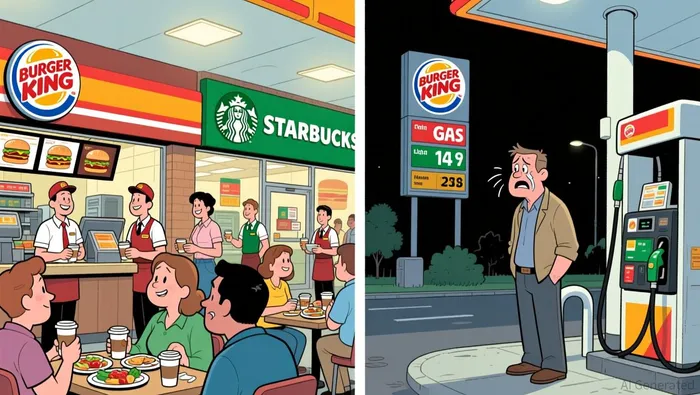
Gasoline prices breached $4.50 a gallon for the first time since July 2022, up more than 50% since the Iran war began according to AAA data. About one-third of consumers spontaneously cited gasoline prices as a primary concern, with roughly 30% mentioning tariffs in the May survey. These aren't abstract macro indicators-they're the daily math families are doing at the pump and the grocery store.
The current conditions component dropped about 9% to 47.8, the lowest on record, driven by growing concerns over high prices affecting personal finances and buying conditions for major purchases. Consumers' perceptions of their current financial situation slid to the lowest level since 2009 during the financial crisis. This is the group that's supposed to be powering the retail recovery retailers are hiring to capture.
Year-ahead inflation expectations eased slightly to 4.5% from 4.7% in April. But here's what matters: the damage to real income expectations is accelerating. The expectations index edged up slightly, yet real income expectations continued their decline from March as cost pressures outpace wage growth.
This is the expectation gap in stark relief. Retailers are pricing in a consumer recovery-hiring thousands, investing in retention, betting on sustained traffic growth. But the sentiment data shows households feeling "buffeted by cost pressures, led by soaring prices at the pump" according to UMich's Joanne Hsu. When consumers are this squeezed on fuel and fundamentals, the spending engine that drives 70% of the economy starts to sputter.
The question for retailers isn't just whether they can staff for growth-it's whether the growth they're betting on actually exists. Record-low sentiment suggests the answer may be no.
The Expectation Gap: Risk Scenarios and Catalysts
The sector is fracturing. While Burger King and Starbucks bet aggressively on consumer recovery, QVC Group is signaling existential distress-$6.6 billion in debt with $2.9 billion due in October and junk-tier credit ratings. This divergence reveals something critical: retailers are not making synchronized bets. Some are positioning for growth; others are fighting for survival. The market's reaction will depend on which narrative wins.
Here's the asymmetric risk: retailers have committed to capacity expansion based on a consumer recovery that hasn't materialized. If sentiment stays below 50-meaning households remain "buffeted by cost pressures" led by soaring prices at the pump-spending elasticity will test pricing power and traffic assumptions. Burger King's 60,000 hiring bet could become a cost burden if traffic stalls. The chain's own data shows nearly half of consumers decreasing spending following poor customer experience-meaning overstaffing during a demand slump compounds the problem.
But the risk runs both ways. If sentiment stabilizes-if gasoline prices ease, if tariff concerns recede-these retailers are already positioned to capture rebound traffic. The hiring is done, the retention programs are in place. The question becomes: who blinks first?
Three catalysts will resolve this tension:
First, May and June consumer spending data. The sentiment index is a leading indicator, but actual spending prints will confirm whether the gap is narrowing. Watch for any uptick in discretionary categories-dining out, apparel, home improvement-that would validate retailer bets.
Second, same-store sales versus guidance. Retailers have been beating expectations, but the market will scrutinize whether these beats are sustainable or one-quarter wonders. A "beat and raise" cycle would signal genuine recovery; guidance cuts would trigger a reset.
Third, Fed signaling on rate cuts. Financial conditions matter. If the Fed signals meaningful easing, household borrowing costs decline and some pent-up demand could unlock. If rates stay higher-for-longer, the pressure on real incomes continues.
The "sell the news" risk is real. Even if retailers post strong sales, a depressed sentiment environment could trigger sector-wide punishment-the market may view any beat as temporary, pricing in the expectation that consumer weakness will eventually crack spending. For now, the expectation arbitrage favors the bears: retailers are pricing in a recovery that the data doesn't yet support. The gap will close-either through consumer strengthening or through retailer downgrades. The question is which way the gap closes.