

The scale of institutional capital flowing into Ripple's Korean ecosystem is now concrete. A dedicated investment vehicle, structured through a joint venture with licensed South Korean asset manager Lean Ventures, is targeting an initial $300 million of Ripple Labs shares. This vehicle is being funded by VivoPower, which has secured Ripple's approval to purchase an initial tranche of shares. The economic structure is clear: VivoPower stands to earn a net return of $75 million over three years in management and performance fees, directly tying its compensation to the assets under management and any future upside in XRP value.
This capital deployment is backed by a major institutional sponsorship. Ripple is the main sponsor of the Korea Financial Innovation Program 2026, a three-month incubator backed by Seoul Fintech Lab and partners like Hana Bank and Toss. The program offers funding, mentorship, and a $21,000 prize pool to startups building on the XRP Ledger, signaling a direct commitment to cultivating the local developer and business ecosystem.
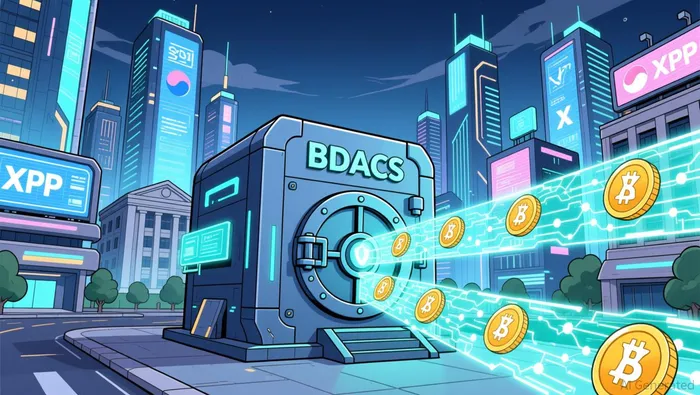
The final piece of the institutional infrastructure is now live. XRP is now available for custody through BDACS, a regulated South Korean custodian. This launch, following a partnership announced in February, gives institutional clients their first direct, compliant access to XRP custody in the country. It removes a key friction point, enabling larger, regulated players to participate in the market without relying on unregulated or foreign custodians.
The Insurance Sector Catalyst
Kyobo Life's entry onto Circle's Arc blockchain is a direct utility play for the XRP Ledger. As the sole South Korean financial firm in this high-profile consortium, the insurer gains a strategic platform to experiment with stablecoin applications. This move signals that major Korean institutions are treating blockchain not as a speculative asset class, but as a core operational layer for financial innovation.
The partnership is part of a broader digital ecosystem being built with Ripple's ally, SBI Group. Their strategic alliance aims to create a digital financial ecosystem in Korea, with a focus on Security Token Offerings. This collaboration between Kyobo and SBI, a key Ripple partner, creates a powerful domestic node for tokenized finance, potentially driving more institutional flow into the XRP ecosystem.
Looking further ahead, the Korean central bank and insurance institute are developing a technical framework for digital currency-based index insurance. This long-term use case, which would use smart contracts to automate payouts, represents a fundamental integration of XRPL's capabilities into the nation's financial infrastructure. It points to a future where XRP's utility extends beyond payments to become a foundational layer for automated, trustless financial services.
Price Action and Liquidity Impact
The institutional build-out is now translating into clear price action. XRP broke above the $1.50 threshold for the first time in weeks, a key psychological level that signals a shift in market sentiment. This move is not isolated; it coincides with a dramatic surge in Asian liquidity, particularly from South Korea.
South Korea has emerged as a dominant trading hub, with XRP accounting for 18% of all trading volume on Upbit. This concentration is a double-edged sword, driving massive spot volume but also making the price highly sensitive to local sessions. The surge is attributed to capital-rich investors reallocating funds, with the country now representing roughly one-third of global XRP trading volume.
On the institutional efficiency front, a critical settlement upgrade is live. The NSCC now permits Ripple Prime to settle institutional post-trade volumes directly via the XRP Ledger. This follows Ripple's acquisition of Hidden Road, a prime broker handling ~$3 trillion annually. While the immediate price impact depends on adoption, this infrastructure improvement directly targets the friction that has historically slowed institutional flows into digital assets.