

Three French telecom companies agreed to buy a fourth for $23.5 billion.
The headline makes it sound like a fortune. It is mostly debt.
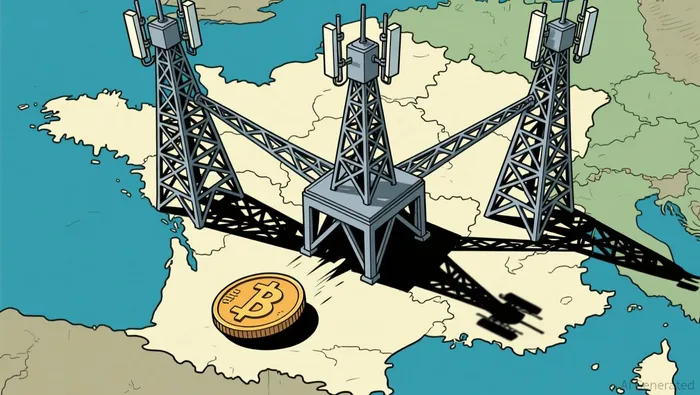
Bouygues Telecom, Free-iliad Group, and Orange signed a memorandum of understanding on June 6 to acquire the majority of Patrick Drahi's SFR - France's second-largest carrier. The total enterprise value is €20.35 billion. But SFR carries roughly €15.7 billion in net debt. The equity they are actually buying costs about €4.6 billion to divide among three buyers who already own competing networks, competing towers, and competing customers.
The more interesting question isn't how much the deal costs. It's why three rivals decided to cooperate on killing off the last remaining competitor in France's mobile market.
Here's what the numbers do and don't say.
SFR is shrinking. Revenue fell 9.1% year-over-year in the first quarter of 2026 to €2.16 billion. EBITDA - a rough measure of cash earnings before accounting charges - dropped 13.1% to €583 million. This isn't a company that needed saving. It was already leaving. The buyers aren't rescuing a strategic asset. They're clearing out a dying one.
Drahi walks away clean. The FT calculated his personal stake carries about €3.2 billion in value. He built Altice France into a sprawling telecom empire and is now exiting while the business is still large enough to command a consortium bid. Timing, not conviction, is what priced this deal.
The carve-up shows the buyers are splitting a declining business by geography, not by strategy. Bouygues Telecom takes the largest share of carved-out revenue - about 52% - and pays 42% of the headline price. Free-iliad pays 31% of the price. Orange pays 27%. The revenue split and the price split don't line up. Someone is paying more per euro of incoming revenue than the others. That gap is where the real judgment call lives.
The fiber network stays out of the deal. The memorandum explicitly excludes SFT FTTH, SFR's wholesale fiber-to-the-home business, along with stakeholdings in XP Fibre and Ultraedge. The buyers are getting the mobile subscriber base, the fixed-line copper business, and the brand. They are not getting the fiber network, which is the only part of modern telecom infrastructure with a real growth trajectory. This matters because it means the consortium is paying €20 billion for the old hardware - not the new one.
Which brings us to the antitrust problem.
France has four national mobile operators. This deal effectively reduces it to three. The European Commission already has a formal investigation open - case AT.38451. Each operator faces a separate antitrust review, and Orange has reportedly started discussing behavioral remedies to satisfy regulators. Remedies usually mean concessions: wholesale access commitments, price caps, or asset divestitures. The buyer gets the business, but with strings attached.
Here's the tension I keep coming back to. These three companies have been competing with SFR for years. They've also been losing money on the same problems SFR has: declining mobile revenues, heavy infrastructure debt, and a market where the only growth comes from stealing each other's customers. Now they're cooperating to end the competition that was supposed to force them to earn their margin.
That doesn't mean the deal is irrational. It means the incentive structure in European telecom is broken. When you can't grow the pie, you buy your rival's slice. When your rival is bleeding, the price looks reasonable even if the math is thin. When you already own 42% of the market, taking another chunk looks like efficiency until a regulator tells you it's something else.
I suspect the buyers' best case requires two things to happen simultaneously. First, the antitrust review goes through with manageable remedies - enough to preserve market share gains without destroying the economics. Second, the consolidated market actually produces higher pricing power, not just higher costs from three companies running overlapping infrastructure. Both assumptions are plausible. Neither is guaranteed.
The test is simple. Watch what happens to mobile prices in France between now and the closing of the deal - expected late 2026 or early 2027. If the buyers are right that this consolidation creates value, they should be able to raise prices or reduce promotional spending without losing subscribers. If prices stay flat and churn continues, the €20 billion price tag was mostly a payment to make SFR's problems go away. Either outcome tells you whether European telecom is a consolidation play or a dying industry buying time.