

Rock Tech Lithium is trading on the Xetra electronic platform in Germany as of mid-June 2026. The press release calls it a step forward. It is a plumbing change. For investors trying to decide whether this stock deserves attention, the exchange listing tells you nothing about the business that actually matters: a company with no revenue, about $5 million in cash, and a multi-year path to production that costs far more than it has.
The Xetra move adds European liquidity - meaning European investors can now click-and-trade the shares through Deutsche Börse's electronic system rather than the Frankfurt floor. Rock Tech has been a German-listed name for years, trading on the Frankfurt Stock Exchange under ticker RJIB since the early 2010s. This isn't a debut. It's a secondary trading venue. The kind of access expansion that matters when a company has something to sell - or at least a growth trajectory that justifies the bid.
Rock Tech doesn't have either yet.
What the business actually is
Rock Tech Lithium is a lithium developer, not a producer. Its flagship asset is the Georgia Lake lithium deposit in Ontario, a 100% owned property that a 2022 pre-feasibility study said could produce 100,000 tonnes per year of 6% spodumene concentrate over a nine-year mine life. Spodumene concentrate is the raw lithium ore that gets processed into battery-grade chemicals. Georgia Lake hasn't shipped a tonne.
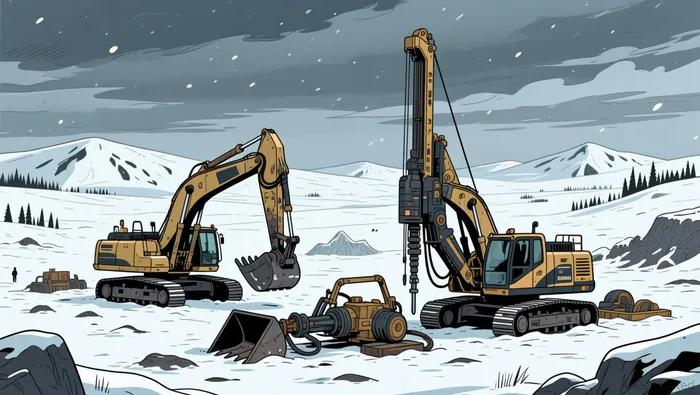
The company is also pursuing direct lithium extraction - a newer method of pulling lithium from brine using selective sorbent materials instead of traditional evaporation ponds. Rock Tech has partnered with Aquatech to deploy Aquatech's Li-Pro LSS DLE technology at Georgia Lake. DLE is genuinely promising technology, but it remains unproven at commercial scale for this deposit. The difference between a technical demonstration and a bankable mine is years of engineering, permitting, and capex.
In May 2026, Rock Tech announced it identified a pathway to reduce processing capex for Georgia Lake by up to 50 percent. That's an attractive headline if it holds. But "potential pathway" in a minerals company's press release is a cost model, not a shovel in the ground. The 2022 pre-feasibility study is now four years old, and the lithium pricing environment since then has only made the math harder.
The cash situation
This is where the listing becomes irrelevant.
As of March 31, 2026 - the end of the company's first quarter - Rock Tech had approximately $5 million in cash, up from roughly $2.1 million at the end of calendar 2025. The company raised some capital during the quarter, but the headline is what matters: the business generates no revenue and burns through cash every single quarter.
In September 2025, the company had CA$6.2 million in cash against a trailing annual cash burn of approximately CA$9.8 million. That was roughly seven months of runway then. Even assuming the $5 million Q1 balance reflects a fresh raise, the burn hasn't collapsed enough to create a comfortable runway. The company needs to keep raising capital. Every raise dilutes existing shareholders. That is the arithmetic of a pre-revenue development company.
Then you layer on the capex the company has committed to. The Georgia Lake project, the European converter operations in Guben, Germany, and the Lopare lithium project in Bosnia-Herzegovina - each one requires hundreds of millions to reach production. In October 2025, Rock Tech announced an estimated €50 million reduction in capex for the Guben converter. That's good housekeeping on a massive spend, but it doesn't change the direction of the flow. In April 2026, the company announced a CAD $200 million "anchor partnership" with BMI Group for a Red Rock lithium converter facility in Ontario. A partnership commitment is not equity financing. The company still needs to find the capital.
The lithium environment
Lithium prices have spent most of 2025 and early 2026 under pressure. Global supply has grown faster than the EV-driven demand ramp that justified the 2021-2022 price spike. Spodumene and carbonate prices have traded well below their 2022 peaks. For a greenfield developer, that means project economics are tighter, offtake negotiations are harder, and the bar for raising capital at a fair price is higher.
Rock Tech is not alone in this. But it is among the most exposed, because it has no revenue to cushion the weak pricing. Companies that are already producing can wait out the cycle. Rock Tech can't wait without burning through its remaining cash.
Valuation context
The stock trades around CAD $0.90 on the TSX Venture Exchange, for a market capitalization of roughly CAD $108 million. For a company with zero production, no revenue, and a multi-year development timeline, that valuation is priced on resource optionality alone - the bet that Georgia Lake becomes a mine and the European projects reach commercial operation.
The optionality is real. The Georgia Lake deposit is one of the larger identified lithium resources in Canada, and the European integration strategy - from Bosnia extraction to German conversion - aligns with the EU's push for critical mineral independence. But resource optionality at $108 million requires the projects to actually advance, the capital to actually flow, and the lithium price to cooperate.
Verdict: Hold - too early, too thin
The Xetra listing makes the shares easier to trade in Europe. It doesn't make the business less risky. Rock Tech Lithium remains a pre-revenue development company with a cash runway measured in quarters, a multi-year path to production, and significant dilution ahead.
What would change the call? A definitive feasibility study that locks in economics at current lithium prices. A committed financing round that extends the runway past first production. An offtake agreement with a battery or converter customer at a price that supports margins. Any one of those would move the needle. Until then, the Xetra listing is a nicer trading venue for a stock that needs business progress, not better liquidity.
Hold for now. The option is there, but the clock is the problem.