

The headline says the stock jumped. The stock says otherwise.
Rocket Lab was awarded a $90 million U.S. Space Force contract on May 21 to design, manufacture, and operate two geostationary satellites hosting space domain awareness payloads. The ticker closed at $125.45 on May 21 and was trading at $126.60 after hours - already up from recent levels, yes, but there is no overnight explosion here. RKLB hit an all-time high of $117.35 on May 12, nine days before this announcement, surging over 40% following Q1 2026 earnings. The stock has already done the move. What's left is the question that FinTwit isn't asking: what does this contract actually prove, and what is it papering over?
The deal is real. The narrative about it is inflated.
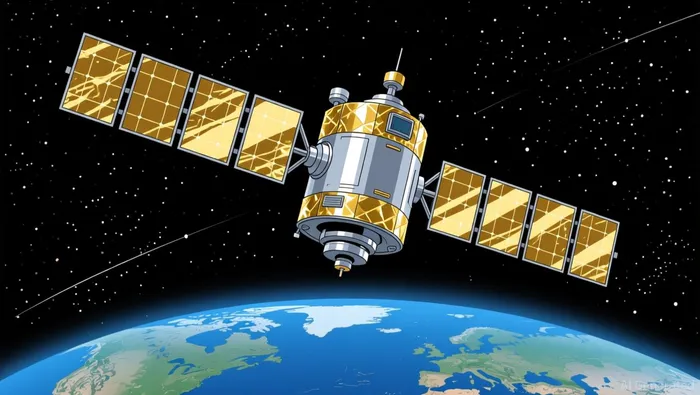
Rocket Lab's press release calls this the company's first satellite production program for geostationary orbit. That's the correct reading. The contract covers the complete lifecycle - design, manufacturing, testing, and on-orbit operation - of two GEO satellites for Space Force's space domain awareness mission, which tracks objects in orbit to maintain awareness of the space environment.
That is a technical stretch of a different class. Rocket Lab has built and operated exclusively in low Earth orbit so far. GEO satellites sit 22,000 miles above the equator - roughly 40 times farther than LEO - requiring different power systems, radiation-hardened components, thermal management architectures, and propulsion budgets. The engineering gap between LEO and GEO is not a matter of scaling up. It's a different discipline entirely.
The market should be asking whether Rocket Lab can execute on a satellite regime it has never touched. Instead, the coverage is treating this as another notch in a seamless growth trajectory.
$90 million in a $816 million quarter
To understand the scale distortion, the math is simple. On December 18, 2025, Rocket Lab won an $816 million prime contract to deliver 18 satellites for the Space Development Agency's Tracking Layer - a missile warning and defense constellation in LEO. That deal was for Rocket Lab's proven territory.
The $90M GEO contract is less than 11% of the size of the deal that moved the needle five months ago. Both contracts came from defense customers. But the $90M deal gets disproportionate attention precisely because GEO is the harder claim. Size is not the story. Capability is. And that makes the execution risk higher, not lower.
Neutron is the background condition everyone pretends isn't there
Rocket Lab's entire growth thesis rests on Neutron - the medium-lift reusable rocket that is supposed to compete directly with SpaceX's Falcon 9. Neutron was first announced in 2021 with a 2024 target debut. That date became 2025, then early 2026, then February 2026.
In January 2026, a Stage 1 propellant tank - the core structural component of the rocket's main stage - failed during testing due to a manufacturing fault. Rocket Lab pushed the inaugural flight to Q4 2026. The company still maintains that target, but we are now in May with less than five months to a debut, and the company just acknowledged that a tank made with hand-laid fiber failed under test conditions.
The Neutron delay is not a footnote. It is the single biggest execution risk in the entire company. The satellite manufacturing business - which is growing fast - exists in part to fund the Neutron development. But Neutron is also supposed to be the vehicle that lets Rocket Lab win launch contracts large enough to matter at scale. No Neutron flight means no launch revenue ramp, no cost-per-kilogram competition with Falcon 9, and no validation that the full-stack thesis works.
Revenue growth doesn't answer the execution question
The financials are the one place where the narrative is honest. Q1 2026 revenue hit $200.3 million, up 63.5% year-over-year. Full-year 2025 revenue was $602 million with 38% growth. GAAP gross margin in Q1 was 38.2%, non-GAAP was 43%. Backlog sits at $2.2 billion.
The numbers are strong. But strong revenue growth and a growing backlog are exactly what you expect when you have a monopoly-like position in small-satellite launches and are winning incremental satellite manufacturing contracts. Electron has completed 70-plus missions and remains the most frequently launched privately developed small-lift vehicle in history. The launches are happening. The satellites are being built. The revenue is flowing.
The question the numbers don't answer is whether Rocket Lab can execute in regimes it hasn't proven: GEO satellites and medium-lift launch. The $90M deal is a bet that the GEO part works. Q4 2026 is a bet that the Neutron part works. Both are live claims without independent verification.
What the valuation assumes
Rocket Lab's market capitalization has moved from roughly $48 billion at the start of May to nearly $76 billion as of mid-May. That $28 billion gain came entirely from Q1 earnings momentum and the expectation that Neutron and the satellite business will compound. The $90M contract announcement lands on a stock that has already absorbed its most important positive catalyst of the year.
Traded at roughly $126 per share, the valuation is pricing in a world where Neutron debuts on schedule, GEO satellite programs scale, and the $2.2B backlog converts without major execution missteps. Any one of those assumptions failing - particularly Neutron - creates a gap between what the stock reflects and what the company can deliver.
The cross-currents
- Satellite manufacturing execution: Rocket Lab has demonstrated LEO satellite production at scale through the SDA Tracking Layer contract. GEO is a different engineering class with no prior track record. The $90M deal is a test, not a victory lap.
- Neutron timing: A Q4 2026 debut is technically possible but tight given a January Stage 1 tank failure. The company's history of timeline pushes suggests skepticism is warranted, not blind faith.
- Electron durability: The small-lift business remains profitable and growing, providing a funding floor. This is the one part of the thesis that is proven.
- Valuation absorption: The stock has already run to all-time highs on Q1 earnings. The $90M deal is not the catalyst that justifies the current level - it's a marginal data point on top of a thesis that's already fully priced.
Directionally, the risk is on the execution side. The financial trajectory is real and growing. But the stock's current level demands that two unproven capabilities - GEO satellites and Neutron - work simultaneously. That is the claim the market is buying. That is the claim that needs independent engineering verification.
It is not as good as it looks when the headline focuses on contract dollar value instead of engineering novelty, or when a stock that already surged 40% gets framed as the beneficiary of new excitement. You decide which was marketing fluff and which one was analysis.