

Let's start with what the headlines are telling you: the Russian ruble was the world's best-performing currency in 2025, surging roughly 45% against the dollar, and the reason is Putin's oil windfall from the Iran war. It sounds dramatic, but it misses the actual story for energy investors. The ruble is a controlled currency in a sanctioned economy. What matters isn't which flag's paper appreciates - it's which companies are generating real, spendable cash flow from the supply shock now reshaping global oil markets.
Here is what has happened. The war in Iran has pulled more than a billion barrels of supply out of the market from Gulf producers, the IEA says. Global oil stockpiles have fallen by 250 million barrels over just March and April alone. Oil demand, which was growing, is now expected to contract by 80,000 barrels per day this year as the price spike forces conservation. Meanwhile, Russia - insulated from the disruption by geography and already running its shadow fleet at scale - nearly doubled its oil export revenues in a single month, from about $9.7 billion to roughly $19 billion in March 2026. Reuters calculated that Russia's main oil tax revenue also doubled to around $9 billion in April. That is a genuine cash-flow event, not a currency mirage.
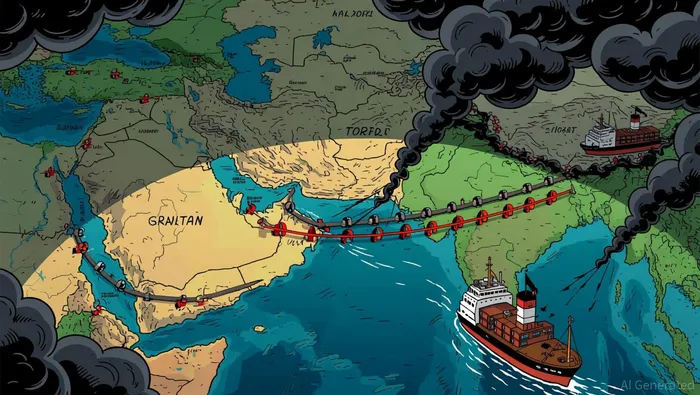
Now let's talk about the mechanism. The ruble's strength is partly real - higher oil prices do bring in hard currency - but it is also propped up by capital controls, mandatory export revenue repatriation, and a dollar weakened by its own trade-war dynamics. As of mid-May 2026, the dollar trades at roughly 72.5 rubles, a dramatic improvement from the 120-150 range that defined the early-war period. But you can't invest in the ruble, and you can't invest in Russian equities if you're a Western investor. That number is context, not a trade.
The real investment frame is the supply gap. OPEC is losing its most capable spare-capacity member as Iran falls out of production. Long-term LNG contracts are being rewritten away from the Gulf toward U.S. and alternative sources. The IEA says it takes several months for higher oil prices to stimulate meaningful supply growth - which means the squeeze isn't over. Energy stocks have been trouncing the broader market in 2026 as a result, but Morningstar has already warned that Iran war gains could erode if the conflict resolves faster than expected or demand destruction accelerates.
From a cash-flow durability perspective, here's what separates good ideas from good stories. First, U.S. shale producers with investment-grade balance sheets are the ones the market is handing the swing-producer crown to. Reuters reported that the U.S. has stepped in to shield the global economy from the oil crunch by boosting exports and selectively easing regulatory constraints. That means American E&Ps can actually bring barrels to market - no shadow fleet, no sanctions risk, no secondary sanctions headache. Companies like Diamondback and Cove Point that sit in the Permian and can ramp production on demand are the direct beneficiaries. Their cash flows are real, their dollars are spendable, and their balance sheets can absorb the capex required to scale.
Second, midstream operators sitting on U.S. export infrastructure - LNG load ports, Gulf Coast pipelines, and export terminals - are running a different kind of play. This is the fee-based insulation model I always look for. The rerouting of global trade flows away from the Strait of Hormuz is not a one-month headline. It is a structural shift in where barrels physically move. Midstream companies with contracted throughput on that infrastructure earn predictable cash flows regardless of whether oil trades at $70 or $120. That predictability deserves a premium, and right now the market has not fully priced it.
Here is the counterargument I'd press first. Even if oil prices stay elevated, the IEA is clear that over half (54%) of Russia's seaborne oil was transported by 'shadow' tankers. Higher prices kill demand, and a recession triggered by energy costs would be the fastest way to unwind the rally. Energy stocks that look like winners at $100 Brent can look like traps at $60 if the global economy stumbles. This is not a trivial risk - it is the single largest thing that could break the thesis.
While it's true that a demand collapse would hurt every oil producer, the companies with the margin of safety are the ones I'd still hold. Fee-based midstream cash flows don't vanish when the commodity drops - they contract far less than pure producers. And investment-grade shale operators who cut capex prudently rather than panic-spend can survive a price decline without depleting their balance sheets. Survival over cheapness, always.
All things considered, the Iran war has created a cash-flow event that separates durable energy businesses from speculative commodity plays. The ruble headline is noise. The real story is the supply gap, the structural rerouting of trade flows, and the capital flowing to operators who can actually deliver barrels to buyers in clear dollars. I would rate this environment a Strong Buy for U.S. E&Ps with investment-grade balance sheets and midstream operators with high fee-based contract shares - names where the cash flow is real, the leverage is contained, and the valuation has not yet caught up to the new reality of who holds the swing-producer crown.
Even if the Iran conflict de-escalates within months, the damage to Gulf spare capacity and the contraction in OPEC's ability to respond is structural, not temporary. The re-rating opportunity is real for operators positioned to fill that gap - and it has nothing to do with the ruble.