

The budget rule is a mechanical fiscal brake. It sets a cut-off oil price at $59 per barrel. When Brent crude trades above that level, the government is required to channel excess oil revenues into the National Wealth Fund (NWF) by buying foreign currency. When prices fall below $59, the rule forces the government to sell reserves to cover budget shortfalls. This design aims to smooth out fiscal shocks from oil volatility.
The trigger for its suspension was a severe revenue collapse. Earlier this year, oil and gas revenues fell nearly 50% year-on-year in January-February. This rapid drain threatened to deplete the NWF, which was already over half depleted. In response, the Finance Ministry announced a planned reduction in the cut-off price to $55 per barrel by 2030, a move that would have diverted more revenue into the fund. To halt the immediate outflow, the government suspended foreign exchange operations in March.
The rule's pause is now being reconsidered due to a powerful market reversal. The outbreak of the Iran war sparked a surge in global oil prices, pushing Brent crude above $100 per barrel. This rally has provided a temporary fiscal reprieve, firming the rouble and easing pressure on state finances. As Finance Minister Siluanov noted, the changed circumstances prompted the government to consider an early return to the forex market.
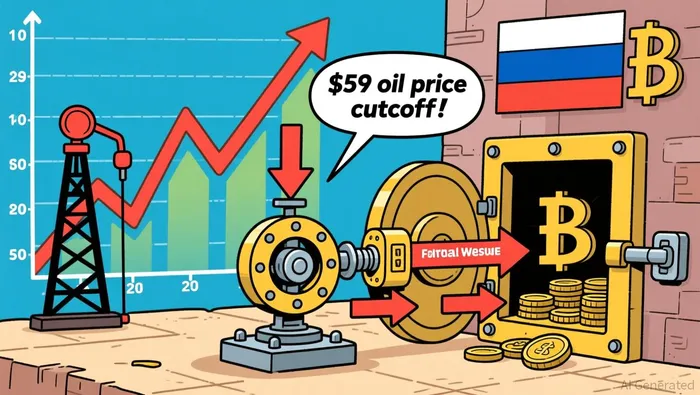
The Flow Impact: Liquidity and Price
The suspended operations created a massive, one-sided liquidity overhang. By pausing its planned sales of foreign currency, the government left a 500 billion rouble overhang in the market. This artificial surplus of dollars and other hard currencies has been a key factor in dampening exchange rate volatility and propping up the rouble.
The rouble's rally to a near-three-year high of 74.75 against the dollar is the direct market signal of that support. The currency's 8% gain this month, driven by the oil price surge, has provided the fiscal reprieve that makes a return to the market politically viable. Yet the underlying pressure remains stark: despite the recent strength, the rouble is still down 24.6% over the past year.
This divergence highlights the market's structural constraints. Capital controls and sanctions have created a persistent drag on the currency, as seen in the massive capital restrictions that prevent foreign cash from leaving. The rouble's recent strength is therefore a fragile equilibrium, supported by temporary fiscal flows and a lack of outflows, rather than a sign of fundamental market balance.
The Stalemate: Policy vs. Reality
The government's fiscal plan is now at odds with its own economic reality. Officials have pledged to reduce the budget deficit by 2 trillion roubles this year, but the IMF forecasts only 1.1% GDP growth for 2026. This disconnect is the core risk: a plan to shrink the deficit while the economy is effectively stagnating. The war economy provides a fiscal impulse, but it is not sustainable growth. The planned changes to the budget rule, which would have diverted more oil revenues into the National Wealth Fund, have been shelved. This leaves the budget exposed to the next oil price downturn, as the mechanism designed to protect it is no longer being implemented.
Monetary policy is stuck in a similar stalemate. The Bank of Russia cut its key rate to 15.5% in February, but the move is symbolic. The central bank's own estimate puts the neutral rate at 10–11%, meaning policy remains extremely tight. This pressure is suppressing economic activity across civilian sectors, even as the war economy continues to grow. The rate cut was expected and understandable given easing inflation, but it does not address the fundamental constraint: the economy is not growing fast enough to support a return to normal monetary conditions.
The bottom line is a policy pause that has not solved the underlying problem. The government has bought time with the oil price surge, but it has not fixed the fiscal architecture. With the budget rule's planned changes shelved and growth forecast to be minimal, the next oil price drop will test the government's commitment to deficit reduction. The current setup is a fragile equilibrium, where official plans are out of step with the economic fundamentals, leaving the budget vulnerable.