

Putin signed a decree on May 26 forgiving debts up to 10 million rubles for new contract soldiers and their spouses. That's roughly $10,900 of mortgage, car loan, or medical debt erased - if you sign a contract to fight in Ukraine.
The headline calls it compassion. The mechanism calls it a labor incentive. It's the latest line item in a recruitment campaign that has been quietly getting more expensive and less effective.
Here's the sequence. In late 2024, Putin first introduced debt forgiveness for recruits. The federal government pays 400,000 rubles - about $4,500 - as a sign-on bonus. Regional governments add on top of that. By early 2026, some regions were paying recruits the equivalent of $12,000 or more to enlist.
Then something happened that every company eventually faces when it needs more labor. The cheap supply ran out.
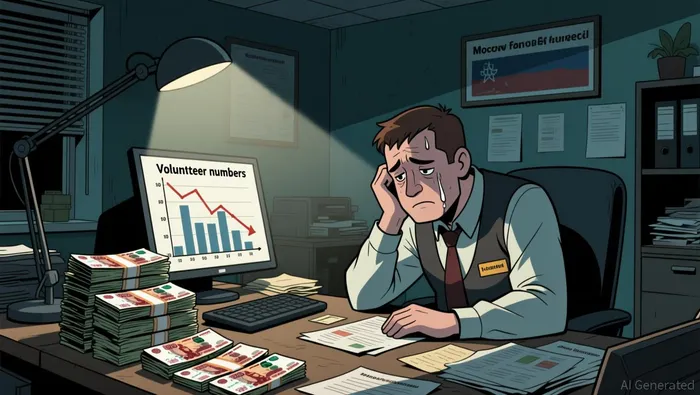
In October 2025, several regions tried cutting bonuses by up to 75%, apparently thinking the war had become routine enough that fewer incentives would suffice. It didn't work. Contract recruitment fell roughly 20% in the first quarter of 2026 compared to the year before. So the regions raised the bonuses back up again.
The way to recruit when nobody wants the job is not to lower the price. It's to raise it, then raise it again.
Now add debt forgiveness. On top of the sign-on bonus. On top of salary. On top of pensions and benefits for families. You can see the price of a Russian soldier going up in real time.
The deeper question isn't whether Putin is desperate. It's whether this war has a financial ceiling. Because every incentive program adds a marginal cost, and there are only so many marginal recruits.
Here's what the labor market is telling us. The average age of Russian recruits has been rising - toward 38, according to some analyses. The prison population has fallen to its lowest level in decades, and officials have admitted the war recruitment is a reason. Debt-burdened men and convicted criminals are now a significant portion of 2026 enlistments. Russia is also running year-round conscription for the first time in its modern history, drafting 261,000 men in 2026, up from the usual two annual drafts.
What this means is that the willing pool is thinning. The government needs more bodies. The available bodies are older, poorer, or already in trouble with the law. So it offers more money.
The contradiction is simple. Russia is spending more to get fewer and worse soldiers. That's not a sustainable economics.
The 2026 defense budget is 14.9 trillion rubles - about 6.3% of GDP. That's down slightly in nominal terms from 2025 but still enormous. The problem isn't that Russia can't afford the war. The problem is that Russia may be able to afford it but can't find enough people to fight it, regardless of what it offers.
I suspect the market is misreading this as a signal of Russian endurance. "Look how much they're willing to spend" is a reasonable first thought. But the right question isn't how much they're spending. It's what each additional ruble is buying.
If the last 10 million rubles of debt forgiveness brings in fewer recruits than the first 400,000-ruble bonus did, the marginal return is declining. That's the definition of a market running out of supply.
The test is simple. Watch whether recruitment numbers stabilize after the debt relief decree. If they don't - if Russia keeps adding new incentive programs in the coming months while recruitment still lags - then you're watching a structural constraint, not a pricing problem. No amount of debt forgiveness fills the gap when the willing pool is exhausted.
Conversely, if recruitment jumps and stays elevated, the conclusion is messier. It means Russia can buy its way through the shortage, at least for now. The cost to the economy just gets higher.
Either way, the price tells the story.