

Goldman Sachs just told investors to buy the Korea dip, raising its KOSPI target to 12,000 - implying 35% upside. Timothy Moe called the recent selloff "scary" but sees the rebound coming. The problem: Goldman's cheerleading doesn't address the question that actually matters for investors holding the names behind the index. Samsung Electronics is cheap at 8 times forward earnings while operating profits are about to double - but it's also a cyclical semiconductor play at the peak of a memory boom that has already pushed its stock up more than 110% this year.
The answer isn't generic Korea optimism. It's whether Samsung's valuation gives you enough margin of error to survive the inevitable memory cycle downturn. I think it does - for now. But the window is narrowing.
What actually happened
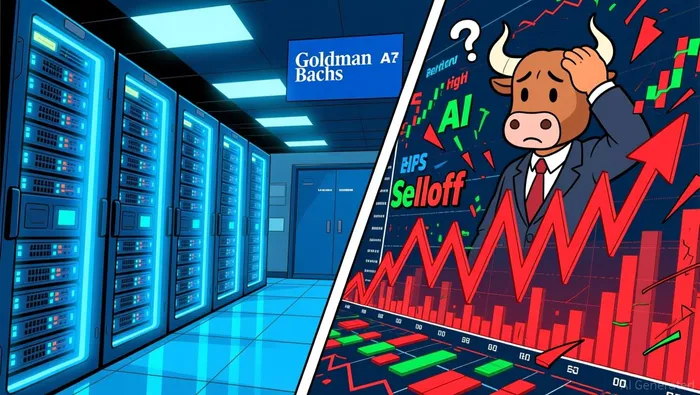
The KOSPI hit a record near 7,844 in mid-May, up roughly 100% year-to-date for 2026. Then came what local media dubbed "Black Friday" on June 5-6: a 6% plunge that triggered circuit breakers, with Samsung and SK Hynix both getting crushed.
Here's what caused the selloff. Foreign investors pulled money out of Korea to rotate into the upcoming SpaceX IPO and take profits after the longest-running rally in the market's modern history. This was a flow event, not an operating deterioration. Samsung didn't miss earnings guidance. SK Hynix didn't lose its HBM contracts. The won weakened to a 17-month low, but that's the currency adjusting to capital rotation, not a sovereign stress signal.
That distinction matters. A flow-driven selloff is different from an earnings-driven selloff. When the business is intact and the price drops, that's when you evaluate whether the multiple reset went further than the risk warrants. In this case, it went far enough to matter.
The operating picture: profits doubling at single-digit multiples
Samsung Electronics trades at roughly 8 times forward earnings. Its PEG ratio - the P/E divided by expected earnings growth - sits at 0.19, which means the market is pricing in almost no growth premium despite consensus expecting combined Samsung-SK Hynix operating profits to more than double from 91 trillion won in 2025 to 189 trillion won in 2026.
That number is the load-bearing fact. Samsung and SK Hynix together are sitting on operating profit growth that would be headline-grabbing for any tech company, yet Samsung trades at a multiple you'd expect from a cyclical industrial, not an AI infrastructure beneficiary. The explanation is the word "cyclical" - investors know memory chip margins collapse when the cycle turns, so they refuse to pay through the nose even when earnings are surging.
The HBM (high-bandwidth memory) demand story is real, not narrative. Samsung and SK Hynix both raised 2026 HBM3E order prices by 20%, which means pricing power is still intact. SK Hynix broke the $1 trillion market-cap barrier in late May, and both companies delivered Q1 2026 revenue equal to roughly half of their full-year 2025 totals. That's a revenue run-rate that more than doubled in one quarter.
But here's the risk the Goldman note doesn't pressure-test: memory is the most cyclical segment in semiconductors. HBM demand is driven by AI capital expenditure cycles at Nvidia, Amazon, Google, and Microsoft. When those capex budgets flex - and they always do - order visibility drops and pricing pressure follows. CNBC's memory cycle coverage in late May flagged this explicitly: the boom-bust pattern in DRAM and NAND is structural, not a one-time AI exception.
Valuation versus the cycle clock
Let me put the valuation in a frame that actually helps you decide.
Metric
Samsung Electronics
SK Hynix
Forward P/E
~8.1x
~7.6x
YTD gain
~114%
~186%
2026 operating profit outlook
~91T → doubling (combined)
~91T → doubling (combined)
PEG ratio
0.19
2.93
Samsung looks cheaper than SK Hynix on a PEG basis, but both trade at single-digit forward multiples. For context, Samsung's forward P/E is expected to average 12.5x over the next five years. At 8.1x, the stock is trading at roughly a 35% discount to its own long-run multiple average.
That discount exists because investors are pricing in the cycle peak. The question is whether the peak arrives sooner or later. If HBM demand holds through 2026 and into 2027, the current multiple is a gift. If AI capex spending decelerates in the second half of 2026 - and there are already whispers of cloud providers right-sizing - the cycle turn could arrive faster than the market expects.
The concentration problem
There's another structural issue Goldman's Korea upgrade doesn't address. The KOSPI is effectively a two-stock market. Samsung and SK Hynix have driven the entire rally. Foreign money is net-long concentrated positions in these two names. That means the index can look cheap as a basket while individual risk is heavily loaded into the same cyclical driver.
If you're buying Korea exposure through an ETF or index fund, you're not buying a diversified market. You're buying a leveraged bet on the HBM memory cycle. That's a fine thesis if you believe in it. But it's not a "Korea market recovery" trade. It's a memory chip cycle trade wearing a Korea label.
What changes the call
I'm comfortable with a Buy on Samsung at 8x forward earnings given the operating profit trajectory, but this isn't a set-and-forget position. Here's what would reverse the thesis:
- HBM order guidance cuts. If Samsung or SK Hynix signals slower HBM ramp or reduced pricing power in Q2 or Q3 earnings, the cycle narrative breaks and the multiple contracts further.
- AI capex deceleration at hyperscalers. The entire story depends on Nvidia's customers continuing to spend. Any public guidance cut from Amazon, Google, or Microsoft on data center spending would flow directly through Samsung's order book.
- Valuation re-expansion without earnings proof. If the stock rallies back to the 12-15x forward P/E range before earnings actually double, you're buying the cycle peak at peak multiple. That's when the rating shifts to Hold.
Investor takeaway
The Korea "correction" was a foreign profit-taking event layered on top of the most concentrated bull market in the index's history. Goldman's 12,000 target is bullish by design - it's a bank selling a conviction call to clients. The evidence on Samsung's operating side supports the idea that earnings will run ahead of expectations for at least the rest of 2026. The 8x forward P/E gives you room for error that most AI-adjacent names don't offer.
But the cycle clock is the real risk. Memory stocks that look cheap at cycle peaks are cheap for a reason. Samsung is a Buy at these levels as long as HBM pricing holds and the stock stays in single-digit forward P/E territory. If it rallies back toward its 12.5x historical average before the earnings double, the margin of error disappears and the trade becomes riskier. Watch the next earnings print closely - that's the clock that matters.
Rating: Buy (conditional - holds as long as forward P/E stays near 8x and HBM pricing remains firm).