

The immediate event is here. Satair has finalised the acquisition of Unical Aviation and ecube, closing a strategic move announced in November 2025. This finalization removes a key overhang and sets the stage for execution. The combined entity is a major player, bringing together US$298 million in 2024 revenue and a footprint of seven operational sites across North America, Spain, and the UK.
This scale-up is timed for a market on the rise. The global air transport USM market is valued at USD 7.86 billion in 2025 and is projected to grow at a 4.4% compound annual rate to reach around $11.58 billion by 2034. By integrating Unical's USM expertise with ecube's disassembly and storage infrastructure, Satair is building a more resilient supply chain to capture a larger share of this expanding circular economy. The deal positions the new entity as a premier global provider, directly targeting the rising demand for cost-effective, sustainable aftermarket solutions.
Strategic Fit and Competitive Landscape
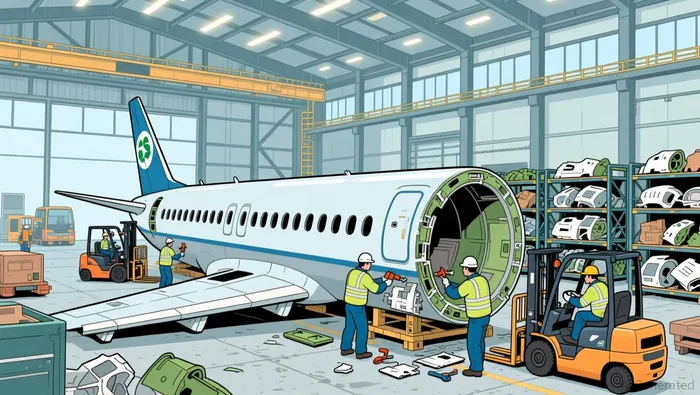
The deal's strategic logic is clear. It combines Unical's deep expertise in sourcing and selling USM with ecube's specialized teardown and storage infrastructure. This creates a vertically integrated powerhouse, advancing Satair's circular economy strategy by controlling more of the lifecycle from airframe retirement to part re-entry into service. The synergy is not new; Unical's own 2021 acquisition of ecube was a deliberate move to build this exact capability. Satair is now inheriting a proven, complementary service suite that streamlines operations and improves cost control.
Yet this scale-up arrives in a market becoming fiercely competitive. A growing pool of players is snapping up used airframes and engines for teardown, directly increasing the supply of USM. As noted, AerFin has acquired about 160 assets in four years, while Werner Aero bought more than 20 last year. The trend is accelerating, with recent purchases including some of the youngest A320neos. This surge in teardown activity is a double-edged sword. While it supports the broader trend of keeping older aircraft in service longer, it also floods the market with parts, which can pressure prices for certain materials.
For Satair, the integration of Unical and ecube is a direct response to this intensifying competition. By creating a "premier global provider," the new entity aims to differentiate through sheer scale and a more resilient, unified supply chain. The challenge is execution. The competitive landscape is now defined by who can extract the most value from each airframe and move parts fastest. Satair's ability to leverage this combined footprint across seven sites will be critical to converting the strategic fit into a tangible market advantage.
Financial Mechanics and Near-Term Catalysts
The deal's financial timeline is now set. The acquisition was announced in November 2025, with the transaction finalised in recent days. Platinum Equity, which had owned Unical since 2021, completed its transformation program, modernizing systems and expanding capabilities before the sale. This four-year build-out under Platinum is a key backdrop; it suggests the target was already a scaled, tech-enabled operation, which could ease Satair's initial integration burden.
The immediate near-term catalyst is Satair's Q1 2026 earnings report. Investors must watch for two critical pieces of commentary. First, management will need to outline the integration costs associated with merging Unical and ecube into its existing structure. Second, they should provide a clear view on the new USM division's contribution to aftermarket growth. This will be the first official look at how the combined entity is performing post-close.
Yet a significant execution risk is already in play. The new CEO structure, announced with the finalization, places Sharon Green in charge of both Unical and VAS Aero Services. While intended to unify strategy, this dual role creates a concentration of operational responsibility. Any strain on her bandwidth during the complex integration of three distinct businesses could slow synergy realization. The market will be watching for signs that this leadership setup is driving, not hindering, the promised scale-up.