

Saudi Arabia's crude oil exports to China for June loading are set to fall to just 13 million to 14 million barrels, a catastrophic collapse from pre-war levels. This represents a 65-70% decline from the typical 40 million to 50 million barrels monthly flow that characterized the market before the Iran war disrupted Hormuz transit routes.
The deterioration accelerated through May. Exports had already fallen to around 20 million barrels for May loading-roughly half of normal volumes-before plunging further in June. The trajectory shows a clear escalation: from full capacity to half capacity in a single month, then to just a quarter of normal flows by June.
The pricing signal reinforces the severity of the supply shock. Saudi Aramco's June official selling price for Arab Light crude to Asia dropped to $15.50 per barrel above the Oman/Dubai average, down from $19.50 in May-a $4 monthly decline that reflects both the reduced premium for Saudi crude and the broader physical market softening.
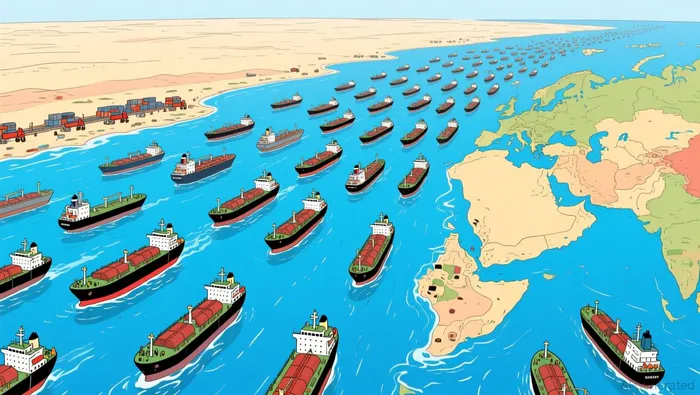
All June-loading crude destined for China will route through the Yanbu terminal on the Red Sea, as the Strait of Hormuz remains effectively closed by the conflict. The kingdom is attempting to offset the Hormuz bottleneck through increased Red Sea flows, but the numbers show this diversion cannot compensate for the loss of the primary export corridor.
Why the Drop: War Disruption and Pricing Dynamics
The collapse in Saudi exports to China stems from a dual shock: physical supply chains severed by war and pricing that pushed buyers toward alternatives.
The Strait of Hormuz has been mostly closed by the Iran conflict, eliminating the primary export corridor for Saudi crude destined for Asia. All June-loading crude to China must now route through the Yanbu terminal on the Red Sea-a longer, more constrained path that cannot absorb the full volume previously moving through Hormuz. This rerouting constraint is absolute: there is no alternative pipeline or corridor capable of compensating for the loss of the Hormuz transit route.
But physical constraints alone don't explain the full magnitude of the decline. Buyers also cut nominations because Aramco's June official selling prices remained above spot-market levels for comparable Middle Eastern grades. Traders noted that Aramco's pricing stayed elevated relative to Abu Dhabi's Murban and Oman crude-grades that buyers could access at more competitive spot premiums. In a market where physical supplies have become scarce, one might expect sellers to capture higher premiums. Yet the opposite occurred: buyers simply walked away, prioritizing cost over supply security when alternatives existed.
The result was a self-reinforcing cycle. The war disrupted flows, forcing rerouting through Yanbu. At the same time, Aramco's pricing failed to reflect the diminished competitive position of its crude relative to spot alternatives. Buyers responded by slashing nominations-not because they didn't need oil, but because the terms no longer made economic sense.
Market Implications: Supply Tightness and Price Signals
The export collapse is part of a broader Middle East supply shock. Crude supply from all producers in the region has collapsed in recent weeks as the near-closure of the Strait of Hormuz has forced shut-ins at upstream production facilities across Gulf exporters. This isn't just a Saudi problem-it's a regional supply system under stress, with multiple producers facing the same physical constraints.
Saudi Arabia is attempting to offset the Hormuz bottleneck through increased flows via its Yanbu terminal on the Red Sea the kingdom is offsetting some of the drop. But the math is unforgiving: all June-loading crude to China must now route through Yanbu, and the volumes show this diversion cannot compensate for the loss of the primary export corridor. The kingdom went from 40 million barrels to 20 million in a single month, then to just 13-14 million by June-despite the Yanbu diversion effort.
Here's where the market dynamics get interesting. The physical squeeze is easing slightly, but only because buyers have backed away from elevated prices-not because supply chains have repaired. Physical-market crude premiums have receded in recent weeks as buyers walked away. When Aramco set June OSP at levels above spot-market prices for comparable Middle Eastern grades, buyers simply cut nominations. They didn't need to-China still needs oil-but the pricing didn't make economic sense relative to alternatives.
The result is a structural squeeze that persists while the war continues, even as the immediate panic subsides. The physical constraint remains: Hormuz is still closed, upstream shut-ins persist, and Yanbu cannot absorb the full volume. What's changed is buyer behavior-nominations dropped because the terms no longer worked, not because the physical problem solved itself. That distinction matters for the outlook: until the war resolves and Hormuz flows resume, the supply floor stays elevated regardless of how many buyers currently sit on the sidelines.
What to Watch: Catalysts and Risk Scenarios
The export collapse to China hinges on three developing fronts: the war's trajectory, Aramco's pricing response, and actual Chinese intake data. Each could either restore flows or deepen the disruption.
The Strait of Hormuz remains the critical chokepoint. U.S. naval movements toward a blockade have added urgency to the physical constraints tankers have started moving away. Any de-escalation that reopens the strait would immediately unlock the primary export corridor, allowing Saudi Arabia to resume normal flows to Asia. The kingdom could then redirect Red Sea volumes back to Hormuz-bound tankers and potentially recover much of the lost capacity. Conversely, if tensions escalate further-or if the U.S. blockade materializes-the physical squeeze intensifies. Upstream shut-ins across Gulf exporters would persist, and the Yanbu diversion alone cannot compensate the kingdom is seeking to redirect as many barrels as possible.
On pricing, the question is whether Aramco will push OSPs lower to win back buyers. The June premium of $15.50 above Oman/Dubai already represents a $4 monthly decline from May's record down from $19.50. That move signaled responsiveness to market conditions. But if nominations remain weak, further cuts become likely-especially if spot premiums for comparable Middle Eastern grades stay depressed. The risk is a lag: Aramco may hold prices expecting physical scarcity to reassert buyer urgency, only to find nominations collapsed further. The market already showed buyers will walk away when terms don't make economic sense buyers cut nominations because of costly prices.
Finally, the 13-14 million barrel figure for June loading needs verification through Chinese refinery intake data for June-July. That data will confirm whether the theoretical export collapse materialized as planned-or whether some volumes slipped through via alternative routes or inventory draws. If intake confirms the drop, it validates the supply shock narrative and suggests the market has already priced in the disruption. If intake surprises to the upside, it would imply either better-than-expected rerouting or inventory release by Chinese buyers-both of which would ease the physical tightness faster than expected.
The interplay matters. A war resolution would matter more than any pricing adjustment. But until that happens, Aramco's pricing decisions and Chinese demand signals will determine whether the market finds a new equilibrium-or whether the export collapse deepens further.