

For a growth investor, the first question is always the size of the prize. In the case of Schneider Electric's TeSys Tera, the target is the intelligent motor control center (IMCC) market. This is not a niche product; it's a foundational technology for modern industry. The market has already reached a substantial scale, valued at $5.27 billion in 2025. More importantly, it is on a clear growth trajectory, projected to expand to $7.95 billion by 2030 at a robust compound annual growth rate (CAGR) of 8.5%.
This expansion is driven by a powerful secular trend: the relentless push for industrial automation. Companies are investing in smart systems to enhance efficiency, reduce costly downtime, and gain real-time visibility into operations. The IMCC market is a direct beneficiary of this shift, as these advanced systems integrate automation, communication, and monitoring to provide predictive maintenance and remote control. The growth forecast points to a market that will nearly double in size over the next five years, offering a clear runway for scalable solutions.
The United States represents a key regional segment within this global opportunity. The U.S. market, valued at $1.02 billion in 2022, is also expanding, albeit at a slightly slower pace with a projected CAGR of 5.86%. This regional data underscores the maturity and ongoing demand within a major industrial economy, providing a stable base for market penetration. For a company like Schneider Electric, with deep roots in industrial automation, this TAM represents a multi-billion dollar addressable market where its technological leadership in motor control can be leveraged to capture significant share.
Schneider's Position: Market Share, Competitive Moat, and Scalability
Schneider Electric is not entering the intelligent motor control market as a challenger. It is a major global player, competing directly with industrial giants like Siemens, ABB, and Rockwell Automation. This established position provides a critical advantage. The company already commands a significant share of the broader motor control center market, which is projected to grow to $6.3 billion by 2025. Its deep integration into industrial operations gives it a built-in customer base and channel access that new entrants must spend years and billions to replicate.
The foundation for TeSys Tera's scalability is its massive existing installed base. Schneider's legacy TeSys portfolio has already deployed 40 million controllers across 50 different sectors. This isn't just a large number; it's a powerful network effect. These controllers represent a vast pool of potential retrofit customers and a rich source of operational data. TeSys Tera is engineered as a seamless upgrade path, designed for both new installations and retrofits. This allows Schneider to monetize its existing footprint without a costly, customer-agnostic sales cycle, accelerating the product's market penetration.
More importantly, TeSys Tera extends the company's EcoStruxure platform, shifting the business model from a one-time hardware sale to a scalable, recurring revenue stream. The system provides predictive diagnostics, energy monitoring, and connectivity that feed data into the platform. This enables a suite of value-added services, including remote monitoring, advisory analytics, and predictive maintenance. For a growth investor, this is the key. It transforms a commoditized control device into a platform that generates ongoing service fees and lock-in. The platform's ability to reduce motor downtime by up to 80% makes it a strategic operational lever for customers, further entrenching the relationship.
The competitive moat is thus multi-layered. It combines a dominant installed base, a recognized brand in industrial automation, and a platform strategy that creates switching costs and recurring revenue. While the market is crowded, Schneider's position as a foundational player with a clear digital evolution path gives it a significant edge in capturing the expanding intelligent motor control TAM.
Growth Trajectory and Financial Impact
The financial promise of TeSys Tera hinges on its ability to monetize a massive, urgent cost. Unplanned downtime is a critical drain, with downtime costs for UK and European manufacturers estimated to have exceeded $105 billion in 2025. By promising to reduce motor downtime by up to 80%, the system directly attacks this expense. For industrial operators, this isn't just a feature; it's a potential ROI driver that justifies the investment. The product's alignment with high-urgency sectors like water and wastewater, where it was launched at the Texas Water 2026 conference, provides a clear, near-term revenue path. The U.S. water sector faces acute challenges, including massive daily water loss and an impending workforce retirement wave, making predictive maintenance solutions a strategic priority. This focus on specific, high-need verticals allows Schneider to target early adopters and demonstrate tangible value quickly.
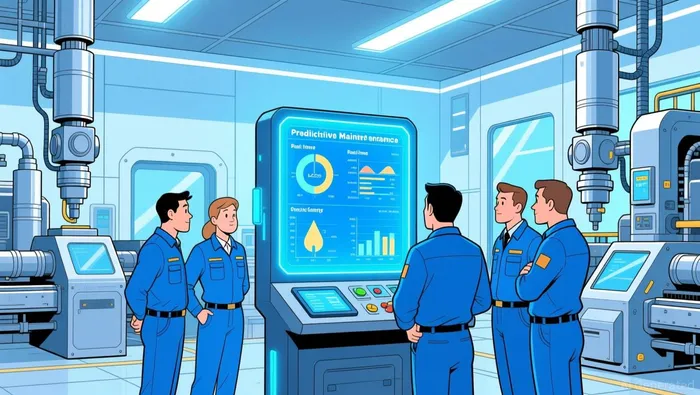
From a scalability perspective, the product fits perfectly into Schneider's platform strategy. The system's predictive diagnostics, energy monitoring, and connectivity feed data into the EcoStruxure platform, enabling recurring revenue streams from services and analytics. This model transforms a capital expenditure into a managed service, improving customer lifetime value and creating a more predictable revenue base. The modular design also facilitates rapid deployment and retrofitting, accelerating time-to-market and customer acquisition.
The key risk, however, is execution. Success depends on outpacing competitors like Siemens and ABB in both technology adoption and sales execution. More broadly, it relies on the pace of industrial digitalization, which can vary by region and sector. While 87% of surveyed manufacturers see digital integration as critical, many still feel unprepared. Schneider must not only deliver a superior product but also provide the partnership and support to guide customers through this transition. The financial impact will be significant if the company captures a leading share of the growing intelligent motor control market, but that outcome is not guaranteed and will be determined by how effectively it navigates this competitive and adoption landscape.
Catalysts, Risks, and What to Watch
For a growth investor, the launch of TeSys Tera is just the beginning. The real story will unfold in the coming quarters as early adoption metrics and customer outcomes provide proof of concept. The initial focus on the water and wastewater sector, where the system debuted at the Texas Water 2026 conference, is a strategic test case. Watch for the first customer case studies from this urgent vertical. Success here-demonstrating tangible reductions in downtime and water loss-will be a powerful catalyst to validate the product's value proposition and accelerate sales into other high-need industries like chemical and oil & gas.
The more critical long-term signal will be how seamlessly TeSys Tera data integrates into Schneider's broader digital services. The system's predictive diagnostics and energy monitoring are designed to feed into the EcoStruxure platform, but the financial payoff depends on this data being monetized. Investors should monitor whether Schneider bundles these capabilities into recurring advisory and managed services, moving beyond a hardware sale to a scalable, subscription-based model. Early evidence of such integration will gauge the platform's ability to generate the recurring revenue streams that define a truly scalable growth story.
Key risks remain. First, the product's promise of an 80% downtime reduction is ambitious. Its success hinges on customers successfully integrating the system into their existing operations, which can be complex. The need for specialized training or new IT infrastructure could slow adoption. Second, competitors like Siemens and ABB are not standing still. They will likely respond with their own intelligent control solutions, intensifying the battle for market share and potentially pressuring pricing. Finally, the overall pace of industrial digitalization adoption is uneven. While 87% of manufacturers see digital integration as critical, many still feel unprepared. Schneider must not only deliver a superior product but also provide the partnership and support to guide customers through this transition, a challenge that could limit the speed of market penetration.