

The interesting thing about Google's new Fitbit Air isn't that it's screenless, or that it costs $99.99. It's that Google seems to have finally figured out what to do with Fitbit.
Most people think this is a new fitness tracker. But look at the numbers. The device itself is priced at what looks like near-cost. The real money is in the $10 per month or $100 per year subscription for Google Health Premium. That's the tell. Google isn't selling hardware; they're selling access to an AI health coach.
The way to understand this launch isn't to compare it to WHOOP or Oura. It's to see it as a test of whether people will pay for software that tells them what to do. The hardware is just the entry point. Google's AI will take into consideration not only your tracked data from the Fitbit Air, but lifestyle changes like injuries, nutrition, and even the weather. That's the product.
I suspect this is what Google has been trying to do since it acquired Fitbit in 2021. Not to make better watches, but to build a health platform. The hardware was always a means to an end. The screenless design makes sense now: if the value is in the AI coaching, you don't need a screen. You need people to stop looking at their wrists and start listening to the software.
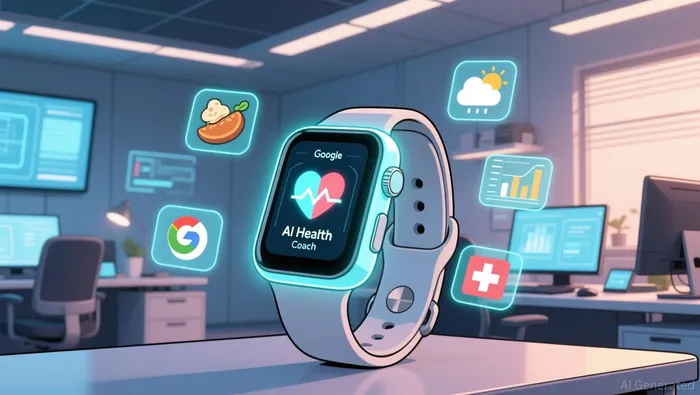
There's a pattern here that good founders recognize. When you can't compete on hardware features, compete on something else. Apple wins on ecosystem integration. Garmin wins on sports specificity. Google is trying to win on AI personalization. The Fitbit app will automatically update to the Google Health app for all existing users starting May 19. That's not a minor rebrand. It's consolidation.
The risk is obvious. Will people trust an AI health coach? The three-month trial of Google Health Premium included with purchase suggests Google knows adoption won't be automatic. And there's the creepiness factor. Google also announced that Coach can now process uploaded medical records, PDFs and photos. That's either incredibly useful or incredibly invasive, depending on your perspective.
What's surprising is how long it took. Five years after the acquisition, Google is finally making a clear move. Not with a fancy watch, but with a simple band. Not with better sensors, but with better software. The device ships May 26. By then we'll know if this is the beginning of something or just another Google experiment.
The test for whether this works won't be hardware sales. It will be subscription renewals after the three-month trial. If people keep paying $100 a year for AI coaching, Google has found its model. If not, they're back to selling $99 trackers in a crowded market.