

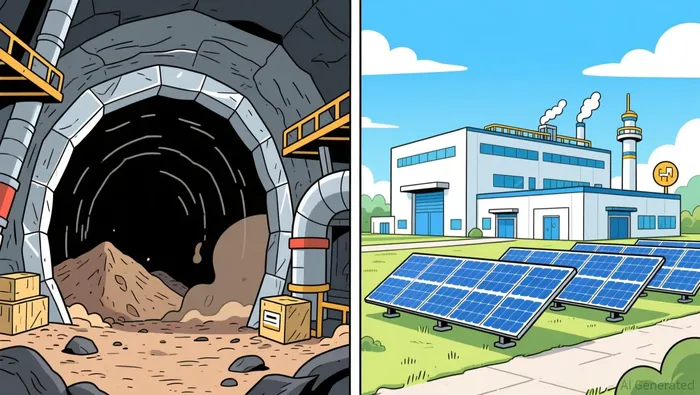
Silver is sitting at a fork in the road. The metal has rallied roughly 130% over the past year, pushed by a five-year structural supply deficit that is now the most cited reason to own the commodity. But the demand engine that was supposed to widen that deficit - solar panel manufacturing - is shrinking fast. At around $65 per ounce, the setup has shifted from "buy the dip" to "wait for confirmation."
Here's the tension investors need to understand before positioning for June.
The supply deficit is the anchor
The Silver Institute and multiple industry reports confirm a structural shortfall entering its fifth consecutive year. From 2021 through 2025, cumulative global shortages have approached 820 million ounces - roughly an entire year of mining output. Mine production is projected to stay around 820 to 830 million ounces in 2026, while total global supply (including recycling) is expected near 1.0 to 1.05 billion ounces. That number is flat, even as demand has been climbing.
This is not a cyclical blip. It's a structural gap caused by decades of underinvestment in new silver mines, declining grades at existing operations, and the fact that roughly 80% of silver is produced as a byproduct of zinc, lead, and copper mining - meaning supply doesn't respond quickly to higher silver prices. Even if the price doubles, miners don't suddenly produce more silver; they produce more of the primary metal, and silver follows.
For years, this was the one number that mattered. It was the reason silver ETFs like SLV and SIVR pulled in billions in inflows late last year. It's still the reason bulls cite when arguing for $80 or $100 per ounce.
Solar demand is the problem
But here's what the bull narrative is missing. Solar photovoltaic demand - which was expected to be the fastest-growing source of silver demand through 2030 - is now forecast to fall 19% in 2026. After dropping 6% in 2025 to 186.6 million ounces, PV silver demand is projected to fall further to around 151 million ounces.
Why? Because panel makers are done accepting silver cost creep. LONGi, one of the world's largest solar manufacturers, announced it would begin substituting base metals for silver in its solar cells starting Q2 2026. Jinko Solar and others are following. Copper pasting technology - which can reduce silver content per module by up to 90% - is moving from lab to production line.
This matters because solar alone accounted for roughly 20% of global silver demand in 2025, up from just 5% a decade ago. A 19% drop in solar demand wipes out a chunk of the deficit story. The cumulative shortfall may still exist, but the gap between supply and demand is narrowing faster than most analysts priced in.
Where price sits now
Silver spot is trading around $65 per ounce as of mid-June. July futures opened June 1 at $74.10 but have faced pressure. The gold-to-silver ratio sits near 63-to-1, with gold at roughly $4,258 per ounce - elevated relative to the 50-to-1 ratio that historically marks silver's catch-up phase. J.P. Morgan's 2026 base case of $81 per ounce is now roughly 24% above spot, which implies the bank's forecast assumes the bull narrative holds intact.
Technical support sits in the $65-$70 range. That's where the rally found a floor after early-June selling. A break below $60 would signal that the market is repricing the solar demand risk more aggressively than it has so far.
What changes the equation
Three things determine whether silver moves from Hold to Buy or from Hold to Avoid:
Solar substitution pace. If copper-based pasting scales slower than expected - due to efficiency losses or manufacturing teething problems - silver per panel stays higher and the demand shortfall is less severe. Industry sources suggest copper substitution can cut silver use by up to 90%, but that maximum assumes full adoption. A partial rollout is more likely in the near term.
Industrial demand outside solar. EVs use 25 to 50 grams of silver each - roughly double a combustion-engine vehicle - and automotive demand is growing at a 3.4% compound annual rate through 2031. Electronics and broader industrial demand could offset some of the solar drop. But solar is the largest single industrial category, so a full offset requires other sectors to accelerate meaningfully.
ETF and physical flows. The iShares Silver Trust (SLV) and abrdn Physical Silver Shares (SIVR) saw massive inflows in late 2025 - $2.3 billion and $900 million respectively. If that buying dries up or reverses as the solar substitution story crystallizes, there's one less support mechanism under the price.
Investor takeaway: Hold, don't chase
The supply deficit is real. It's been real for five years and will continue to drain inventories. That sets a floor. But the demand side that was supposed to turn the deficit into a price explosion is now shrinking, and the market hasn't fully priced that in yet.
At $65, silver is not cheap enough to ignore the solar problem. It's not expensive enough to bet against the deficit. The risk/reward sits in the middle, and the next two quarters will tell which side wins. Watch the June and July COMEX settlement levels - if silver holds above $65 through Q2 despite the solar headline, the supply deficit remains the dominant story and the Hold shifts toward Buy. If it breaks below $60, the demand narrative has flipped, and stepping aside makes sense.
The catalyst clock is short. Panel makers are already implementing copper substitution in Q2. The data on whether it succeeds at scale will arrive in the next two earnings cycles from the major Chinese PV producers. Until then, patience beats conviction.